



beefy
-
Posts
41 -
Joined
-
Last visited
beefy's Achievements

Member (2/4)
-
Can a worn case/hook prevent adjustment of case opener lever.
beefy replied to beefy's topic in Leather Sewing Machines
Finally got around to the hook swap thanks to pulling my lower back and not being able to do higher priority work LOL. The new hook (cheap Chinese off Ebay) was not identical to the worn out hook in the machine. Problem is I don't know if the original worn out hook from the machine is OEM or not because it does not have any Singer markings anywhere. The case had Singer markings but that could be an original case in an aftermarket hook, no idea. The V-slot in the shaft of the new Chinese hook was in a different position, see this thread: Something else I checked was the position of the eccentrics on both hooks, relative to the position of the hook point. As can be seen in the attached photo the new hook (left in the photo) had the highest point of the eccentric more advanced than the old hook. The blue marking on the hooks indicates where the eccentric sticks out the most. This was checked with a dial indicator. This advanced position of the eccentric on the new hook seems to have been beneficial to the case opener arm operation, and the case opener arm now releases earlier, and I don't get the problem I explained earlier, where the thread could not get past the case opener arm and the triangular outcrop of the case. Also attached a video of the the case opener operation and the material passing the latch. A point of note is I've also ground a chamfer on the front / operator side of the needle plate slot, as this was acting as a pinch point with the new hook. So far the operation seems good now, but I have to try it powered to be fully sure. It just on the bench at the moment while I'm doing various jobs in my workshop. AFTER HOOK CHANGE.mp4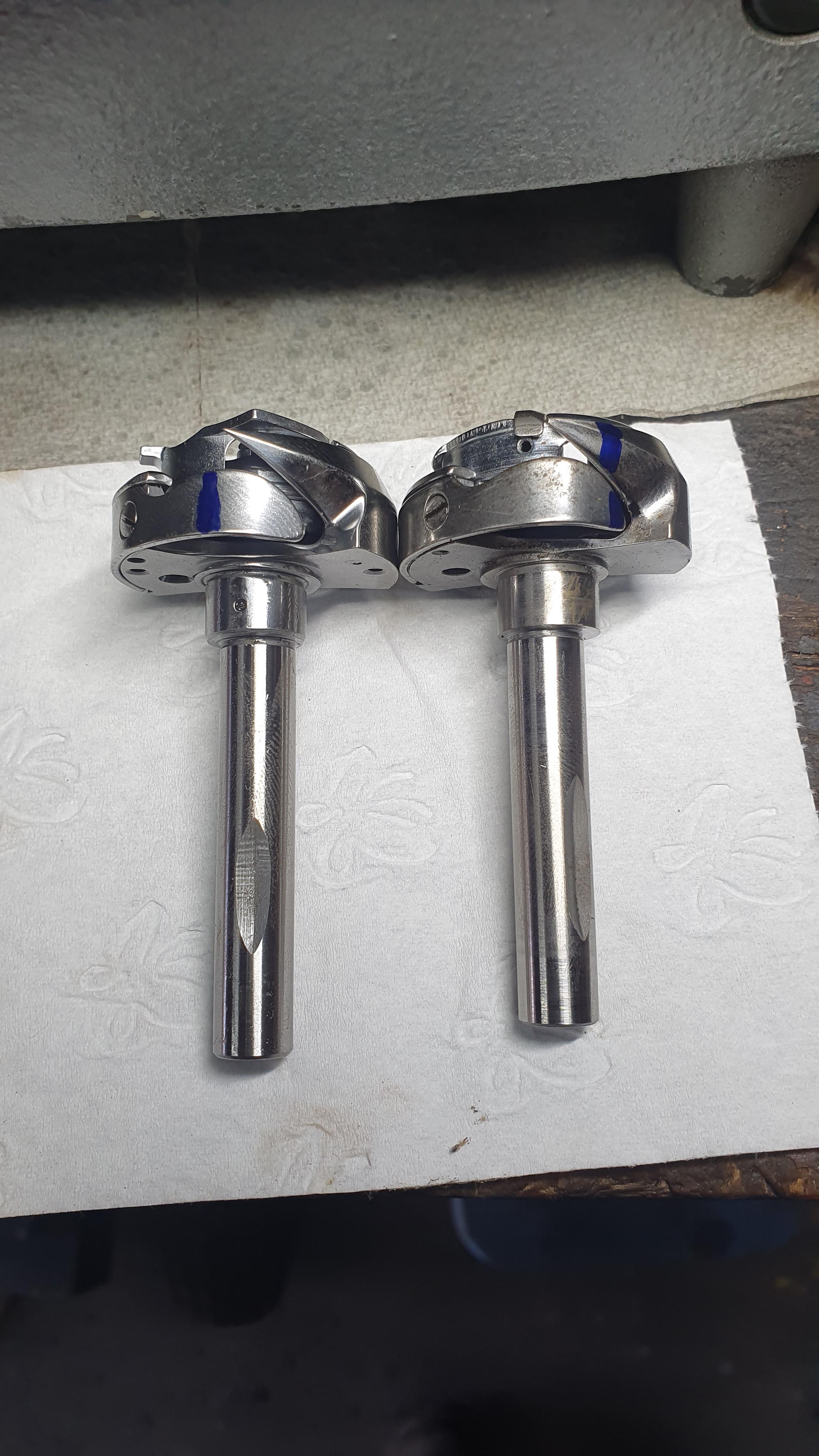
-
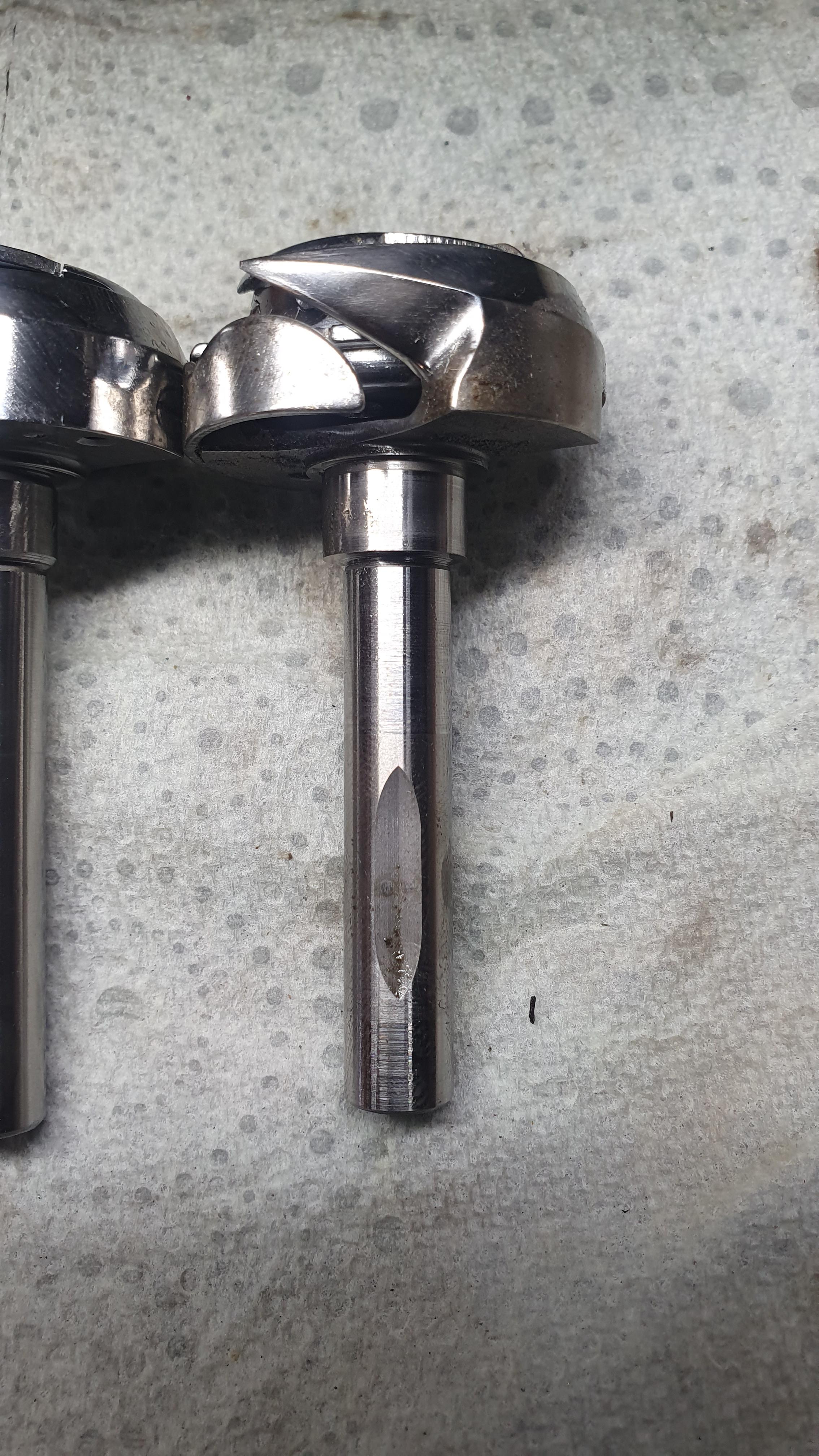
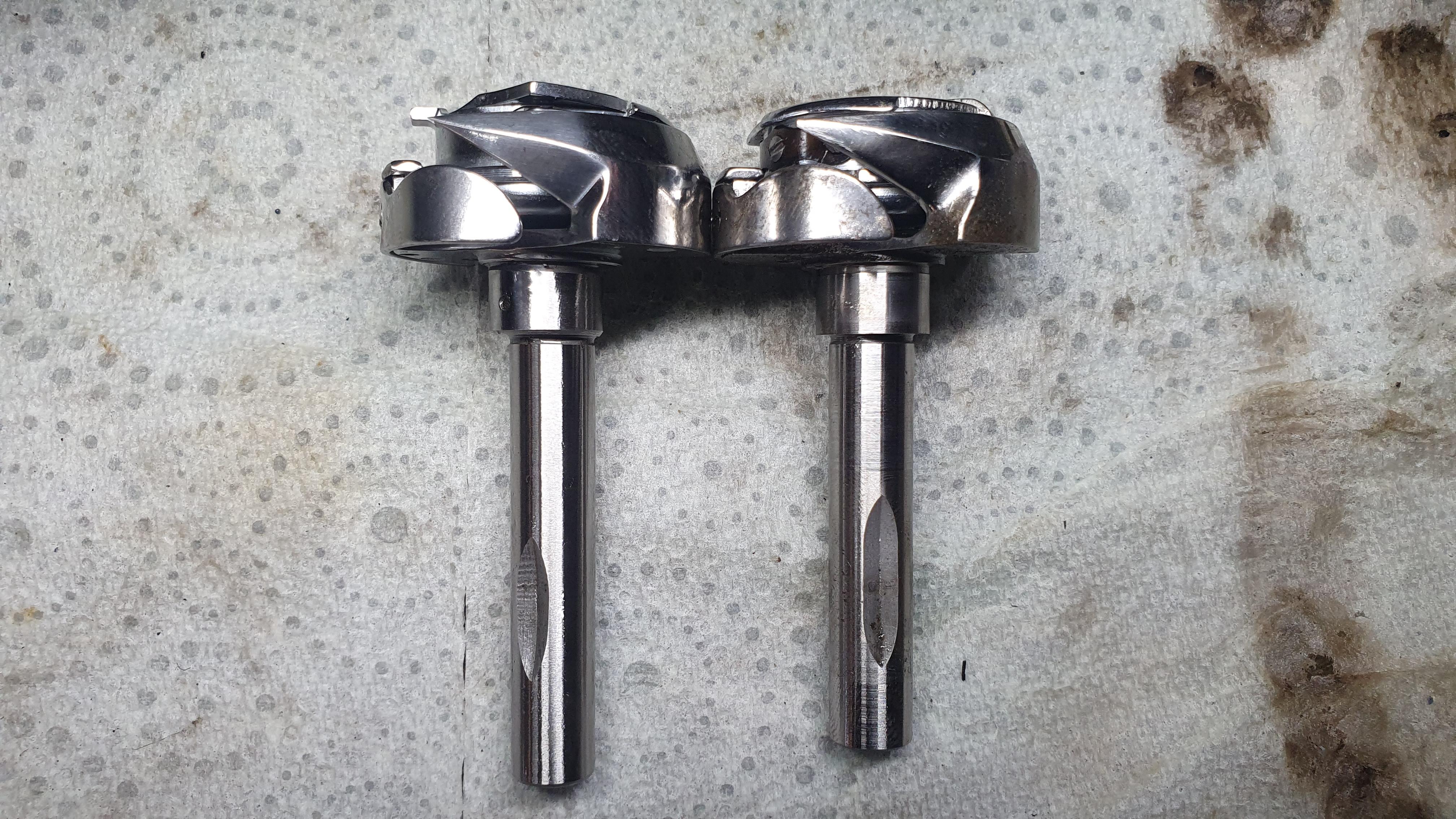
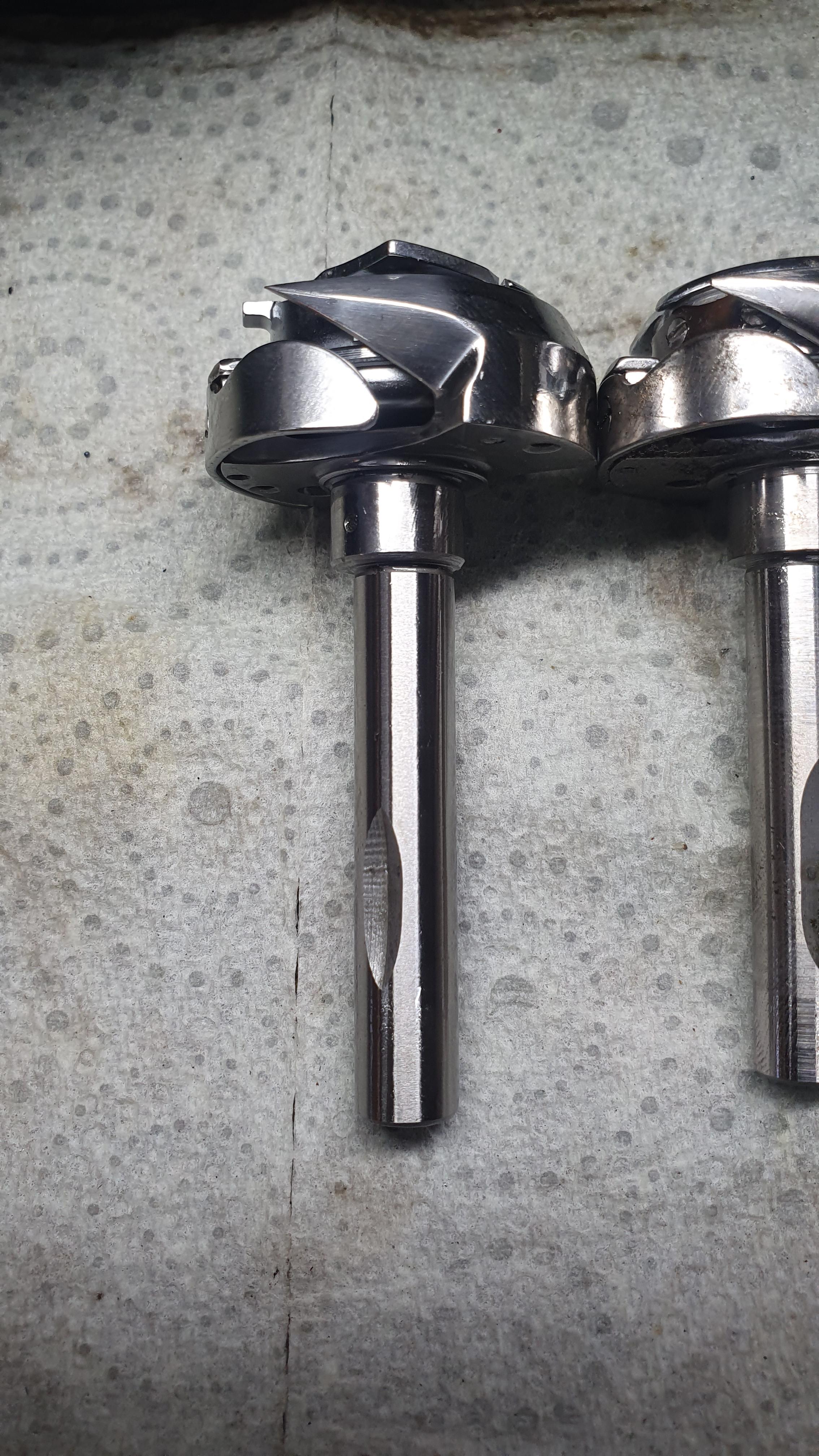
Just started installing a new hook on my Singer 211G156. First thing I noticed was the hook timing was way off, and the large gear could not be moved sideways enough to correct the timing. I have not ran this machine yet so thought the timing must have been off when I purchased it, and I'm only just finding this out now. However, I pulled the new hook out and put it side by side with the original hook. As can be seen in the pictures, the V-slot in the new Chinese (supposedly a CKPSMS) hook https://www.ebay.com.au/itm/262943436183 is in a completely different position. I had to advance the small gear on the hook shaft one tooth to be able to time the hook. So my big question is will a hook for a Juki LU-562 drop straight in to a Singer 211G156. Up to this point I'm under the impression the answer is yes, but am I wrong. It will not be a big deal so long as the large gear is still fairly centrally aligned to the center of the hooks vertical shaft, i.e. I don't have to move it sideways too much to get the timing correct. I haven't fine tuned it yet but it seems to be OK in that regard. Tomorrow I need to check the positioning of the eccentric on the Chinese hook and see if it's the same as the original hook. If that is way out of rotational position that's going to affect the timing of the case opener arm. Looking at the photos it initially appears the eccentrics positions may be different but I'll check with a dial gauge. Chinese hook is on the left and original hook on the right.
-
Can a worn case/hook prevent adjustment of case opener lever.
beefy replied to beefy's topic in Leather Sewing Machines
Yeah, I'm trying to get at my sewing machines but a few other tasks are ahead. Apart from that, excess heat is my problem here in Australia LOL. Would a 5Kw Chinese diesel heater be big enough to heat your craft area. I love those little toys. Want to put one in my boat when I make the fabric cabin so I can go out in freezing winter and be toasty warm. -
Can a worn case/hook prevent adjustment of case opener lever.
beefy replied to beefy's topic in Leather Sewing Machines
I remember one guy's Youtube video, where he reckoned the case opening mechanism is only important for thinner thread. I think he said the thicker (stronger) thread will just pull the latch open. Whether what he said is correct or not I have no idea. -
Can a worn case/hook prevent adjustment of case opener lever.
beefy replied to beefy's topic in Leather Sewing Machines
Thanks AIZilla. Looks like your case opener arm is not adjusted correctly, as it does not even contact the triangular outcrop on the case to pull the case anti-clockwise and open the latch on the rear/far side. It appears the thread itself is simply pulling on the tab of the case and thus forcefully pulling it anti-clockwise then the thread goes through the latch. -
Can a worn case/hook prevent adjustment of case opener lever.
beefy replied to beefy's topic in Leather Sewing Machines
Fantastic, great to be on the same page as everyone. Yes, I agree. The new hook arrived a couple of days ago but I won't get a chance to swap it out until hopefully this weekend. I will create video #2 (the "after" video) when it's done, and hopefully I have a flawlessly working machine. The best part of all this is what I'm learning from you guys, so thanks very much everyone for your kind help. -
Can a worn case/hook prevent adjustment of case opener lever.
beefy replied to beefy's topic in Leather Sewing Machines
This is the before Friquant. It's the old wobbly case. Won't get to install the new hook/case until maybe this weekend. Thread is Coats Dabond V138 for which the machine is rated. I've tried adjusting the case opener arm both ways in tiny increments. I cannot find a happy medium that pulls the case anti-clockwise enough to open the gap enough on the rear/far side of the case tab, yet opens the gap between the case opener arm and the triangular outcrop on the case when the thread goes around the other side of the hook. I can get one or the other but not both. This is why I'm suspecting the slop in the case and how it leans towards the needle plate, to be a potential cause of the problem. Regarding the latch. I'm kind of guessing at the moment at what part is referred to as the latch, so I'd better not go further before I make sure I'm on the same page as everyone. The curved arm that's operated by the eccentric under the hook, I've been calling that the case opener arm. The case opener arm pulls against the triangular outcrop on the case to rotate it anti-clockwise. This is where the biggest problem is as the gap between these two comes too late and the thread gets stuck there a little. Then there's the tab of the case that sits in the slot of the needle plate. So is one of those being referred to as the latch. -
Can a worn case/hook prevent adjustment of case opener lever.
beefy replied to beefy's topic in Leather Sewing Machines
You've lost me on that one Wizcrafts. The case opener arm is at the same height as the triangular outcrop on the case on which it pulls against. -
Can a worn case/hook prevent adjustment of case opener lever.
beefy replied to beefy's topic in Leather Sewing Machines
OK here's two videos. One is me moving the pulley very slowly so the action of the case opener on the case/tab can be seen, and how the case opener itself is still in contact with the case when the thread tries to pass through at the end. That's where the problem lies. As mentioned earlier, if I back off the case opener slightly to allow the thread to get through, the case tab is not rotated anti-clockwise enough to let the thread past the front side of the tab. The 2nd video is to show how much "rocking" there is in the case as it rotates. It's floppy as hell. 20260128_183115.mp4 20260128_183357.mp4 -
Can a worn case/hook prevent adjustment of case opener lever.
beefy replied to beefy's topic in Leather Sewing Machines
will have to make a before and after video. -
Can a worn case/hook prevent adjustment of case opener lever.
beefy replied to beefy's topic in Leather Sewing Machines
Hi Friquant, sorry for the late reply, I thought no more posts were coming to this thread. No email notifications have came to me, and I've only just seen your reply. I'll make a video tomorrow. My new hook arrived today and wow, what a difference as far as wear goes. The case on the new hook has very little play within the hook so I'd say the huge amount of wear in the existing hook/case may be a big contributor to the problem. -
@Wizcrafts Thanks for that very long and detailed reply. I'm happy to know I've got it correct. I know you guys have probably heard this a million times before, but the helpfulness and the quality of the responses and information the members of this site give, is truly amazing. I'm always wondering if I'm delving too deep into understanding the machine first before I "really get sewing", but I'm starting to think doing things this way will save me a lot of time in the future.
-
Thanks AIZilla, I'll have a read of that after work.
-
Can a worn case/hook prevent adjustment of case opener lever.
beefy replied to beefy's topic in Leather Sewing Machines
Using V138. I listened to the advice yourself and other gave in a previous thread and decides not to go any thicker with my machines. Thanks for the help guys. I might just buy a new hook/case and see if that helps. That will at least prove/disprove my theory of wear in the hook's cam, or the race of the hook/case. -
Can a worn case/hook prevent adjustment of case opener lever.
beefy replied to beefy's topic in Leather Sewing Machines
That's exactly it, I'm trying micro adjustments until the thread can just get through but then the other side has too little. I would like to have much larger clearance gaps but don't have that luxury. There is a little bit of play in the arm but not much. However, you've made me ponder something. I should check the play at various rotational positions of the hook to see if this play varies. It appears this machine was not well maintained and had more dry dust than oil, so I wonder if the cam that operates the case opener arm could be worn. I can also see the case actually tilt towards the hook sometimes as the thread pulls through, further indicating wear in the hook/case.