mbnaegle
-
Posts
87 -
Joined
-
Last visited
mbnaegle's Achievements

Member (2/4)
-
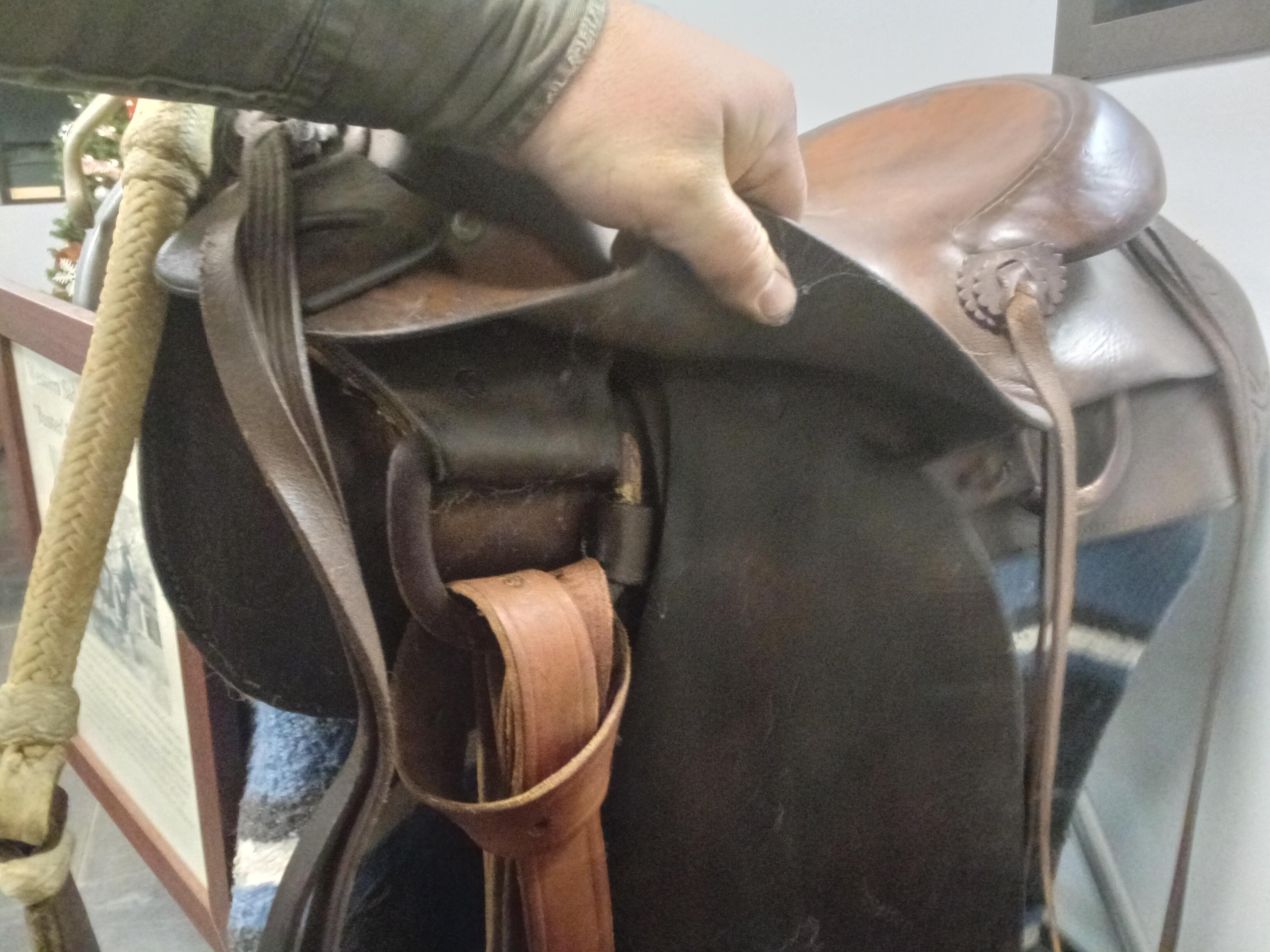
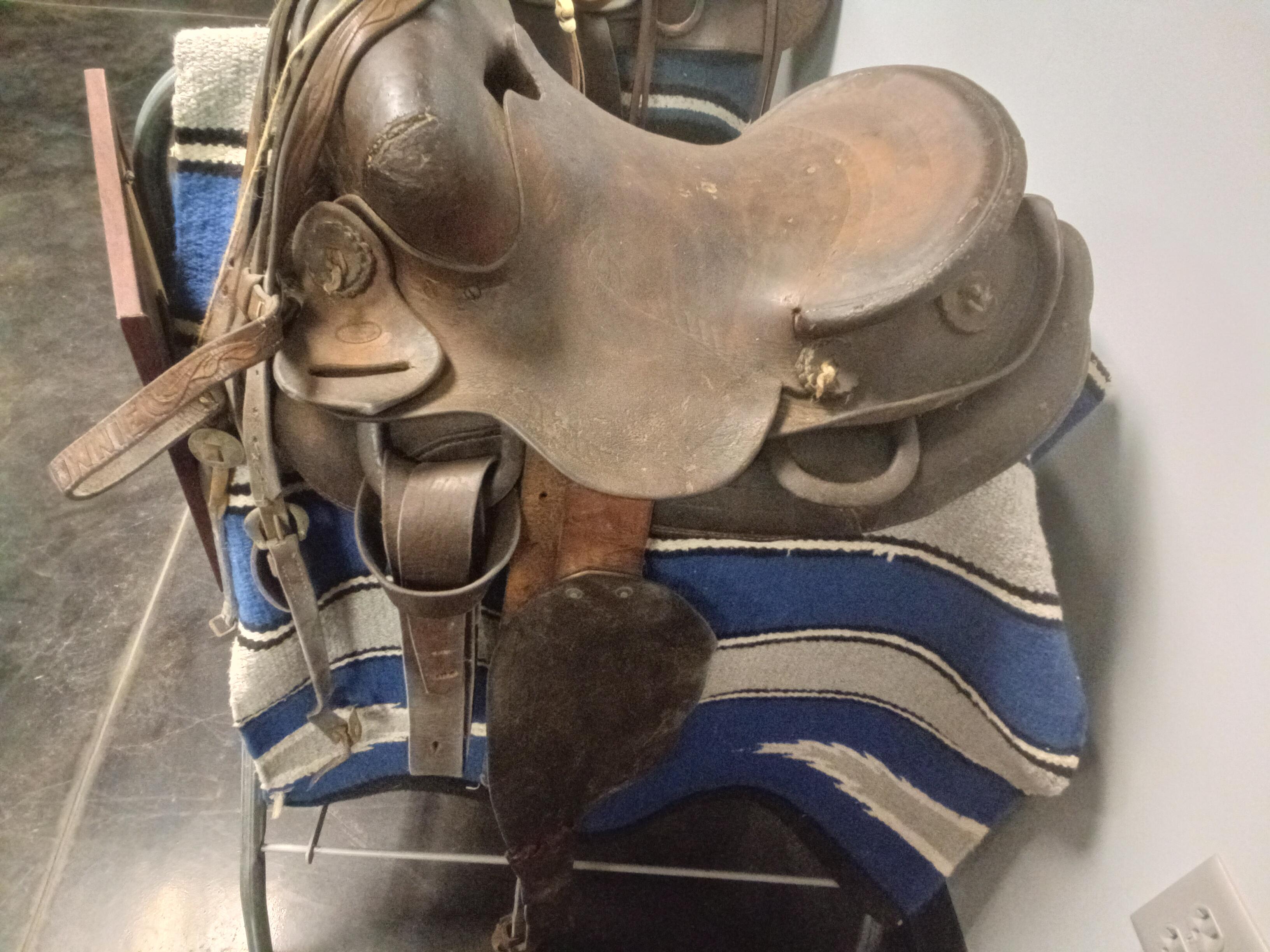
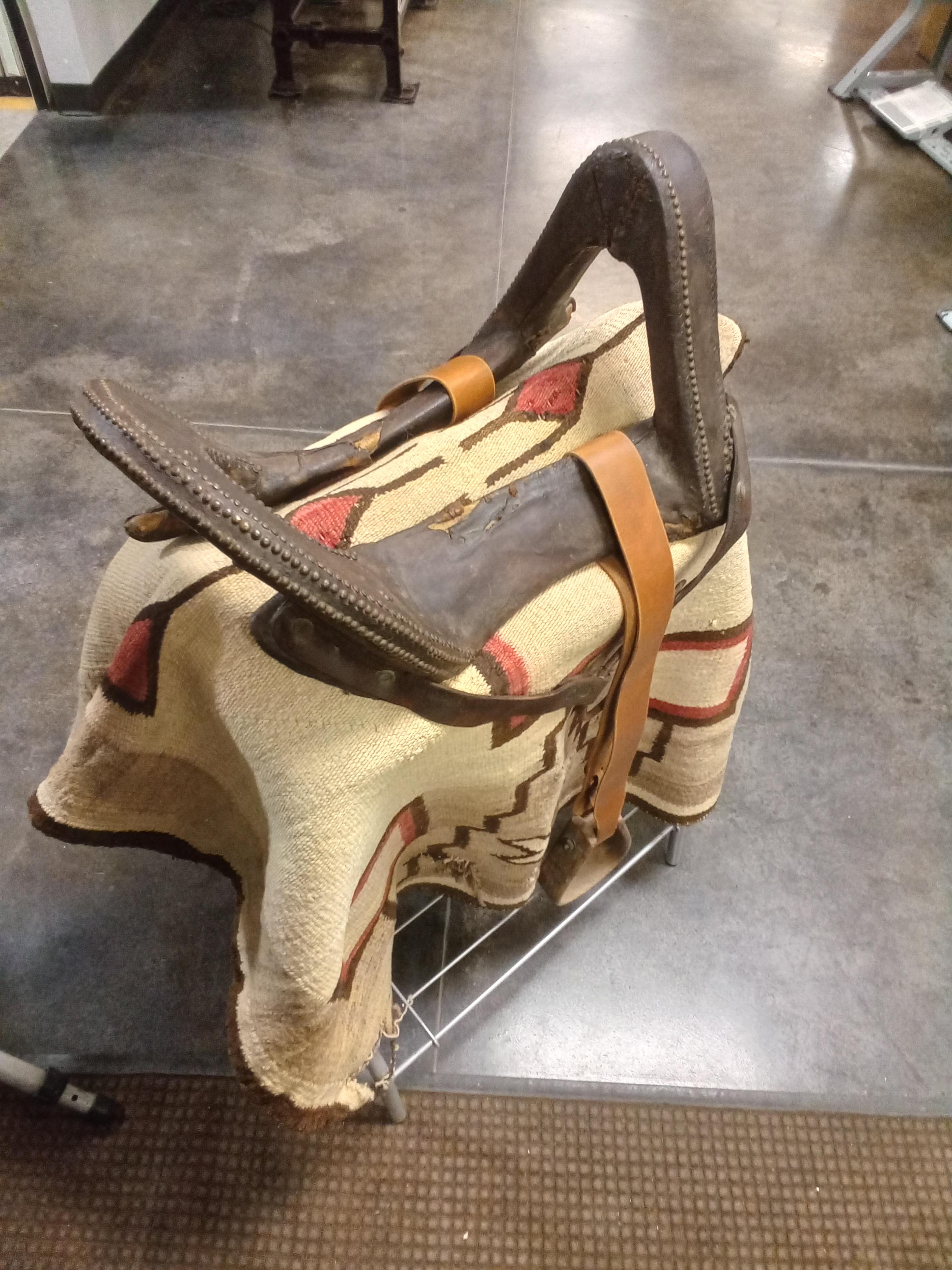
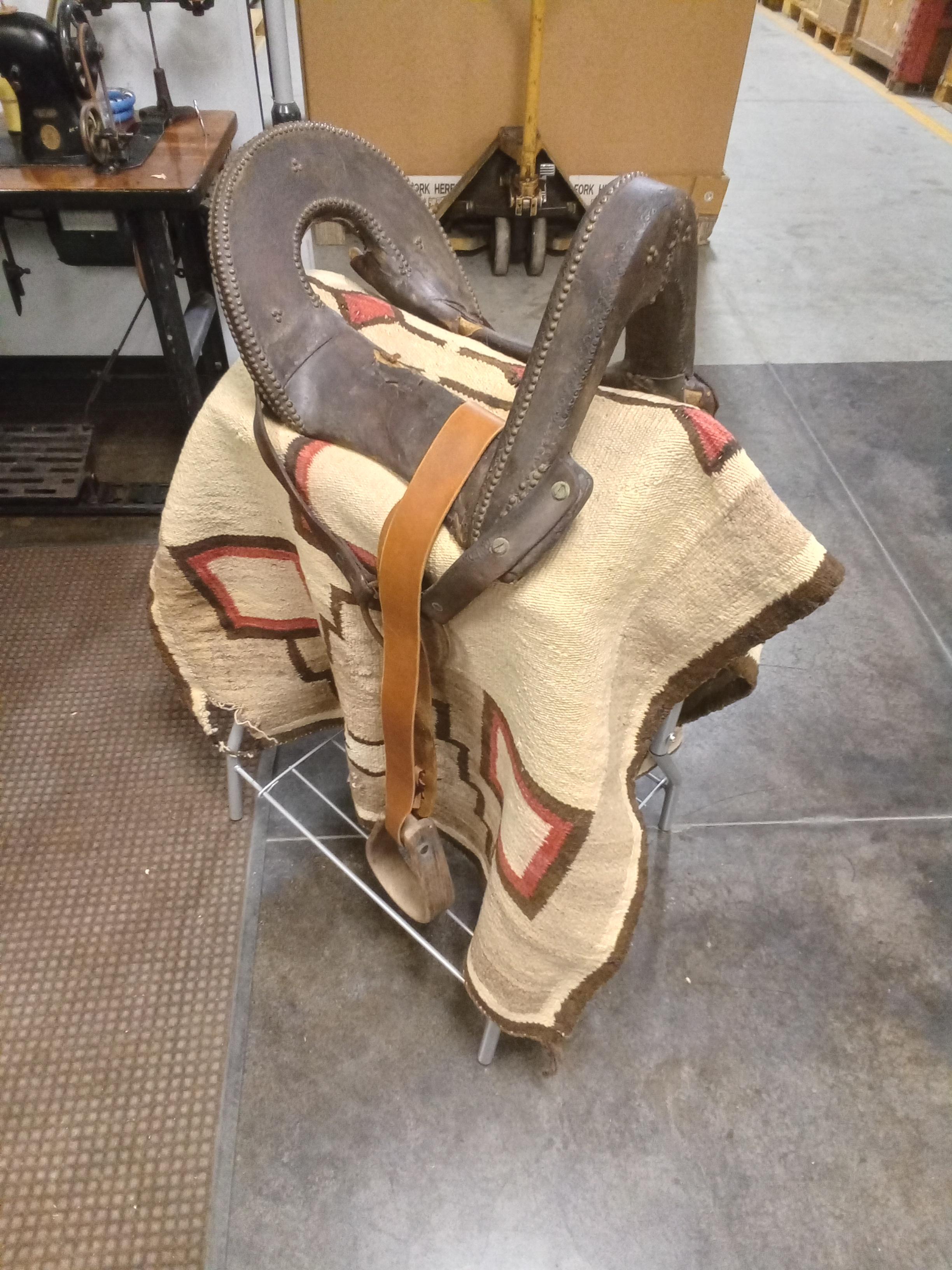
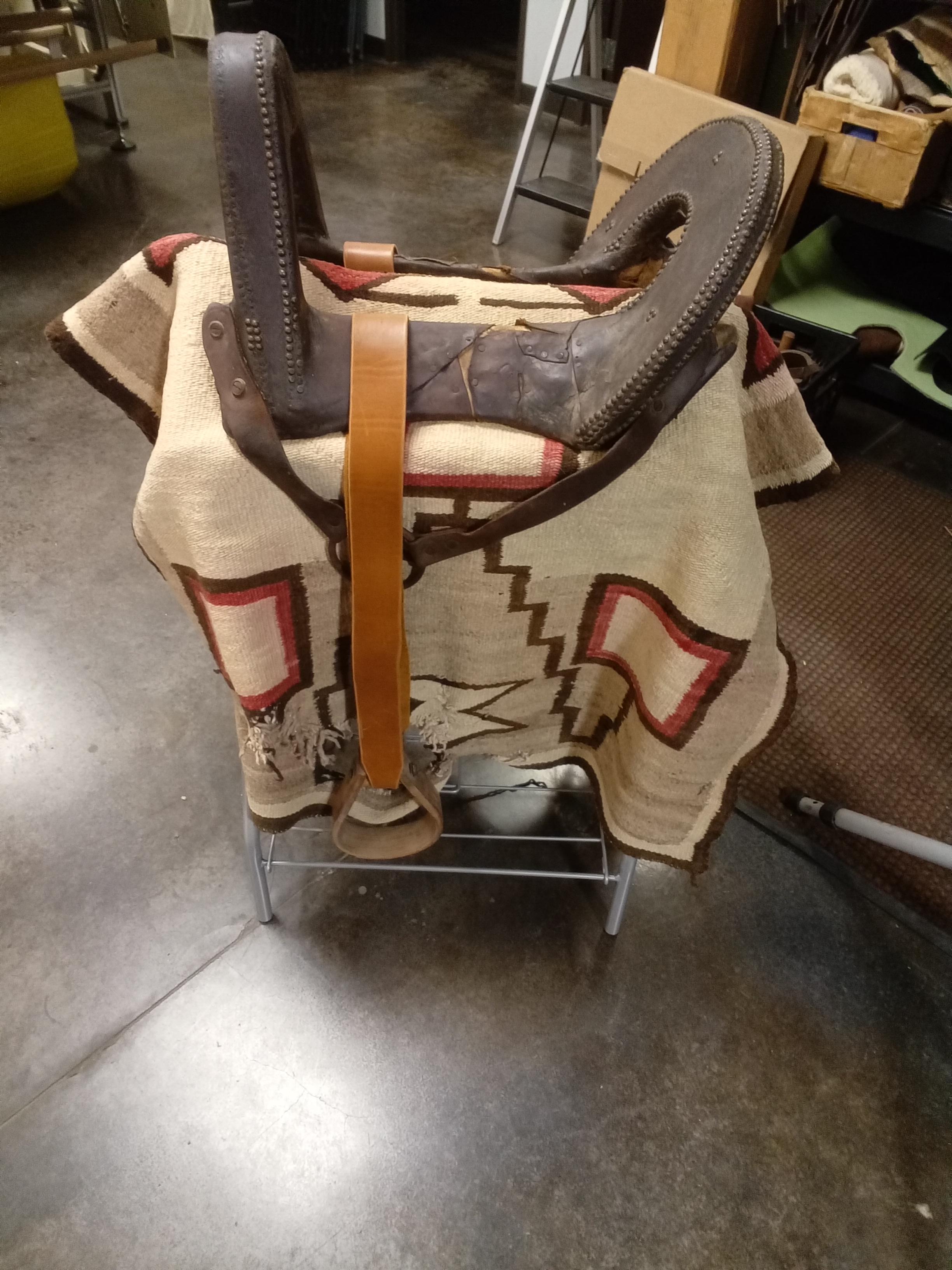
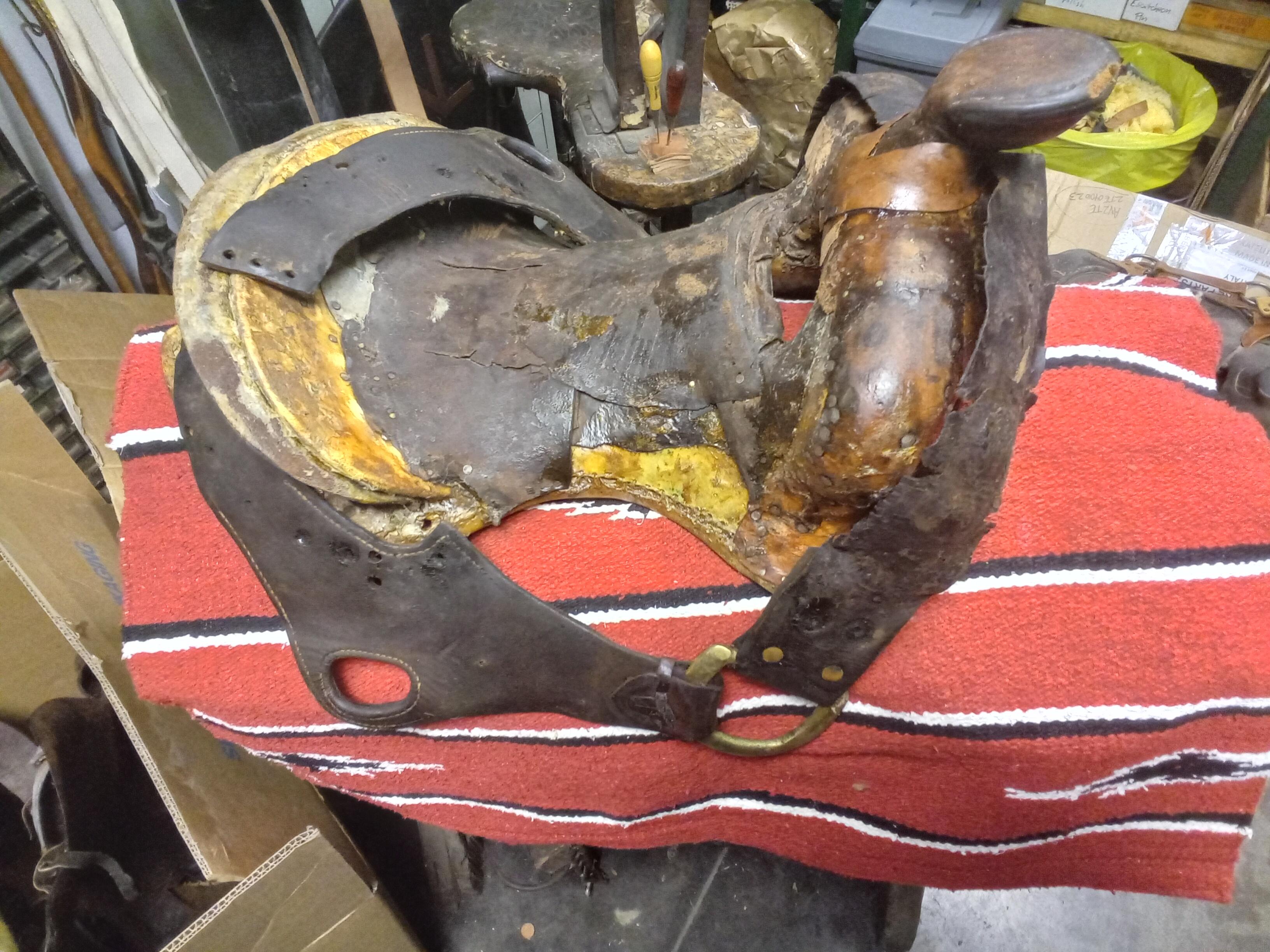
I got another saddle stand so the Navajo saddle is setup for display now. The stirrups are an antique set of wood oxbows that seemed fitting, and the stirrup leathers they are hanging from I cut and laced together to "fill the hole." I left the leather lighter color intentionally so its obvious they are not original, but might stain them to match at some point. I don't want it to look like a forgery though. At some point I plan to make a set of simple skirts as well, unless I can find some used ones to recycle from a western saddle that fit the saddle and look right with it. My goal is to complete the setup as much as I can for display, but to preserve the original saddle as it is. The Navajo blanket I a bit tattered on the ends, so I'm going to add some padding under it. My Dad used to hand sew canvas behind some of these rugs if they were coming apart, and I think this one is a good candidate for that.
-
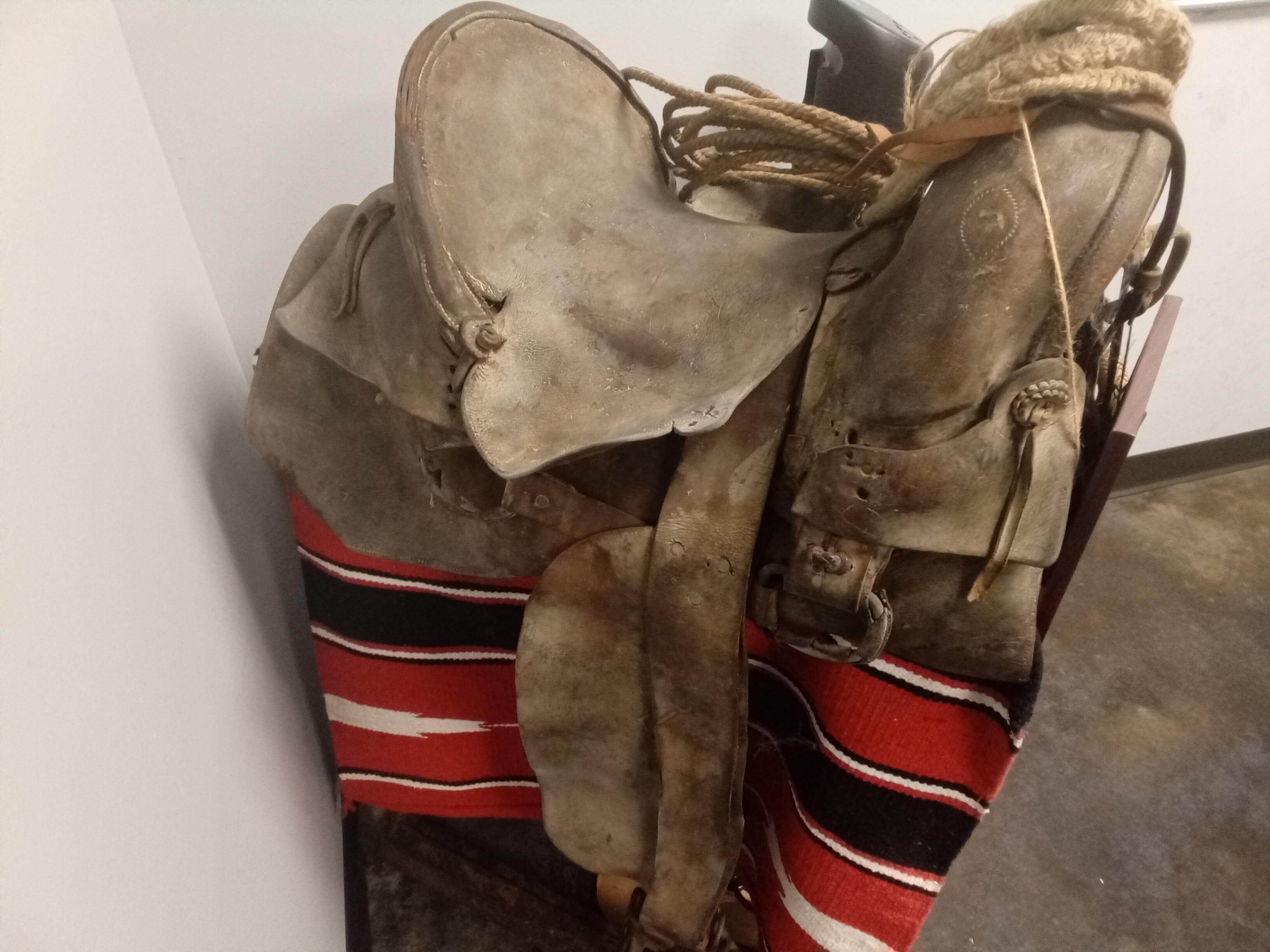
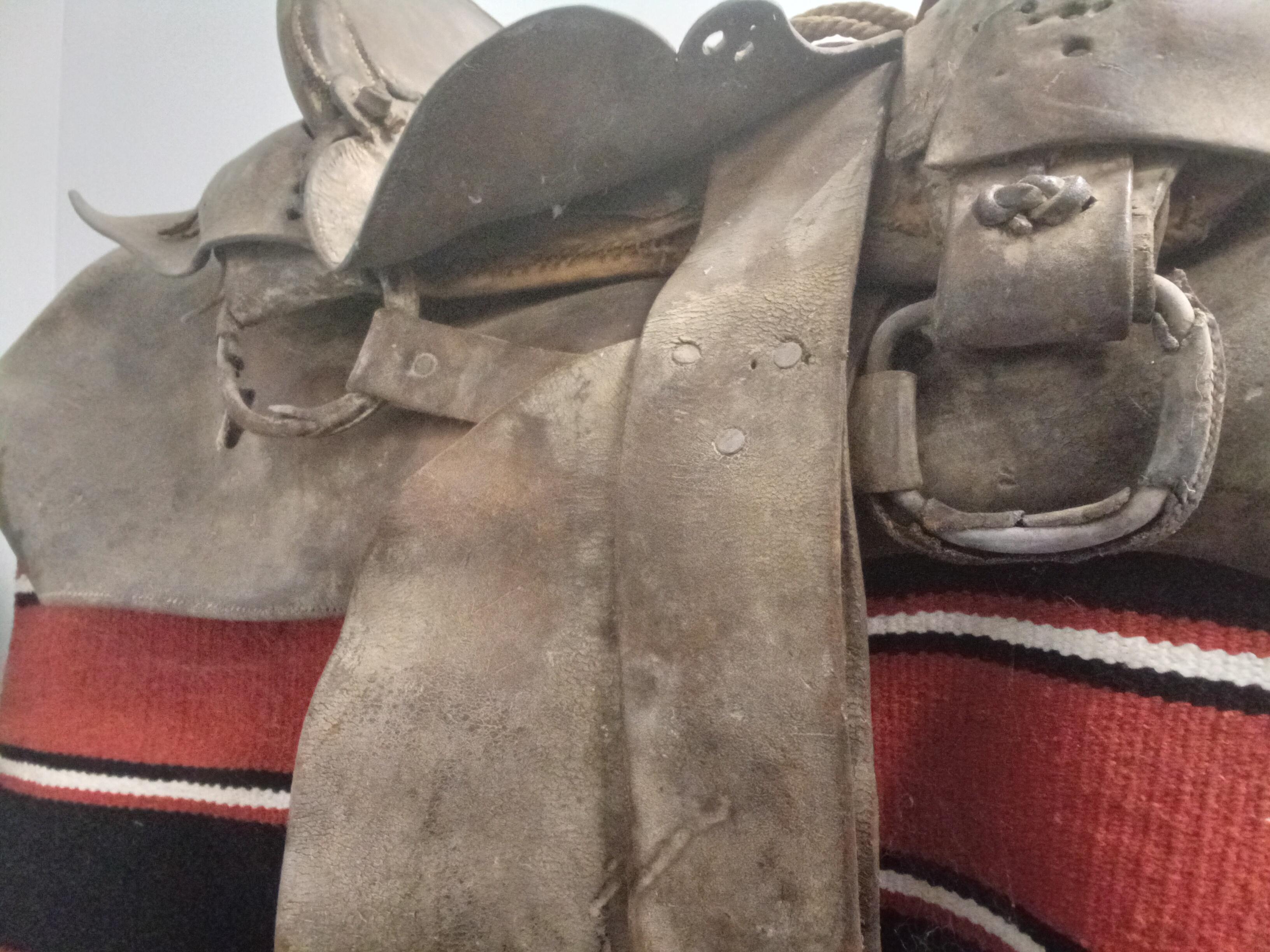
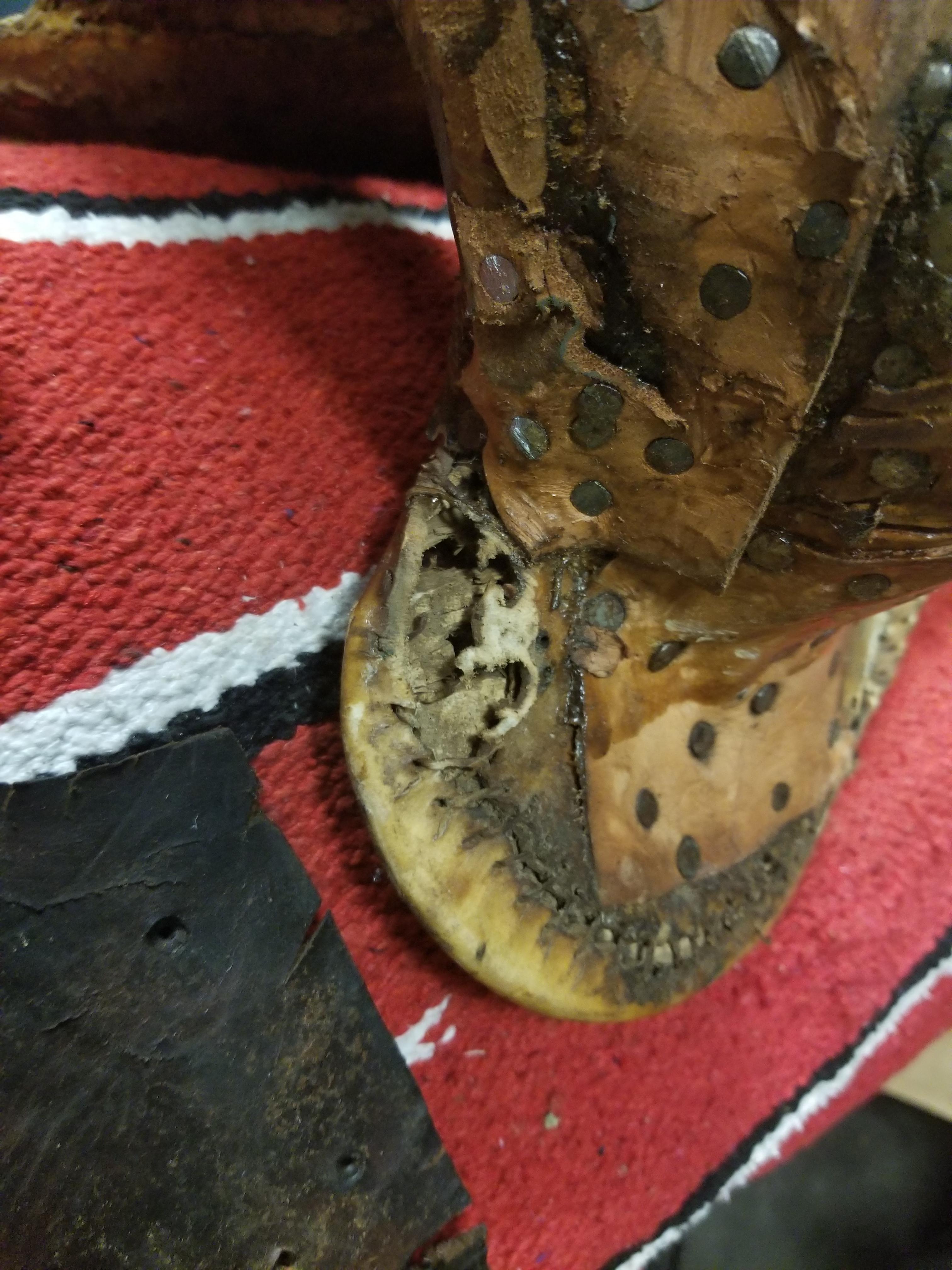
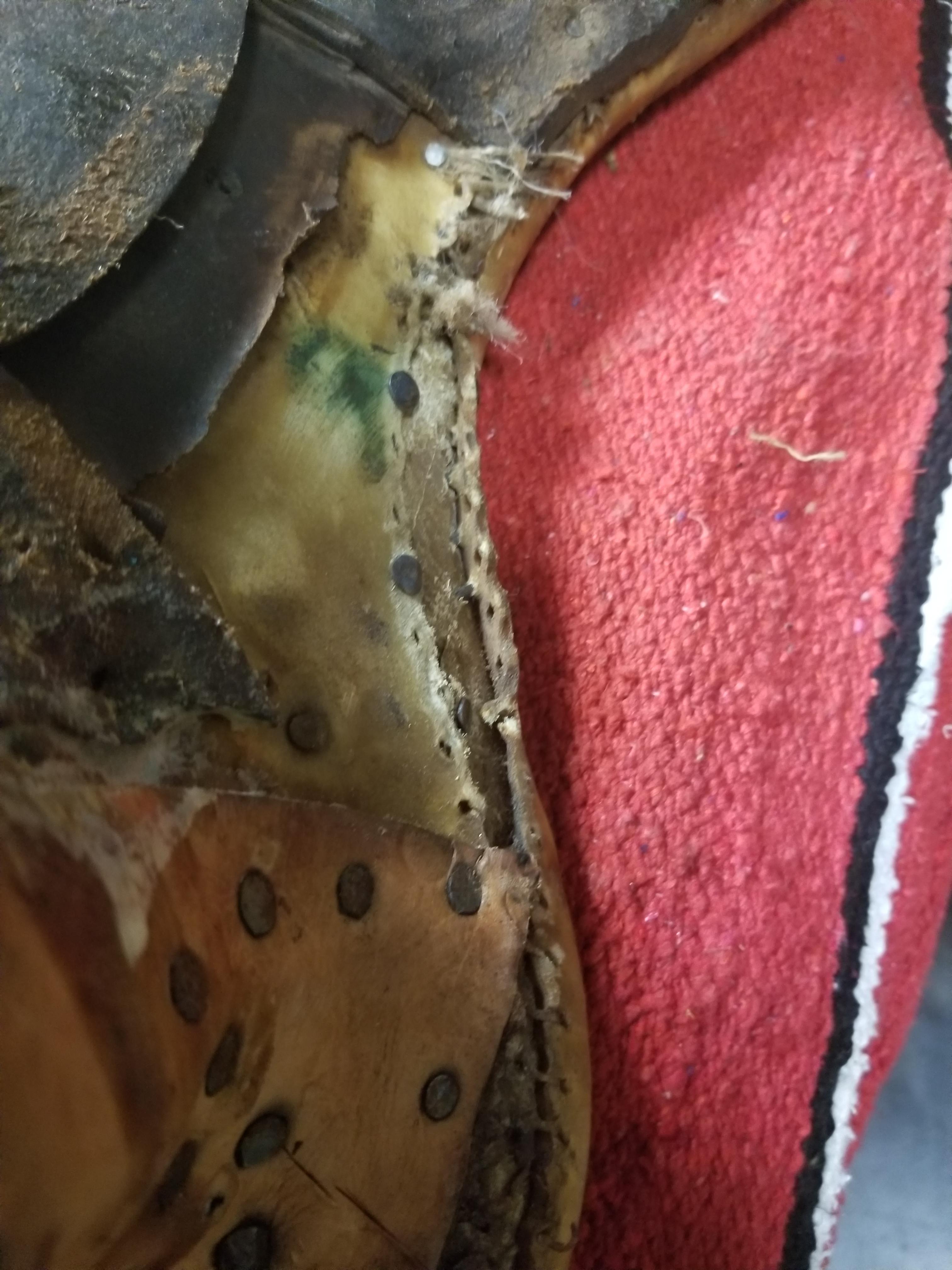
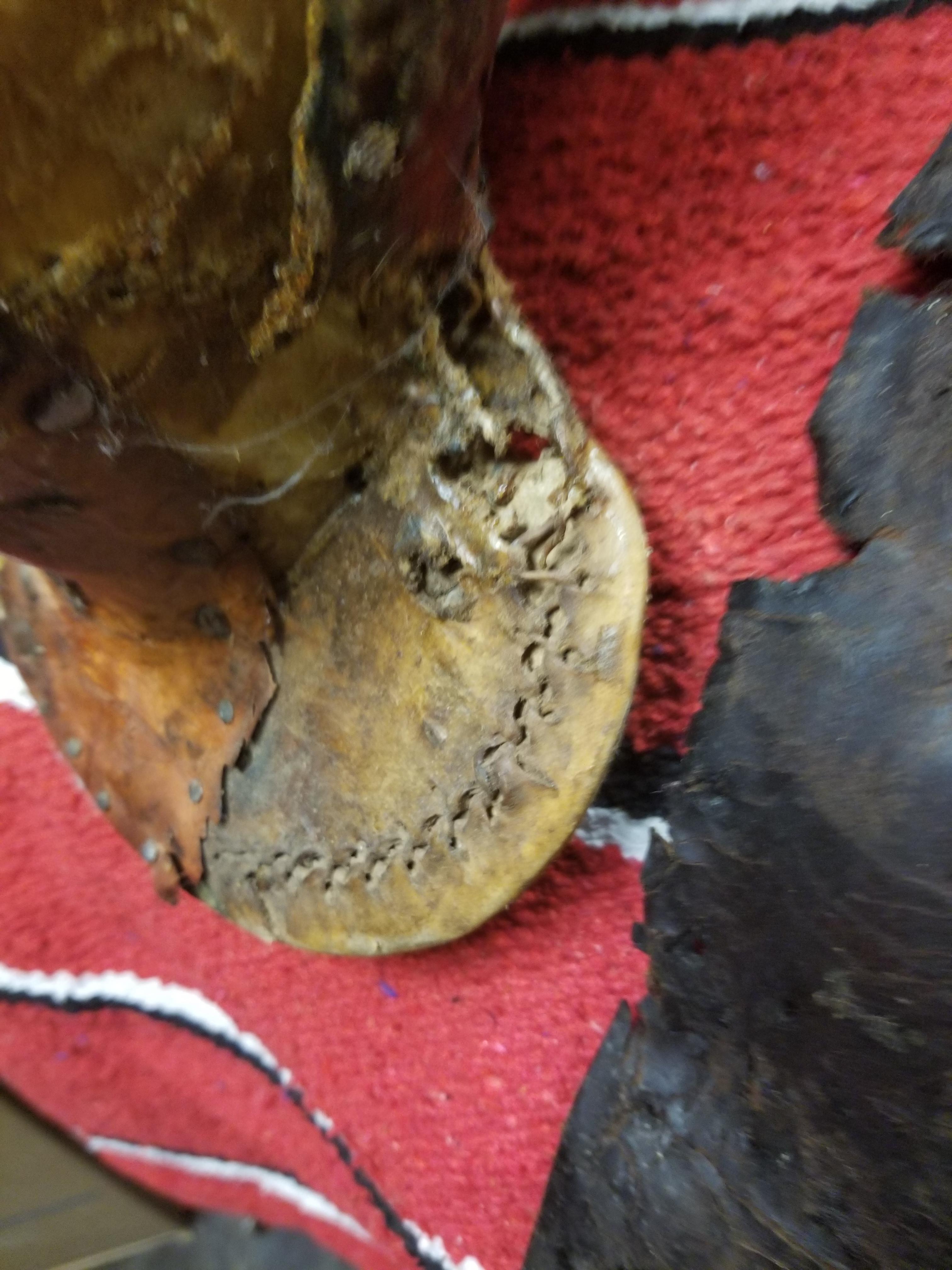
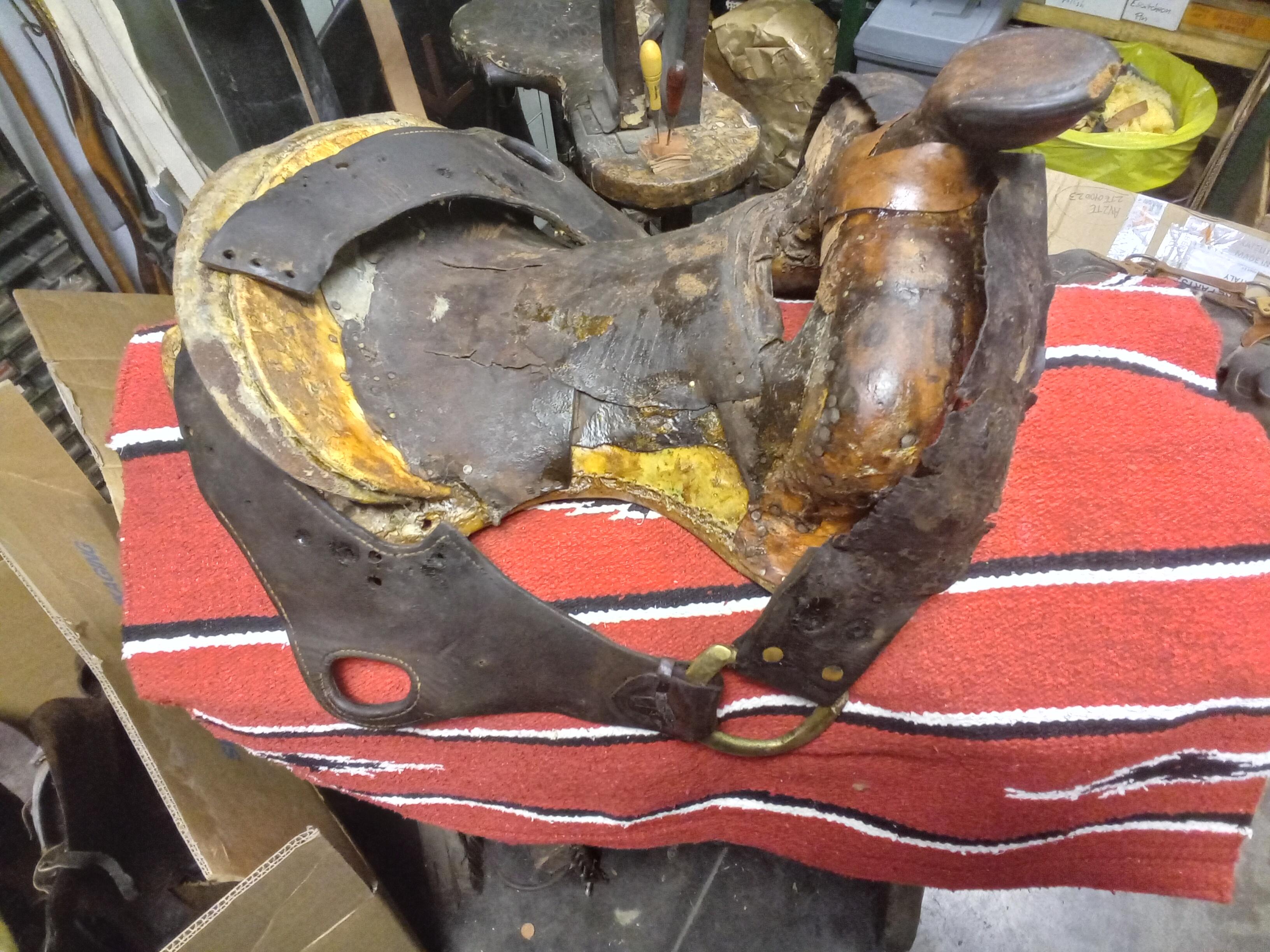
A few more pictures. This first one shows the rigging, which I think is what made this saddle "unique" compared to the more common double D rigging saddles in the 1930's. The ring placement, leather back ring, and the full wrap around anchoring on front and back all look to make this a good saddle. Now some of the rougher bits. The tree feels really solid and most of the rawhide is intact, but there are places it has torn and pulled apart and the wood under it has damage from too many nails. The leather bits on the swells are some past repair reinforcing patches and some of my Dad's prior efforts to repair the saddle as it is, and I think I want to start by removing those to really see how the tree is. I think I would rather repair the rawhide than patch reinforce it. The other thing is all those tacks are not helping the wood underneath and with my luck I'll be hitting them right and left tacking in the following layers of material, so I'd rather get them out and glue up the holes. Similarly, the ground seat is a bit more compacted and rotten than I initially thought, so I'm going to take a lot of pictures, measurements, and make a plug for the front hole to model, than remove it as well. The horn seems to be good and I'm thinking I might keep it intact in an effort to preserve at least some of the original leather? Not sure yet. Now to fix the tree ends, Initially I was thinking about filling and leveling the voids with some kind of putty epoxy, but while I think it's a good solution for the wood underneath, I'm having 2nd thoughts about doing it on the surface too thinking it won't stretch and flex the same as the original rawhide and lead to problems later. I'm thinking once the leather is out of the way, I'm going to see if I can re-hydrate the rawhide to pull it out of the way, but hopefully not induce too much moisture into the wood under it. Once the rawhide is pulled back I'll let everything dry, putty and epoxy the wood, sand it smooth, then see if I can hydrate and stitch the rawhide back together perhaps using some swatches of new rawhide. Worst case, I might need to replace the rawhide all together, which itself doesn't seem to be too much of a challenge, but getting it to integrate with the good parts of the old rawhide might be a challenge. If I must, all of the leather including the horn will need to come off and all of the rawhide will get replaced. I want to take it in steps to preserve what I can, but also intend to make this saddle every bit as durable and reliable as it once was, and that starts with having a solid foundation. I can always come back and fix and improve parts later, but fixing the tree is a big first step before everything else. If all of the leather and rawhide has to go.... then that's just the way it's got to be.
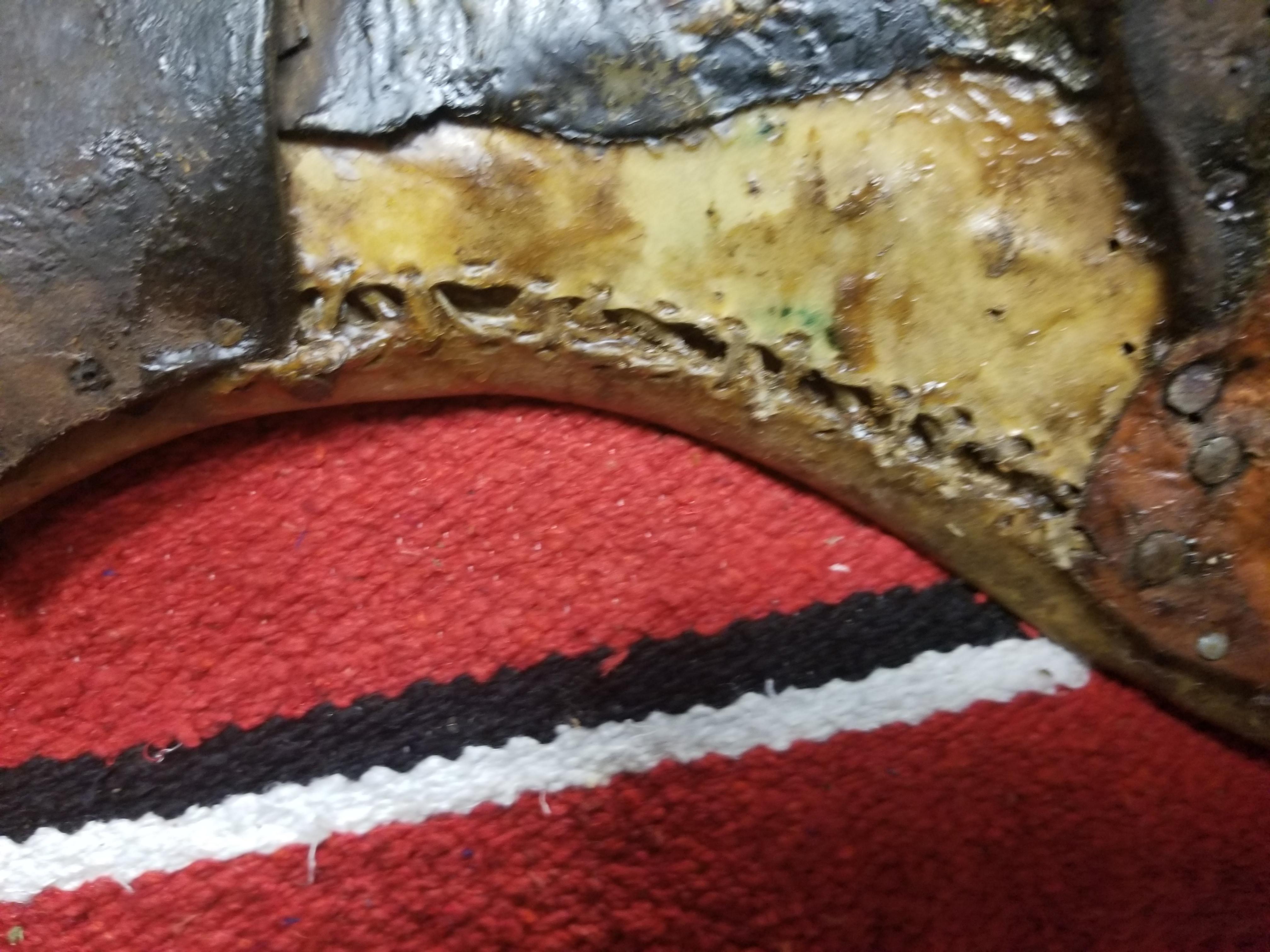
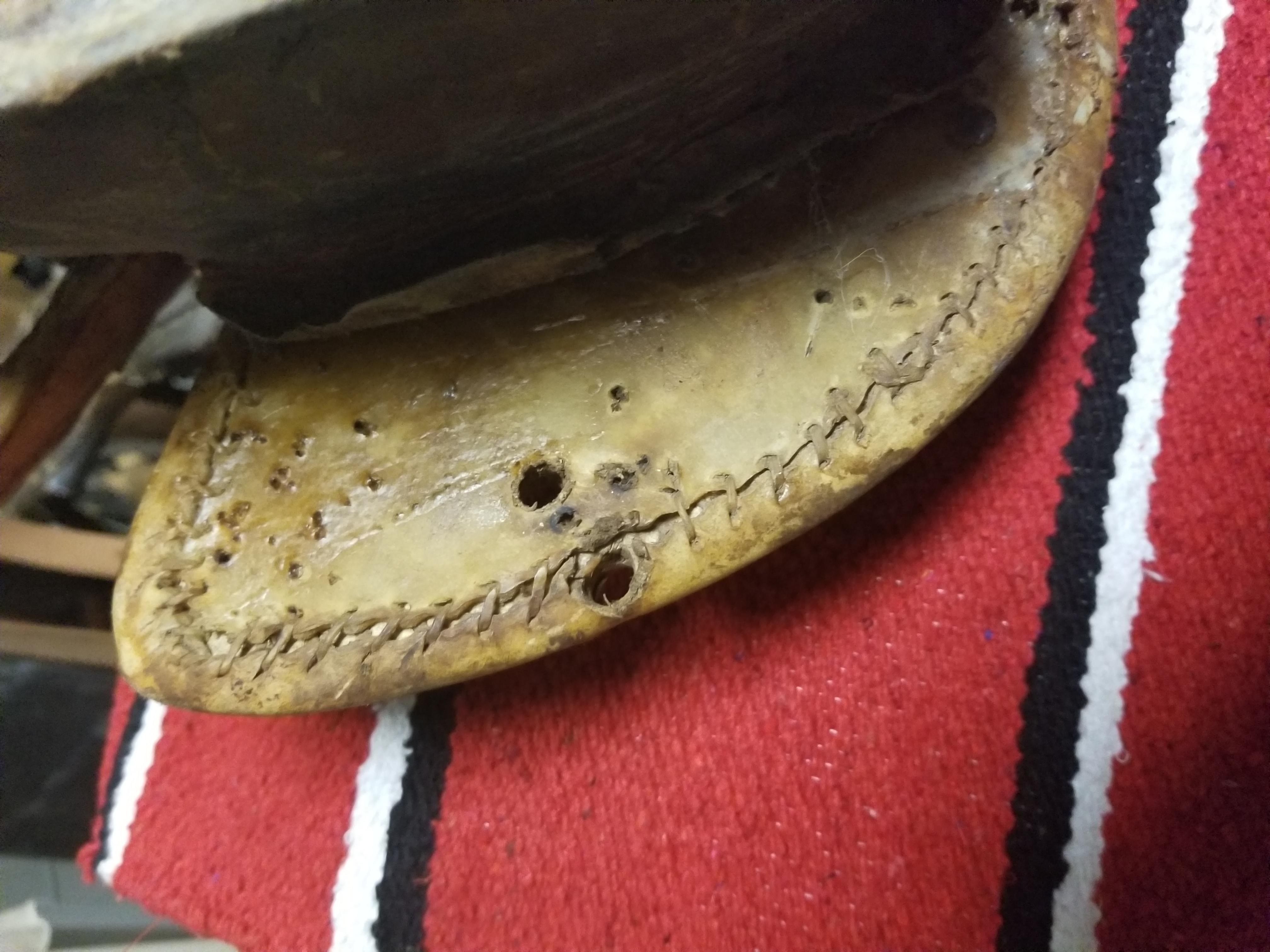
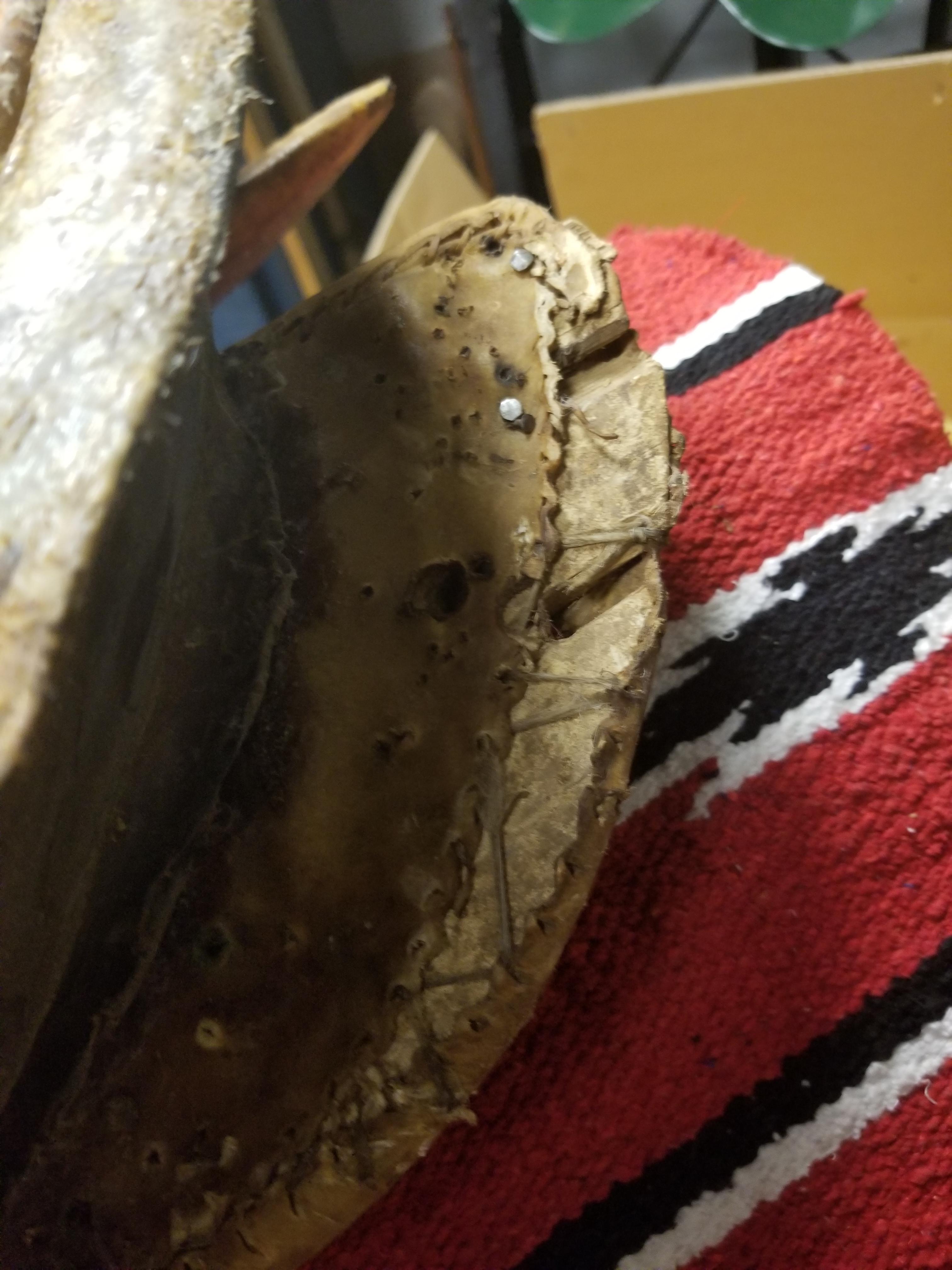
-
I've been looking for period images of these saddles, and often finding Navajo riding western saddles or the saddle being covered with blankets and clothing, but did find this one that appears to be a Navajo saddle, circa 1900. source link
(1).jpg.6444cdf123ec7b63480925eccc9ddaf9.jpg)
-
 Paper mache might be a good option. At least it could make a "master" bust that I can perhaps make a silicone mold from to make my own hollow plaster or resin busts. I think the labor and initial pattern is where people make money on these. The materials are cheap.
 -
Thanks for all the ideas guys. Keep em coming!
-
As the title says, I'm looking for a way to display several headstalls, halters, hackamores, etc. Ideally something that can hang on the wall or somehow arranged in front of a saddle stand display with a plackard nearby explaining the what and why. I've found several places that sell plastic or fiberglass busts of horses heads, but often at $300+ and that will add up quick doing multiples (anywhere from 5 to 20 depending on how far I go). I'm wondering if anyone else has done something similar? I would actually prefer less detail so it doesn't detract from the displayed item, similar to mannequins in a department store, but It still needs to be life-size and have some form of mouth, ears, jowls, and everything else that would play into a headstall properly fitting a horse. I'm looking at 3D printing them myself, but the size makes that a challenge. Also considering a very very simplified wooden frame or lamination that again has the important area's but lacking detail. Almost like the heads used on steer roping dummies that have horns, but are not a fully modeled cows head. The alternative of course is hanging them on a hook like you would in any tack-room, but being able to see how it fits and why pieces are where they are is the real intent. This is more for educational display than for storage.
-
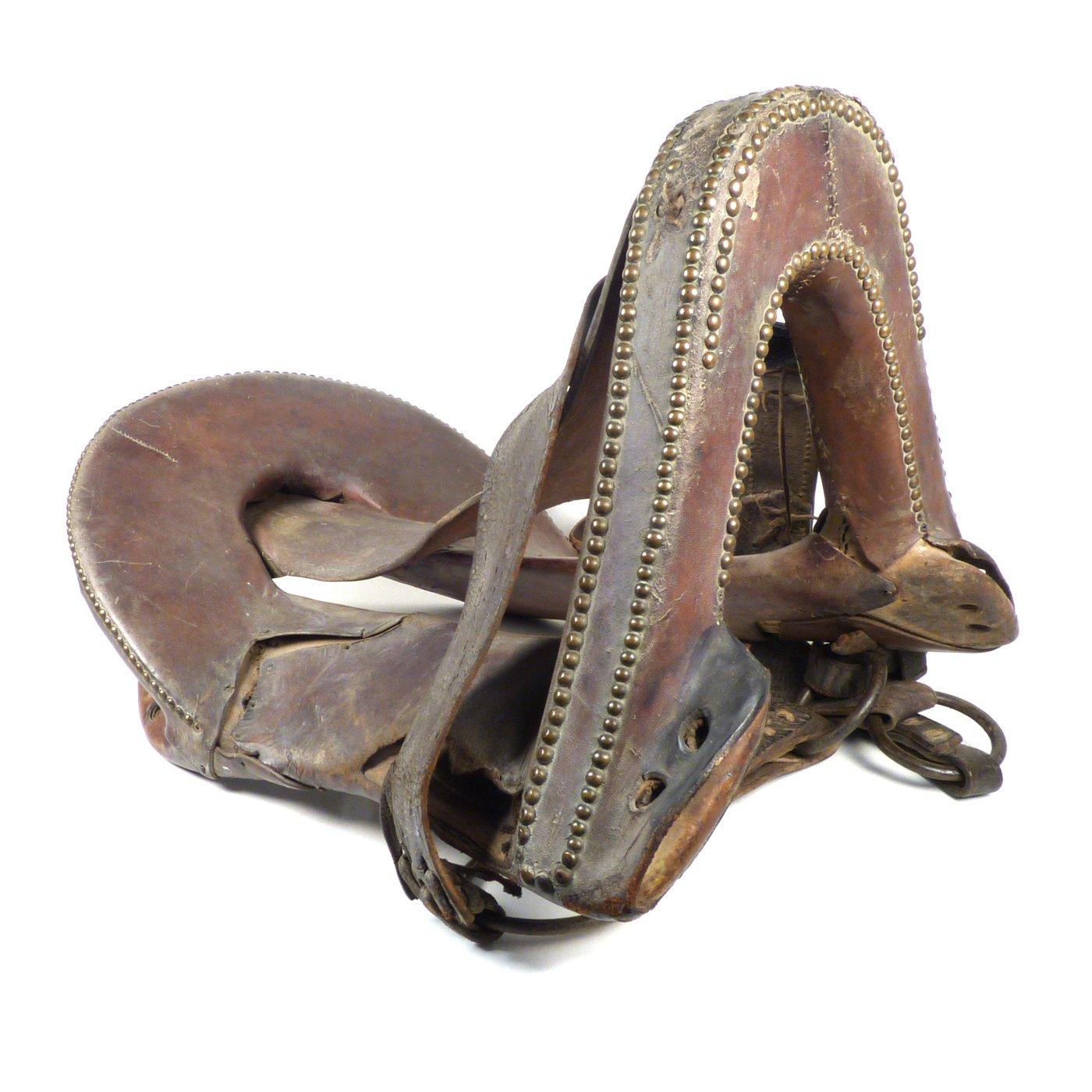
Here's a good Write up from Bill Manns on Facebook: (link) Rare NAVAJO SADDLE I just acquired this 1870s-80s Navajo saddle in Arizona a couple of years ago. The Navajo were the only tribe that made and used a saddle that was strikingly unique. Other tribes made simple rawhide covered trees of a mostly generic design except for the women’s saddles of the Crow, Sioux and Blackfoot in the northern plains. The Navajo tree evolved over time but was inspired by the early Spanish saddles appearing in the Navajo lands in the 1600s-1700s. Later they were simplified along the style of Anglo saddles used by mountain men arriving in the Southwest during the early 1800s. Much of the leather used by the Navajo in saddle building was recycled from old, damaged Anglo saddles. Not at all uncommon to see cowboy saddle fenders on an old Navajo saddle. The sling seat, cushioning detail was common on several styles of American saddles in use during the 1700s well into the 1900s. The rigging is a simple variation on the Sam-Stagg rigging that became very popular on Western saddles starting about the time of the Civil War. Brass tacking is a common detail on all Navajo saddles. Navajo horsemen were till using these saddles up until WWII. A truly handsome saddle and beautiful relic of the early Navajo equine culture.
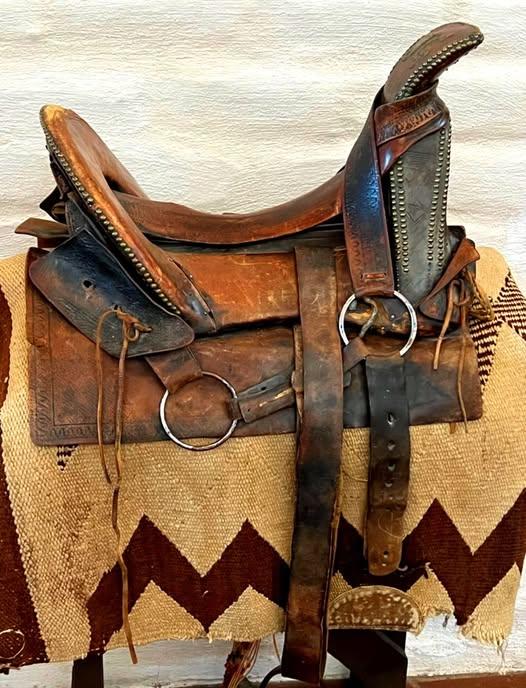
-
And another. This one has the same swells construction, but also has a horn. It's referred to as a Navajo ladies saddle. According to the description linked bellow, the horn was used to hold gear that the ladies would pack, including a baby board, while the mens saddle didn't have a horn because it would have been in their way hunting and fighting. It also has skirts, and the tree sides are similarly leather wrapped, so I think mine originally likely had skirts tied under the sides. I find it interesting seeing the similarities between western saddles and these Navajo saddles. Link The link has more pictures of this example.
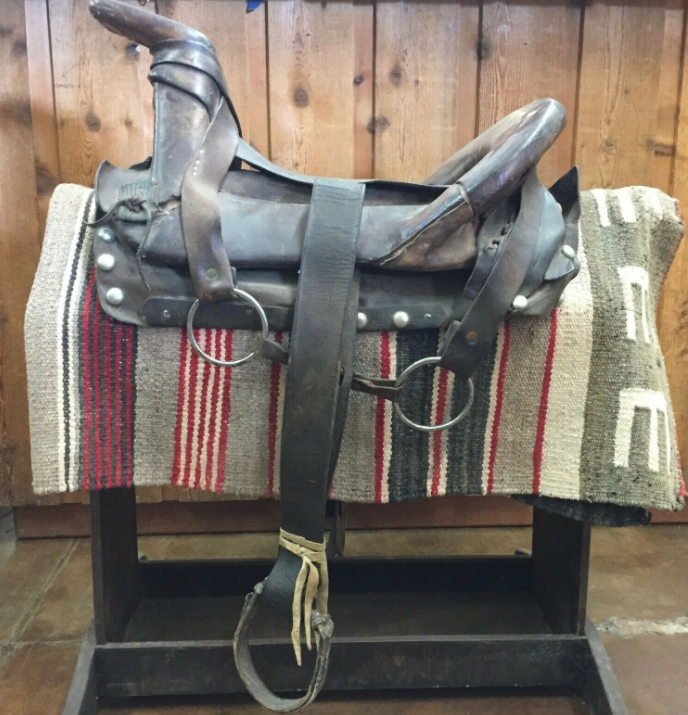
-
Here's another Navajo saddle. The stirups don't look correct (who knows, they could have been traded for?), but the stirrup straps and cinch look original. This one appears to have skirts as well.
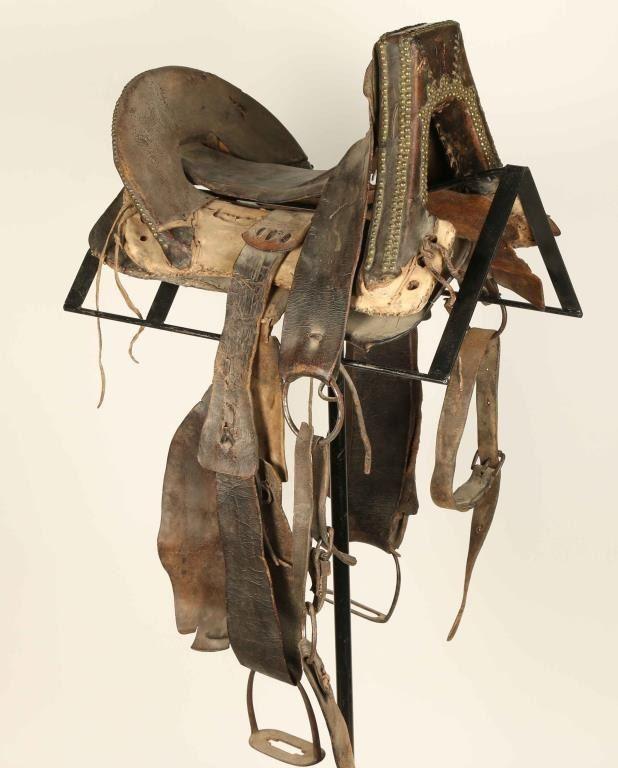
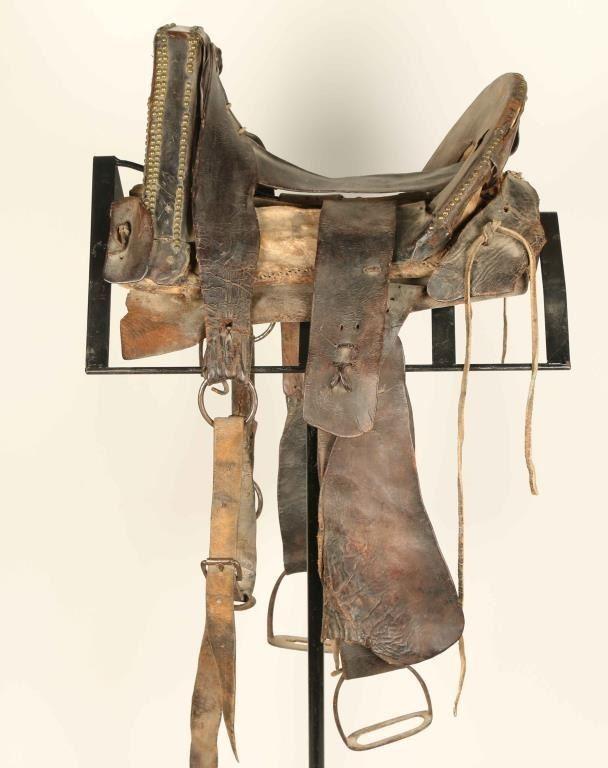
-
I 100% agree. The only conservation I'm doing with this one is periodically (5-10 years apart?) cleaning conditioning the leather (no neats-foot oil). I've used generic saddle soap before, as well as a product called Victoria Cream that works well hydrating and sealing antique leathers. One of the rigging rings is missing and appears that it was cut or torn from the leather. If I can find one of the same diameter and similar patina, I plan to tie it in place with some string, but the original leather would remain modified.
-
I found a very similar saddle, referred to as a "Navajo Mens Saddle". Same basic shape and construction and same brass tacks. Sounds like Navajo blankets would be a perfect fit. Link
-
I'm going to do some digging and see if we have a set of oxbow stirrups in our collection that fit with this saddle. If so, I'll make a pair of simple stirup leathers to hang them (not permanent of course, but I'll try to color match them to the rest of the leather). I'm thinking about moving this saddle from the shelf it's been on to a saddle stand, as that would allow the rigging straps to hang more naturally. My mom has a few Navajo blankets/rugs that need to get out of her closet that I think one would fit in with the display as a saddle blanket.
-
Thanks for the insight. Yep that's about what I found when looking for other examples of squaw saddles. Same concept, only this one appears to be more geometrically square and the cantle and swells seem to be slightly more "western" in nature. The brass tacks seem to be unusual, but it would make sense that they were traded for. I wonder what the stirrups would have looked like? I imagine they would be similar concept to western saddle stirrups with the straps wrapping around the sides of the tree, only being exposed instead of under a leather seat (I imagine some kind of loose blanket padding was used between the saddle and the rider?).
-
Here's another Pic showing the rigging from the Porter saddle thread. This is interesting as it's similar to Al Stolemans style of double rigging, but also has an additional reinforcement of having the leather for the front rings wrap clear over the swells. This kind of makes sense as the front rings have so much more holding responsibility than the rear, which seem to mainly stabilize the saddle. I don't want to detor too much from the standard saddle design for this build, but I'm wondering if the very basic leather tabs that held the rings previously contributed to the bottom ears of the tree breaking off? If so, it would be good to go a step further in how the rigging is mounted to the saddle. I did some sketching tonight and am thinking about doing a simple hybrid of the Stoleman double ring design, and the Porter design. The Leather would need to have the edges tapered and skived so it dosn't mess with how the seat, jockeys, and swell cover mounts, but it could help the geometry of the tree. I'm going to stick with the welded rigging rings, but carry the leather for the front rings over the swells, and the leather for the back rings around the back of the seat with the same strap continuing forward in front of the rear rings to make the connecting strap. It shouldn't radically alter the appearance and outer design of the saddle, but improve how their holding is distributed across the tree. I'll make a card-stock paper pattern first, and will make patterns for all the other pieces as well which might help one day to eventually build out the unused saddle tree and rebuild the junk store saddle pictured previously. This saddle didn't have a metal floor panel, and there was no hand hole under the swells, but both I plan to add when I do the ground floor leather.
-
Just to give some perspective, these are some of the family saddles I'm taking inspiration from, and eventually want to repair, restore, or preserve. This saddle my grandfather had made in the 60's and was one of his general use working saddles. It's one that's still usable. This one was a general use saddle on grandpas ranch, though it was mainly used by my Dad in high school. He had a drop calf he raised on a bottle and eventually trained it to ride and do circus style tricks as a rodeo act, and from the pictures I'm 90% sure this was the saddle he used. This saddle was my great grandfathers and goes back to the 1880's. It's one we've decided to preserve and not restore, as every piece would need to be replaced, and the tree's shape wouldn't fit modern horses anyway. The wear and tear on it to me speak volumes of hard life in the west and give me gratitude for what I have, so I wouldn't want to lose that restoring it. As you can see, these are all standard double ring rigging, and I'm thinking I'll use their ring placement and proportions on the youth saddle in this thread. I also started a thread for a saddle my Dad started before he passed, and I hope to complete. Restoring a Porter Saddle I'll also start threads for each of these and some other saddles eventually.