


TomE
-
Posts
1,287 -
Joined
-
Last visited
Content Type
Profiles
Forums
Events
Blogs
Gallery
Everything posted by TomE
-
I don't have a clear plate to view the hook, and it seems to only happen with the holster plate. I'm going to reconfirm that leather sews without skipping stitches using the holster plate. I am guessing that the skipping is caused by friction on the upward stroke through biothane, causing flagging even though I'm not feeling it. With a size 25 needle and #207/#138 thread the knots were on top, even after considerable decrease in top tension, so I installed a size 24 needle and that buried the knots. I guess I could switch back to the larger needle and try increasing the bobbin tension. If I can't find the right needle and thread combination then I guess lubricating the thread is the next step.
-
I am starting to sew halters made from 2-3 layers of Biothane Beta 520 super heavy (3.5-4 mm thick) on a Cobra Class 4. I am having problems with skipped stitches, mainly when backstitching 2-3 layers near hardware. I am using a holster plate that allows me to stitch closer to a center bar buckle. I did make small adjustments to the hook timing, following @Uwe's video on Youtube. Thanks, Uwe! The machine sews leather fine. My current setup for Biothane is the Hennigan Precision holster plate with feed dog, the Hennigan narrow presser foot set, #207 thread top/ #138 thread bottom, size 24 794 7x3 round point needle, and 5-6 stitches per inch. This setup buries the knots in a single layer of Beta 520 super heavy. I have also tried #277/#207 thread with needle sizes 27, 26, and 25. I've done a limited test of cutting point needles but I like the thread tension with round point needles. I have used the stock holster plate and harness feet that come with the Class 4 for the larger thread and needle sizes. Still get occasional skipped stitches. The information for needle choices that I've read in this forum and seen on Youtube is contradictory. Most suggestions are to use round point needles that are 1-2 sizes larger than what would be used for sewing leather. I haven't yet tried thread lubricant, and I haven't played with presser foot tension. I don't notice flagging while sewing. I mainly sew bridle leather on this machine and would prefer not coating the thread path with lubricant, but I am open to suggestions. I appreciate your advice on machine setup and best practices for sewing Biothane.
-
Good looking seat. Still trying to work out how you constructed that shape. Like the valve stem caps too, and the fork reminds me of my brother's Lemon Peeler from the 1960s.
-
Ha, ha! I guess it lives up to the name in the hands of some riders. Thanks for your kind words, Ron. Thank you, @JDFred. Already planning the next one in my head.
-
Yes, the everyone is an expert mentality is particularly annoying to me with regards to science and medicine. Google/AI turns up random facts (and outright lies) without any context and these are amplified in the echo chamber of social media. Think I'll stick to leathercraft at this stage of my life.
-
Thank you, @BlackDragon. Got some positive comments about the bridle as well, so all is good. Had to look up the quote. I'm stuck in the 70s-90s with my musical selections, but I have an abiding interest in pop culture/Americana.
-
The folks at The Steel Stamp Co tweaked my logo to make a small impression. Very happy with their work.

-
@Mulesaw Thanks, Jonas. I agree that it's up to the rider to fit their tack correctly. At FEI sanctioned events they've begun checking noseband tightness prior to horses entering the ring. I guess that new rule got the attention of the keyboard warriors. I do add a leather flap under the buckle of a simple cavesson to pad the buckle. The leather flaps under the dee rings of this crank bridle are a bit unwieldy. Next I plan to use a smaller dee ring and contour the flap differently.
-
Interesting. I thought dog fanciers are a friendlier bunch. Perhaps it’s a sign of the times.
-
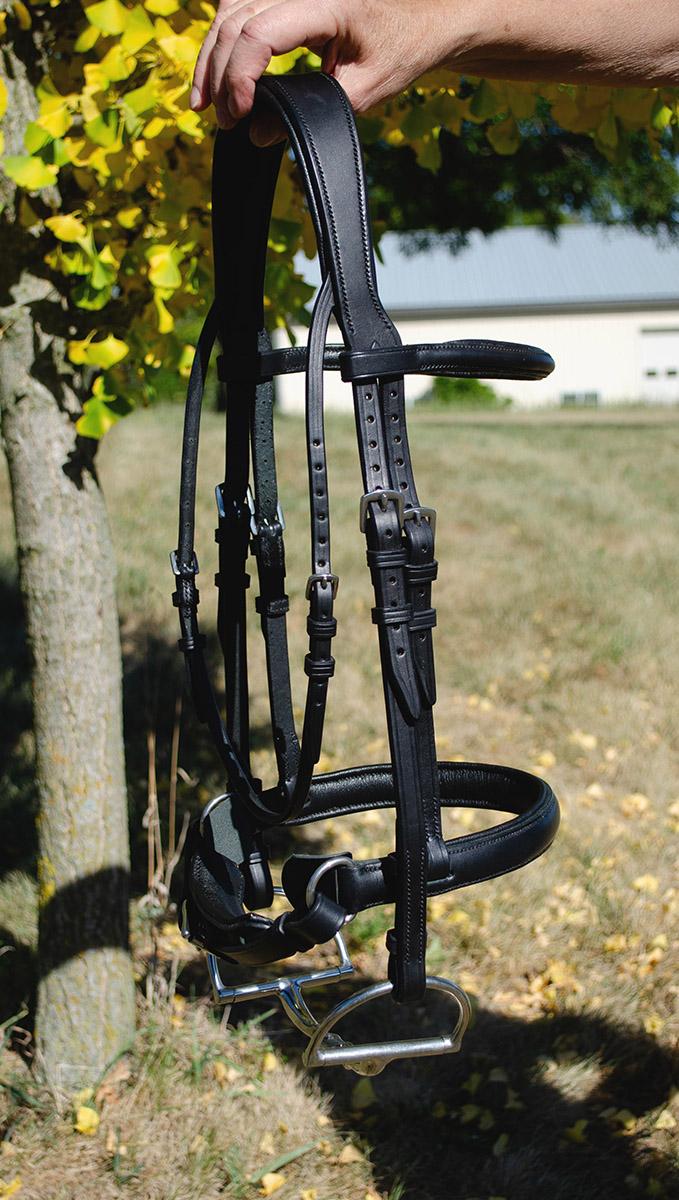
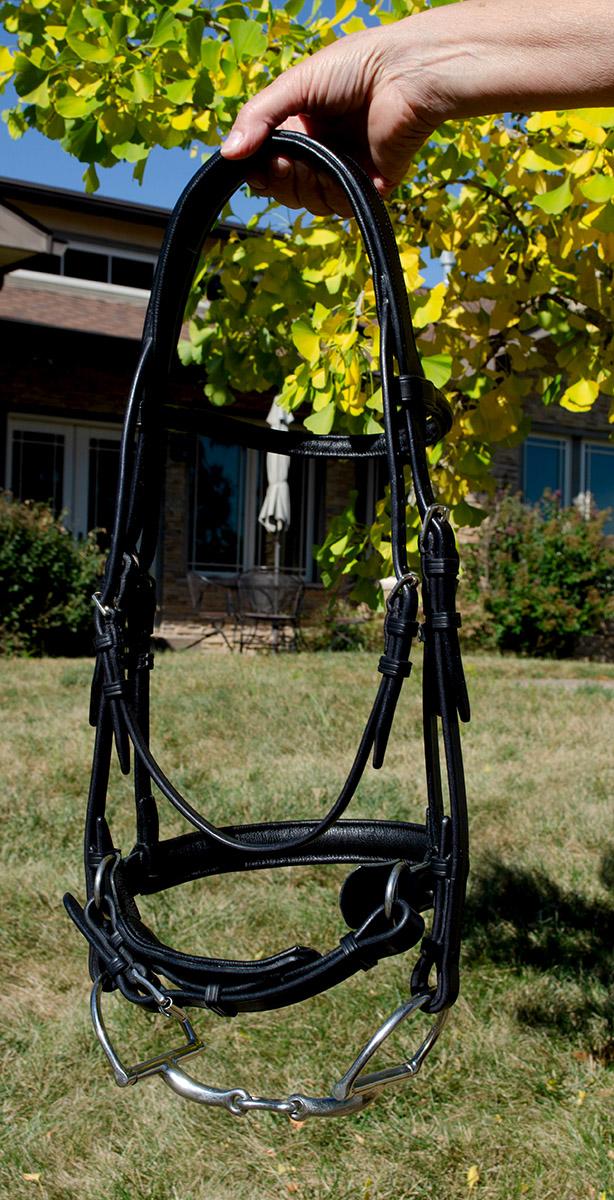
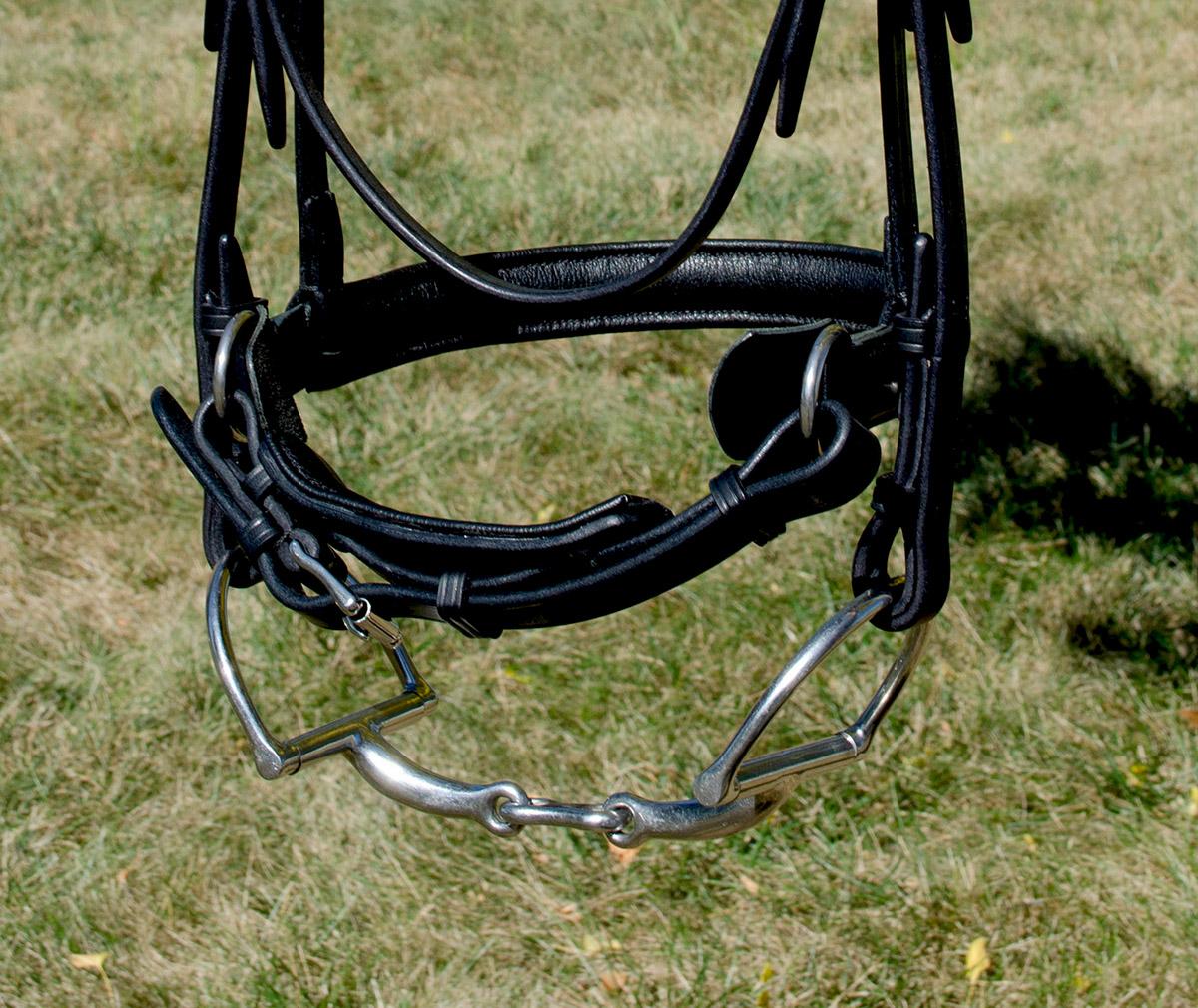
I usually make bridles with a simple cavesson noseband - a continuous strap of leather and the buckle off center under the chin. This bridle has a Swedish or crank style noseband that evokes strong opinions. The crank is two-piece construction with a padded strap that can generate some leverage when tightening the noseband. Proponents say that the crank style provides flexibility and even pressure under the jaw. Critics note that the crank lends itself to overtightening, causing discomfort. The name "crank" is a rather unfortunate choice. I posted the bridle on social media and sure enough some of the comments were "cranky." Maybe there's no such thing as bad publicity? I enjoyed making this noseband but the construction takes considerably longer than a simple cavesson. At least I have the ability if someone asks for one.
-
Good looking bridle! Very tidy work. That should last a long time.
-
That's a nice looking case! I like the shape and the blue edges. As far as price, I'm happy charging materials cost plus $40/hr shop rate to cover time spent on the project, maintaining tools and machines, etc. I figure some waste into my materials cost. I aim to distinguish my work from what is commercially available in order to set a price point that I'm happy with. Since I don't tool leather that means quality materials, unique construction, and/or or decorations that personalize the item. Most of the horse tack that I make is made to measure and I'll do free adjustments/alterations to satisfy the client. So they're paying for a high level of customer service, which gives me satsifaction and generates repeat business and recommendations.
-
Congratulations on your retirement, Bruce. This sounds like a great service for the community.
-
What thickness of leather, and do you need the bevel on straight or curved edges? I changed out some parts on a bottom feed bell skiver to create a beveled edge on 9-10 oz veg tanned leather. In the example below the angle is less than 45 deg. - probably 30+ deg - but I think I can get a steeper angle by adjusting the roller foot.
-
I'm impressed with how well the bridle leather submitted to your tooling. Very nice work. Mark of a pro is being able to fix things that aren't working out as originally planned.
-
I've had occasional problems with 2 coats of Barge gumming up my edges. I've switched to 1 thin coat that I heat with a gun before assembly. Produces a strong bond with less mess and it speeds up my process. It also solved a problem of glueing pieces that are cased to mold a raised leather feature. After a little heat the glue is stuck to the wet leather and the leather remains mold-able (if that's a word).
-
Some folks commented on Youtube that Makers sells a less expensive water based contact adhesive that is comparable to Aquilim 315.
-
Regarding the glueing of hides. Don Gonzales published an interesting-to-me video on glue strengths. The Aquilim 315 water-based contact cement produced a strong bond when applied to one surface and immediately assembled without drying. I use Barge but think I'll give this a try. I like cutting straps one at a time so I can check the quality and decide how to use each strap.
-
Not sure if I understand your question. You can make the narrow end of the strap as a separate chape that wraps around the front and back of the wider part of the strap. The wider strap would be sandwiched between 2 layers of the chape with the grain side showing on both sides of the strap. The wider strap could be lined.
-
Is that the Hennigan holster plate with a feed dog? How is that working for you, compared to the Cobra holster plate?
-
Mike and Gretchen Graham, the owners of Ruxtons Trading Post in Manitou Springs CO, know western saddles. They used to write a column on appraising saddles for the Western Horseman magazine. Could ask them about your saddle. https://ruxtons.com/
-
Questions on tooling English Bridle
TomE replied to DoubleKCustomLeathercraft's topic in How Do I Do That?
A Google search of this site turns up a number of threads about tooling/stamping bridle leather. "site leatherworker.net tooling bridle leather" I use a fair amount of HO bridle leather for making English tack, and appreciate that it is firm and has a smooth "moss back." In my limited experience, Wickett and Craig bridle leather has a softer temper. If you're seeing loose fibers that might not be the best part of the hide. I find that typically more than half a side of HO bridle leather is firm, smooth backed, and suitable for straps. Bridle leather is stuffed with fats/waxes that impair water adborption so it won't case like regular veg tanned. An alternative to carving/stamping would be to carve designs without stamping. Jean Luc Parisot has some nice examples on his Instagram account. -
This tack puller has worked well for me on English saddles. https://a.co/d/hplCLS2
-
I don't have experience making headstalls, but a Google search of this site using the syntax "site leatherworker.net headstall" turned up quite a bit of information. Seems folks use bridle, harness, and latigo for headstalls and some recommend doubling the leather or lining with latigo. I've been very happy with Hermann Oak bridle, harness and latigo leathers for making tack. Their bridle leather has a firmer hand than the bridle I ordered from Wickett & Craig. Beiler's Manufacturing in Ronks PA sells HO bridle and harness leathers at good prices, and a variety of unnamed bridle, harness, and latigo leathers that I haven't tried. I've been very happy with the quality of Beiler's merchandise and their service. No website - call for a catalog. There are a number of other retailers that sell HO leather and many are listed on the website of the Hermann Oak Leather Co. You can buy directly from the tannery if you order a roll (5 sides) or if you're purchasing item(s) that aren't stocked by their retailers. For example, I buy sides of chocolate harness leather in "rein selection" (big cow size) directly from the tannery. They fill orders (finish the hides) as they are received and that takes 5-8 weeks in my experience.
-
That's a handsome bag with a nice finish. I like the stitching, the handle, and how you attached the shoulder strap.