All Activity
- Past hour
-

Special Holster for Special Friend
JSage replied to Dwight's topic in Gun Holsters, Rifle Slings and Knife Sheathes
Dwight, You do do nice work! May I ask for you to post a photo of the back? -
Equipe saddle, repair of worn saddle flap
Mulesaw replied to Mulesaw's topic in Saddle Identification, Restoration & Repair
Thanks for the very nice words Chuck. It is so frustrating, that I haven't got the answer to why the wear is only on one side. It is really puzzling. I had thought about the "one way" idea too, but it just doesn't make any sense when it is a regular dressage saddle. Equestrian vaulting would fit that category, but that is a completely different type of saddle. And also I am puzzled, why the original owner didn't notice that the saddle got so worn in one side and not in the other side - and in time did something about it. Take care Brgds Jonas - Today
-
Internship and maybe a new start
Mulesaw replied to Tove09Tilda's topic in All About Us and Off Topic
@Tove09Tilda Hi Tove Sorry to hear that the internship wasn't a success. I think that @BlackDragon has a pretty good point in that you can follow your passion without it being your career. So I really hope that you'll find a job where there is: Nice colleagues, A friendly and supportive environment, Enough interesting tasks to make you feel occupied. Best regards Jonas -
Tsunkasapa, when I originally saw your thread last night, I found I couldn't respond, as it cut too close to the bone, even though my husband died in 2004. I know what it's like to stand by and watch a loved one fade away from cancer. Time softens the pain, but it never completely leaves. I am so sorry for your loss. And I hope that getting back into leatherwork will help you get your life back and help with the pain. I wish you all the best! Jane
-
Interesting. Finding bolts that fit properly for sewing machines can be a chore at times since a lot has to due with whether the manufacturer is using standard bolts with standard thread pitches or they are using a particular manufacturers specific bolt thread setup like Singer and to lesser extent Juki and Juki clones. Sometimes you can sorta kinda get a Imperial bolt to fit in a metric hole but most times you have to re-thread the hole to get a proper fit. Most machines these days are made using the metric system (International System of Units - SI). The problem of trying to match bolts sizes tends to be a more of a problem in the US as most of the world uses the metric system (International System of Units - SI). Even in Canada and to some extent the US it is not that uncommon to see three systems ( the Imperial, the Metric and the America ) of measurement being used. kgg
-
Of course. For Singer machines that is a viable option, provided you can find the part number. I have a few screws I need to find the part numbers for so I can order them that way. But when I get off the beaten path: Manufacturer went out of business Manufacturer considers my machine obsolete Manufacturer has no dealers from which I can easily and affordable purchase parts Brand name on the machine is not the actual manufacturer Parts list for machine has no photos so you don't know which set screw it's referring to The ease of a midnight transaction on Ebay calls my name then I want to measure the screw and order it by its dimensions. Given that some of these sizes are uncommon outside of Sewing Machine Land, someday I aspire to look up which singer parts are the same thread pitch, major diameter, length, and head style and then order by part number through a singer parts dealer even though the screws are going into some other brand of machine. But that requires a lookup table and the only one I've seen is a good start but lacks screw length and head type: https://www.singersewinginfo.co.uk/screw_threads/ But for today I want to be able to accurately measure screws and at least know what size to ask for at the common internet retailers.
-
Very nice been meaning to do one for my ride, absolutely love the little skull piece
-
I would just call Toledo Industrial and tell them what I need a screw for ... 😬
-
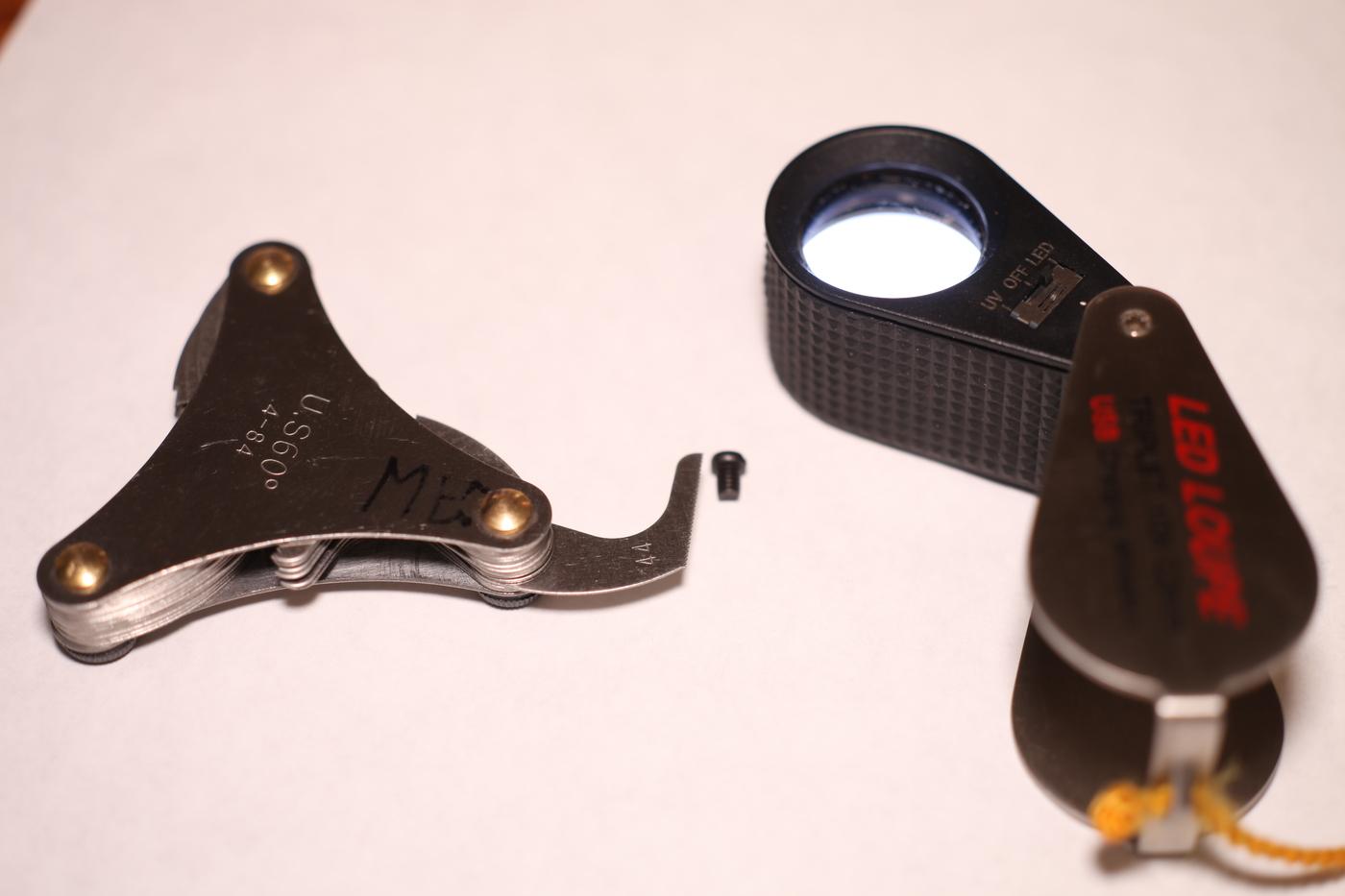
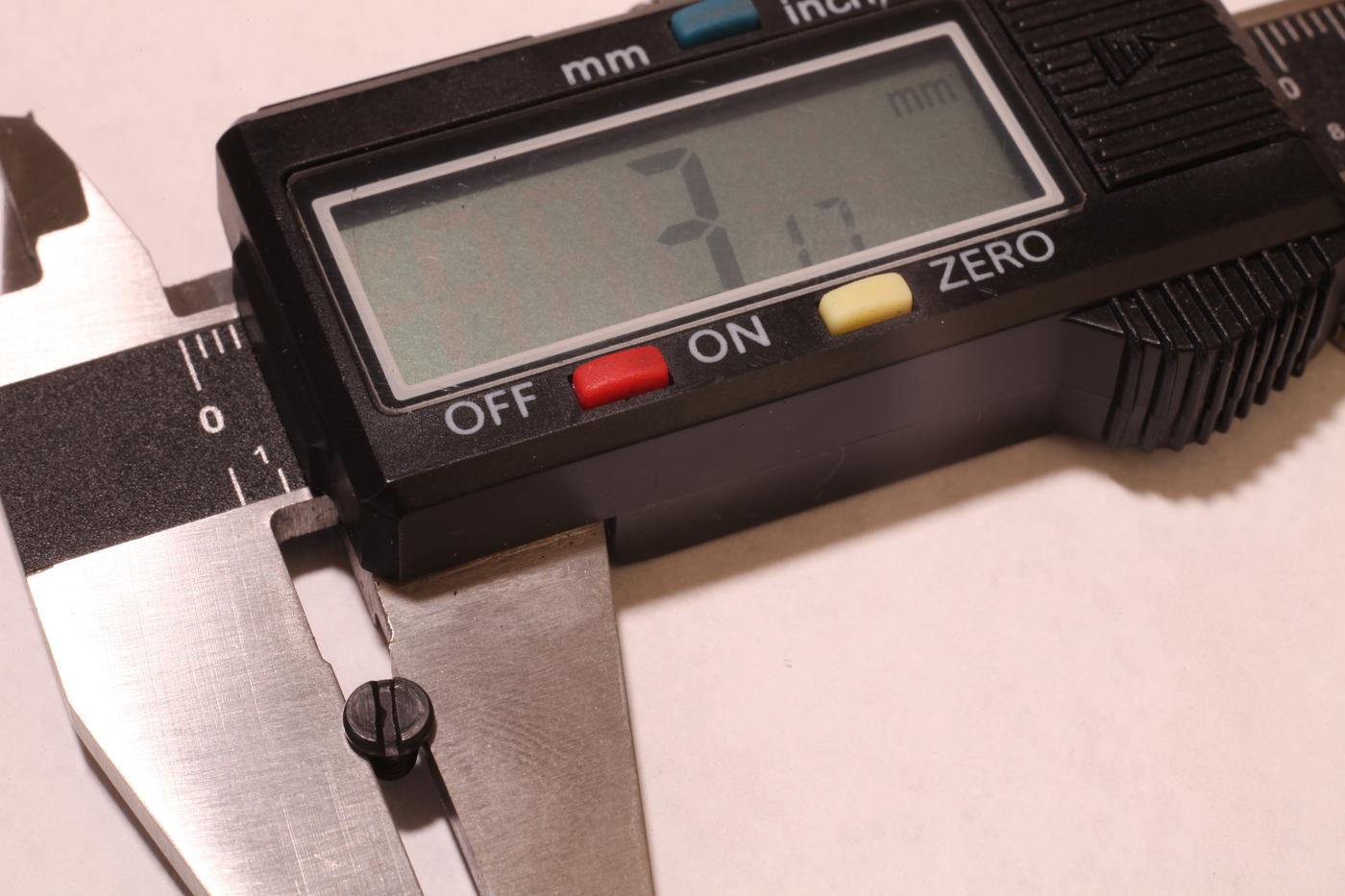
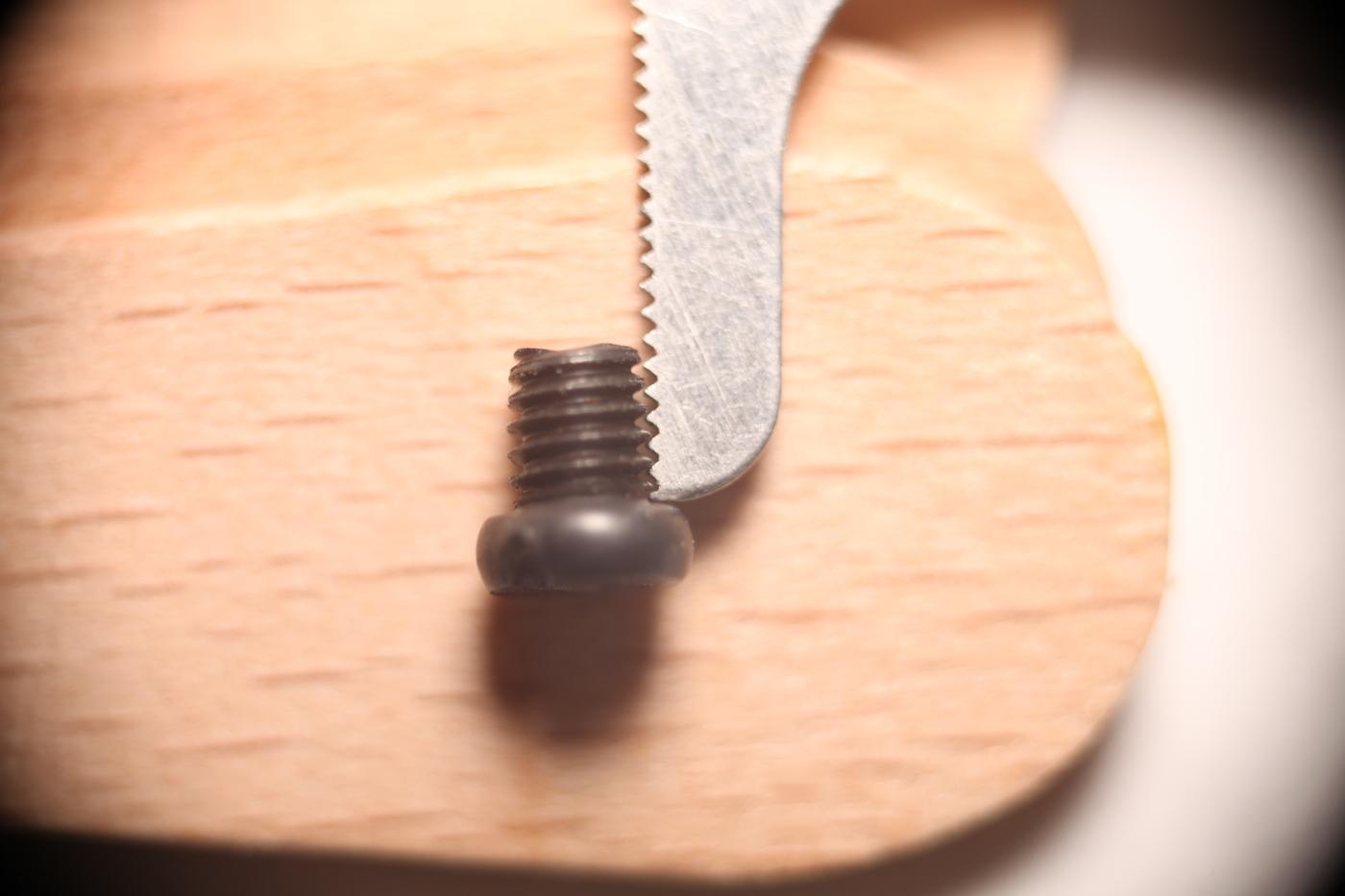
For machines where parts are not directly available, how does one measure the diameter of a screw to determine what size it is? To determine thread pitch I've been using this SAE pitch gauge: https://www.amazon.com/dp/B0BGRB96DP and viewing through a jeweler's loupe the pitch gauge snuggled up against the screw for comparison. To determine the major diameter (aka outer diameter, see https://en.wikipedia.org/wiki/Screw_thread#Major_diameter ) I've been measuring the threads with the fat part of the digital caliper jaws. Here's the hard part for me: For the nominal fractional sizes (1/16, 5/64, 3/32, 7/64, ..., 1/2) commonly sold as SAE screws and used on sewing machines, what is the actual major diameter for these screws that calipers or a micrometer would measure? If we were to assume that the nominal size matched exactly its actual major diameter (outer diameter), we could simply generate a table with a little math and multiple by 25.4 if we want millimeters. Here is such a table: NOMINAL | Theoretical | Theoretical 1/16 in | 0.0625 in | 1.587 mm 5/64 in | 0.078125 in | 1.984 mm 3/32 in | 0.09375 in | 2.381 mm 7/64 in | 0.109375 in | 2.778 mm 1/8 in | 0.125 in | 3.175 mm 9/64 in | 0.140625 in | 3.572 mm 5/32 in | 0.15625 in | 3.969 mm 11/64 in | 0.171875 in | 4.366 mm 3/16 in | 0.1875 in | 4.762 mm 13/64 in | 0.203125 in | 5.159 mm 7/32 in | 0.21875 in | 5.556 mm 15/64 in | 0.234375 in | 5.953 mm 1/4 in | 0.25 in | 6.35 mm 17/64 in | 0.265625 in | 6.747 mm 9/32 in | 0.28125 in | 7.144 mm 19/64 in | 0.296875 in | 7.541 mm 5/16 in | 0.3125 in | 7.938 mm 21/64 in | 0.328125 in | 8.334 mm 11/32 in | 0.34375 in | 8.731 mm 23/64 in | 0.359375 in | 9.128 mm 3/8 in | 0.375 in | 9.525 mm 25/64 in | 0.390625 in | 9.922 mm 13/32 in | 0.40625 in | 10.319 mm 27/64 in | 0.421875 in | 10.716 mm 7/16 in | 0.4375 in | 11.112 mm 29/64 in | 0.453125 in | 11.509 mm 15/32 in | 0.46875 in | 11.906 mm 31/64 in | 0.484375 in | 12.303 mm 1/2 in | 0.5 in | 12.7 mm But I don't have enough evidence yet to say whether this is the best course of action, or if there is a better table somewhere based on actual values instead of theoretical. Photos LED loupe, thread pitch guide, and machine screw Matching up threads under magnification Measuring the major diameter with digital caliper
-
 You're a master man that looks great and after some use, no one will be able to tell it wasn't original. Maybe the saddle was used for some kind of event or something where the horse turns one way more than the other. Stay warm, my friend!!
 -
Equipe saddle, repair of worn saddle flap
Mulesaw replied to Mulesaw's topic in Saddle Identification, Restoration & Repair
Not a chance on that one 😄We are in the southern part of Norway, and it is bitterly cold here at the moment. Plus there is some incredibly bad weather in the North Sea at the moment, so we have been told to just stay put in the harbour until the sea calms down a bit and we can deliver supplies to the platforms again. On your triple stitched halters, the edges looked fantastic. Did you only use beeswax and heated edge irons on those, or also hide glue? It sound like a very interesting experiment to use hide glue, but I think that I would be afraid that it would be sort of delicate and not handle rain too well? -

Equipe saddle, repair of worn saddle flap
TomE replied to Mulesaw's topic in Saddle Identification, Restoration & Repair
Sounds like good duty inside. We're having uncharacteristically cold weather this week and horse care is taking longer, so I haven't done much leatherwork lately. My 1959 model joints are feeling the cold! I did buy some hide glue (pearl glue, bone glue) and have been experimenting with finishing edges. It does a remarkably good job on bridle leather edges without sanding. Since hide glue is water soluble I am trying a few different top coats to seal the edge after burnishing. My favorite so far is beeswax applied with a heated edge iron and rubbed with canvas. Good luck on the ship. Hope you're going to a warm part of the world. -
 It's hard to say from a distance. Some of it is going to depend on the thickness of your material. Wiz gives 3 adjustments to look at in the post I linked earlier and they all work together. It's well worth understanding how the check spring works.
 -
The stitching on the 5th attempt looks a lot more consistent than on the earlier ones, so there is a fine progress! Also the distance from the stitching to the edges is very nice and consistent on the last one. So like @DieselTech says: keep up the good work 👍, Brgds Jonas
-
On the 111W's and everywhere I've seen that tension setup, it makes an "S" shape. It does not go over the pin.
-
New to the forum and wanted to introduce myself
Mulesaw replied to Second_Chance_Leather's topic in Member Gallery
In Denmark, it is not uncommon to get a "retirement job", I don't know if that is a thing in Canada? It could be janitorial for a small business, maybe 10 hours a week, not enough to get exhausted by, but it gives a little bit of steady income and more importantly a continued connection with the rest of the world. It is just nice to have a new story to tell at home, or have someone that you can tell if you did something interesting in the weekend etc. If retirement is scary, that might be a way of slowing down. Off course it depends on if you can find a place that has a similar opening that you would like, but I have often thought about that it is a fine way of doing it. Brgds Jonas -
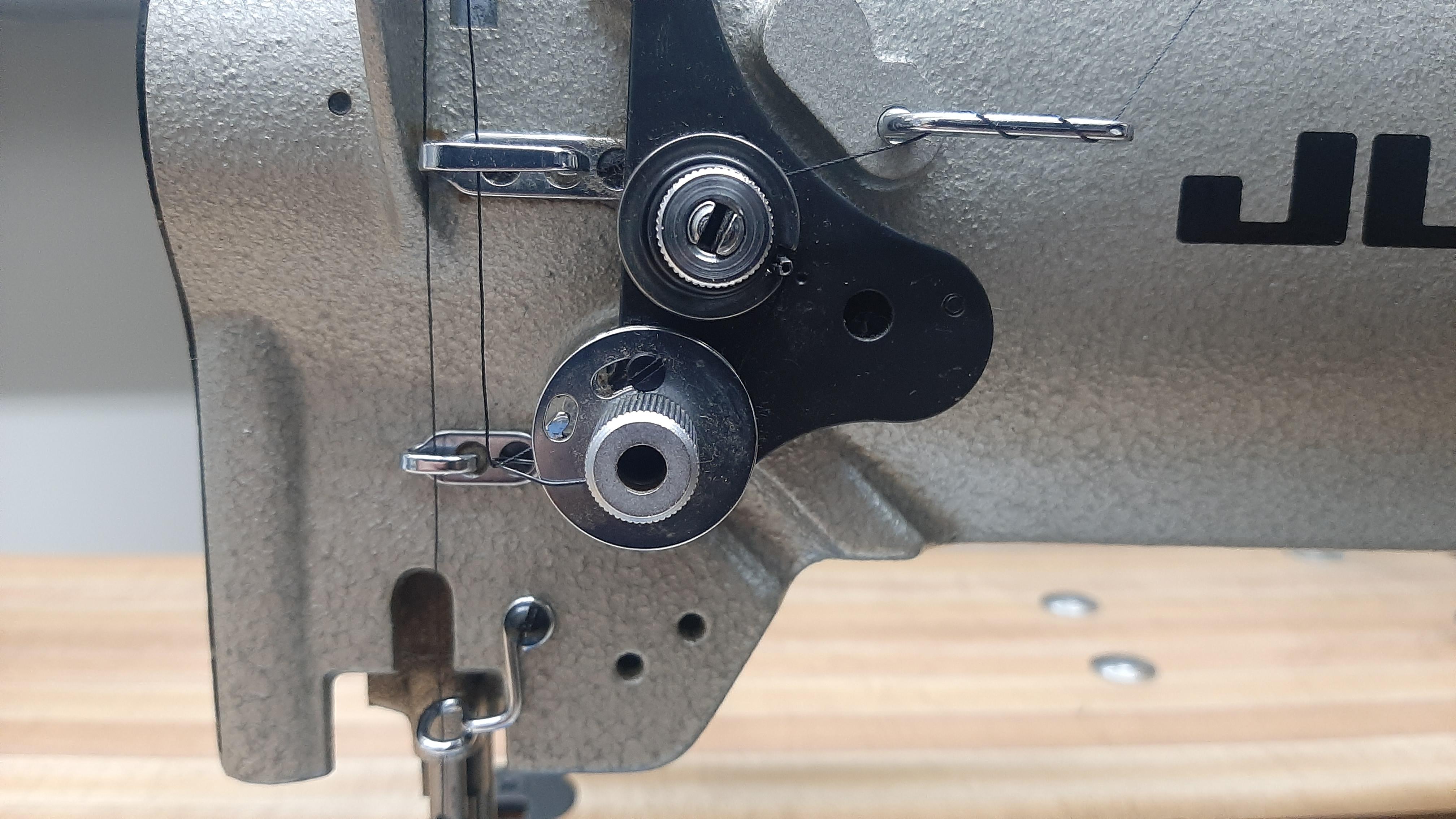
 I have seen many varying videos online and there's no consensus. Does the thread go over the pin or not? I typically do not have it over the pin, but it is in this photo.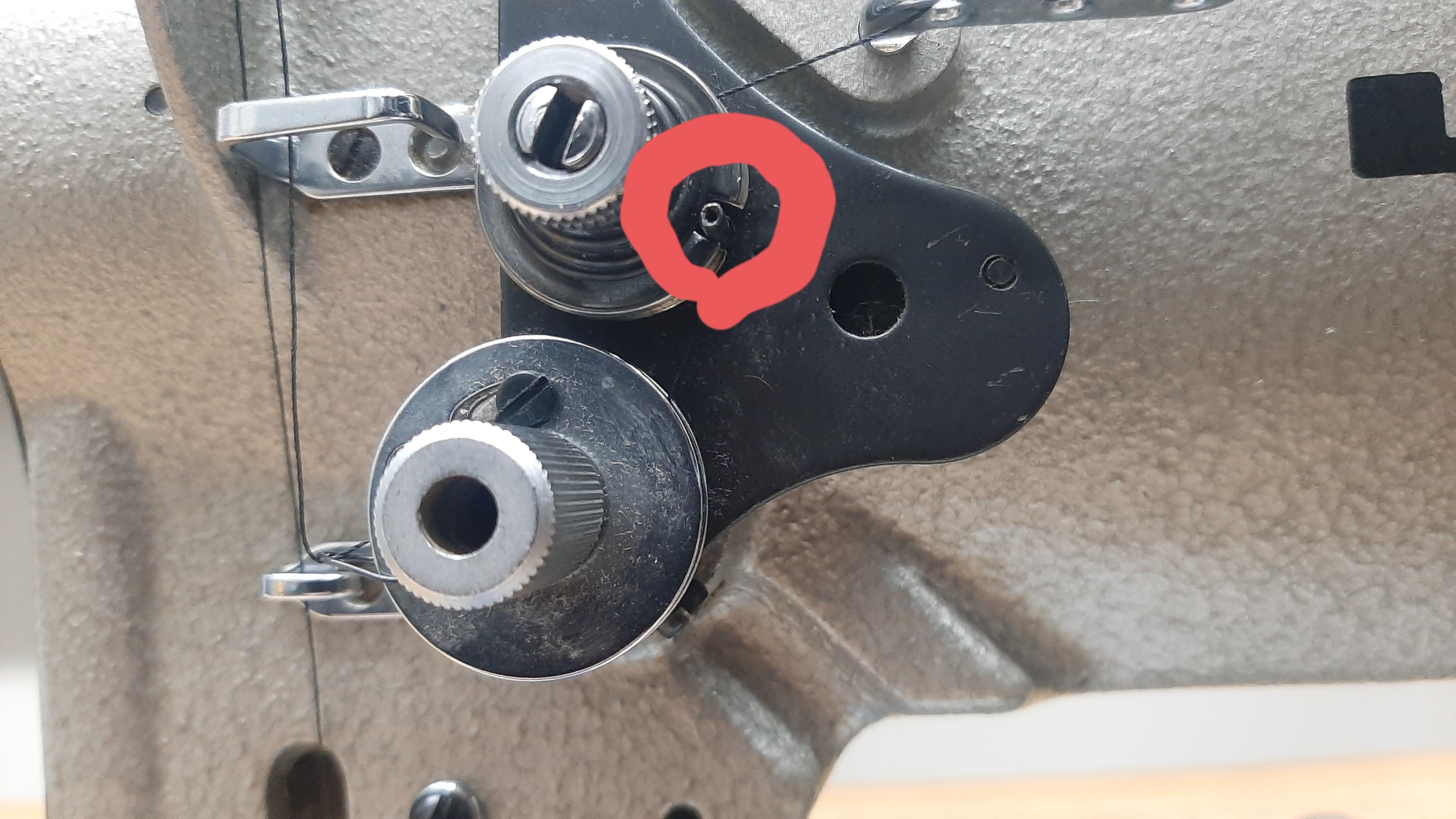
-
Tension seems about the same as a PEZ dispenser which should be fine. I have never adjusted it. The location of the spring seems like its at about a 9 position in reference to a clock. A lot online seem to be more at at 9:30 position or higher. Should I reposition it?
-
 A good friend wanted a cross draw for his 1911 . . . black . . . with a thumb break. My favorite suggestion for that is the slip-cake style . . . which I made for him. Added a concho to kind of dress it up a tad . . . thought about white stitches . . . makes it too conspicuous . . . Anyway . . . here's the finished product. May God bless, Dwight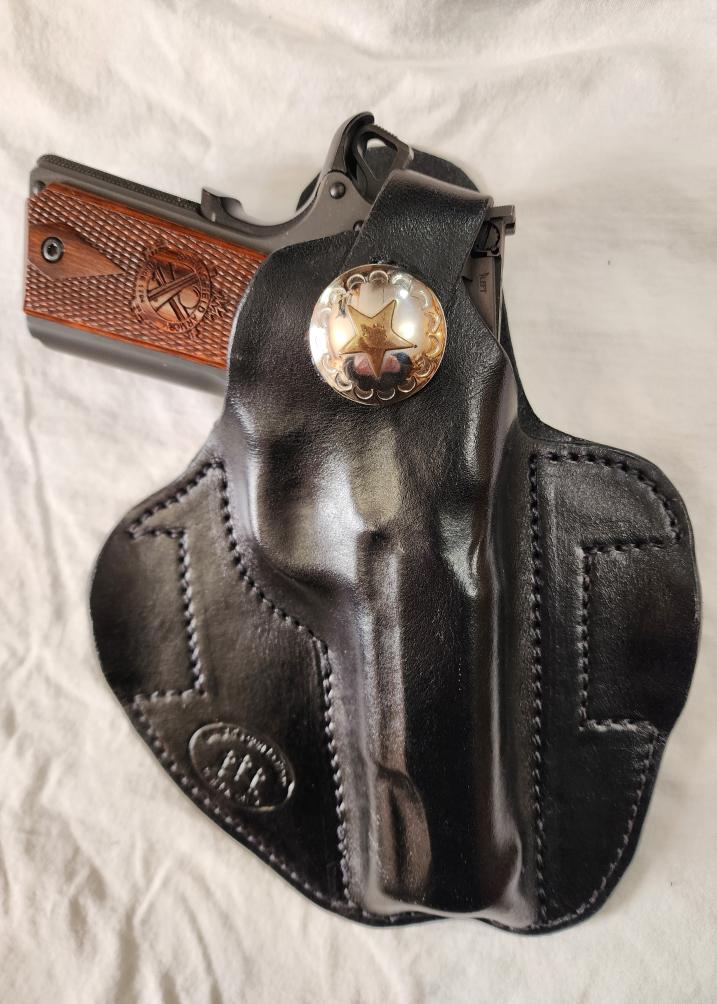
-
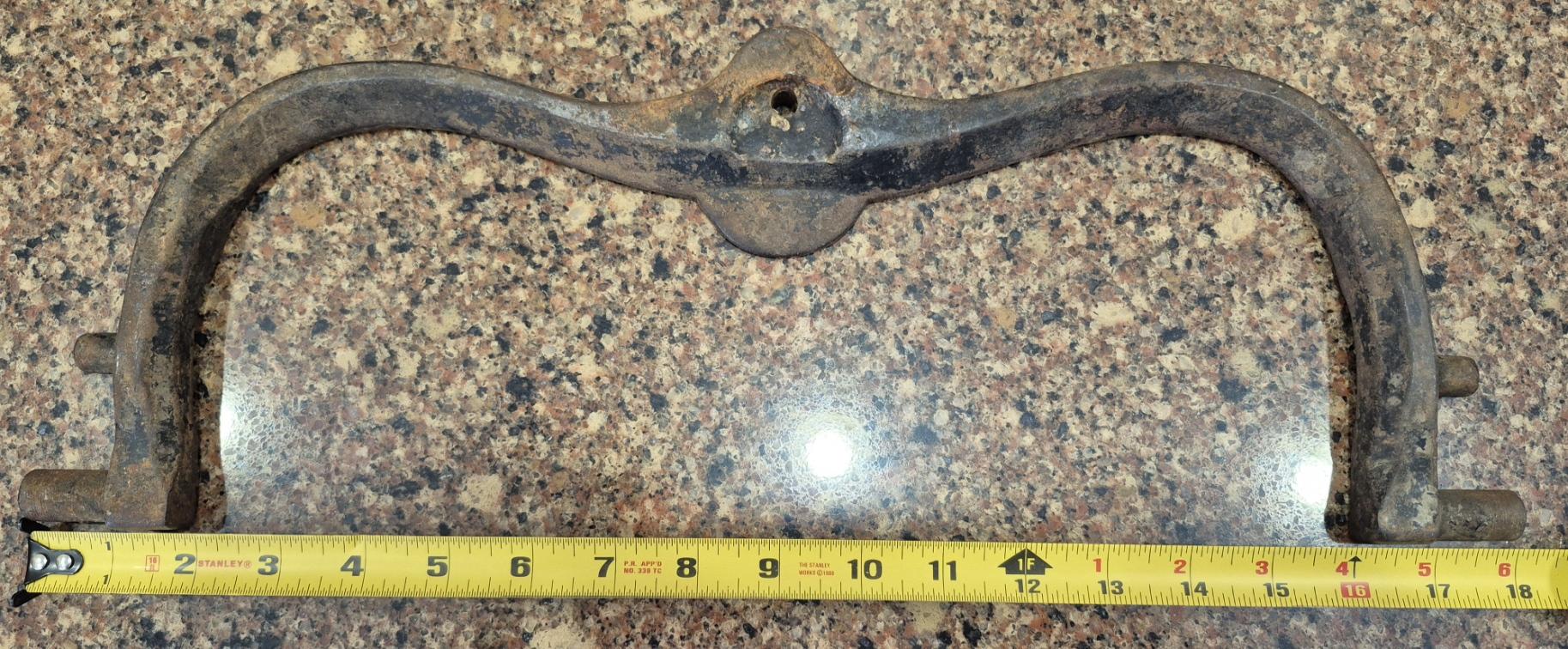
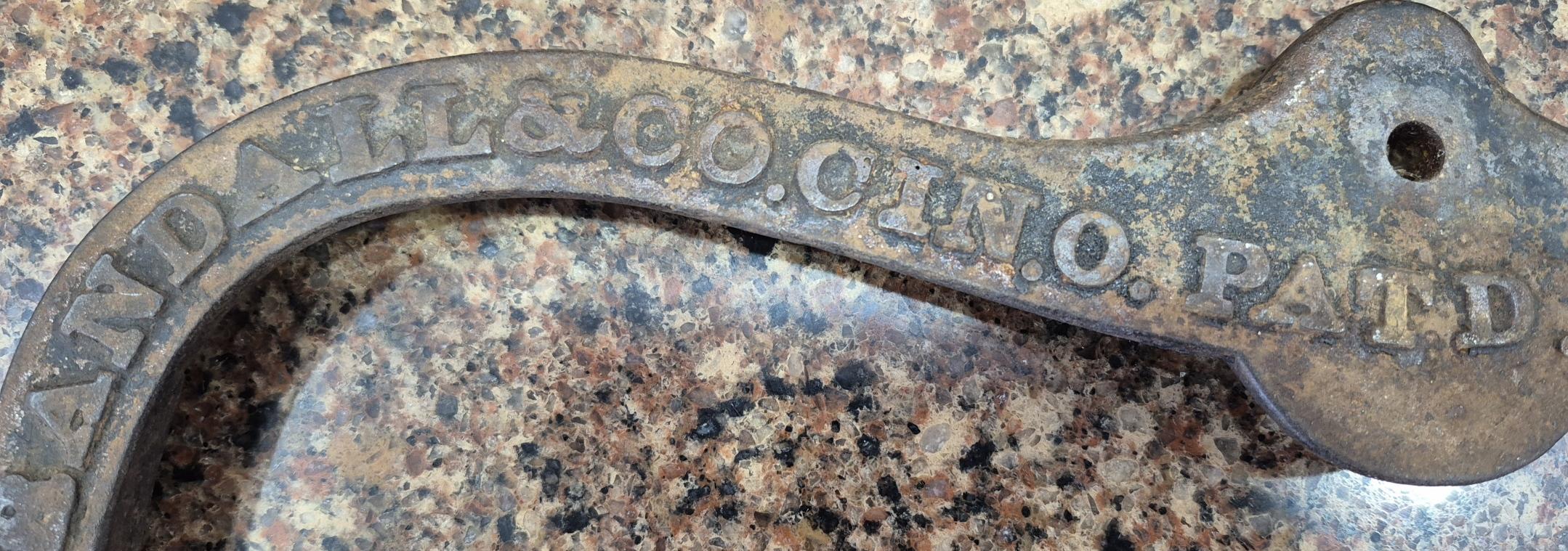
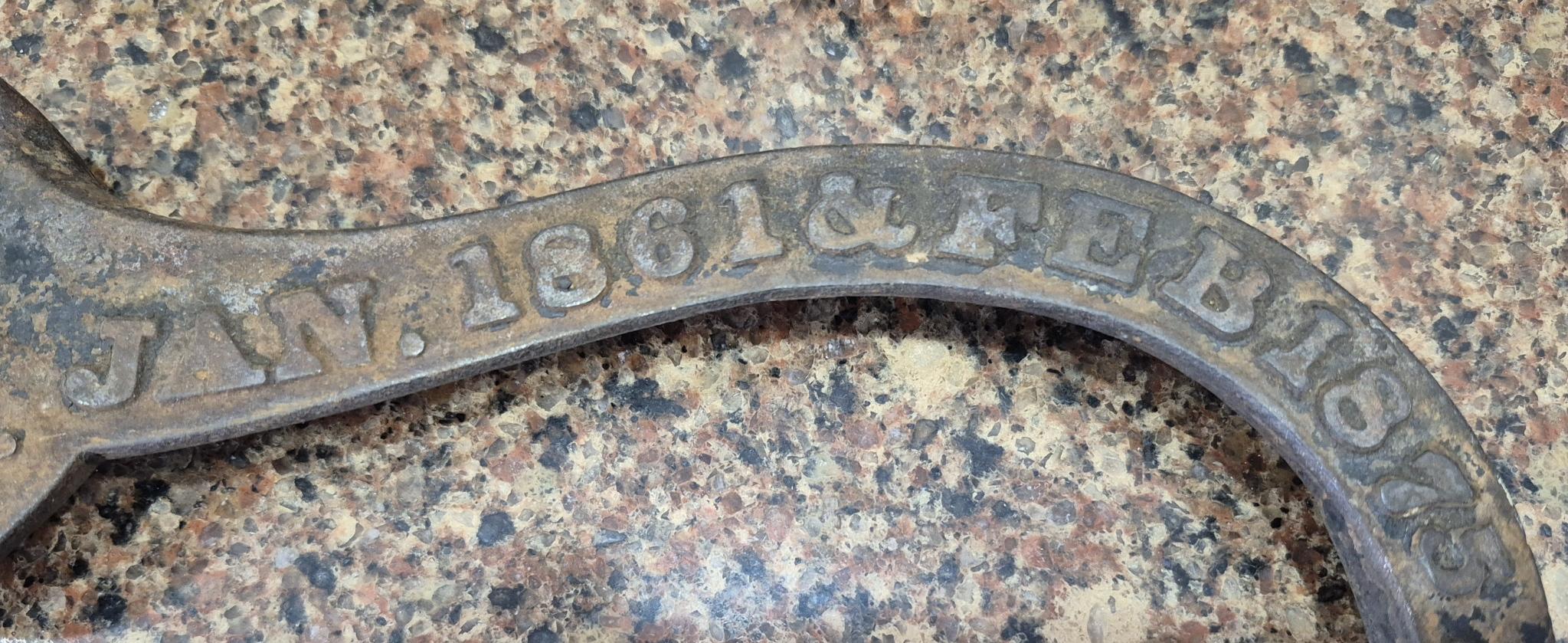
 This was in a box of stuff I bought at an auction thinking it was an antique bell yoke. Once I realized it was not for that, I contacted the CAMPBELL-RANDALL MACHINERY company directly and game them this same photos to help identify it. Here is their reply: ___________________________________________________________ Yep, that's from an early Randall & Co. Leather creaser. The basic design was patented in 1875, and the later improvements started being patented in 1887, so this one would have been made somewhere in that 12-year window. The 1861 patent was by another company for a different creasing machine, that Randall either bought or licensed the rights to, so 1875 would be the earliest. If you are looking to sell, its history is pretty cool and it is worth putting in the right hands. One of these creasers that is complete and working would be worth around $900. The creasing roll shafts are the expensive part. To sell it the arc, you would have to find someone who collects leather bench tools who might have a use for it. Maybe to replace one on an existing machine. It's sad because you see stuff like this on eBay where people pull the cool looking parts off of machines for art and scrap the rest. Short sighted industrial tomb raiders of the digital age. __________________________________________________________ Then they directed me here to where it may be more likely that I find someone needing this part. So here I am. I would like to find someone having a machine that needs this part so I don't see it go to waste. Willing to sell it for just $30. Buyer pays shipping via USPS from 62056.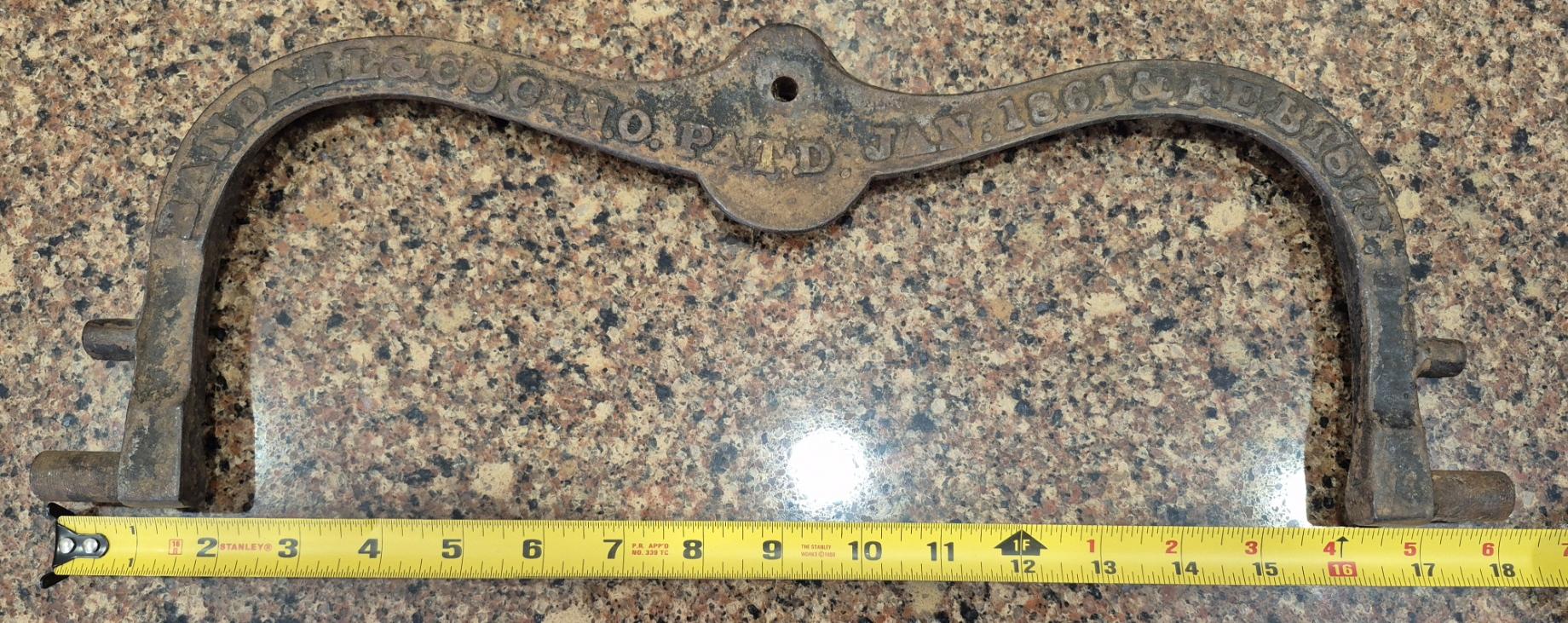
-

New to the forum and wanted to introduce myself
kgg replied to Second_Chance_Leather's topic in Member Gallery
I threw in towel about 22 years ago and the first thing I done was turned off the computer and threw out the cell phone (it "fell" out of the truck on the highway). Never touched either for 3 years. Done what we were planning for five years, move to another province, build a new house, opened a dog boarding kennel and showed our dogs. A far cry from my engineering background. Should have done it earlier. I do things that interest me, no deadlines, no boss except for the wife. The hardest part was figuring out my interests and how to combine them, like 3D printing, leather, sewing machines, metal welding, metal lathes etc. which are all interlinked. Remember working for the man is just a means to an end. One door closes and another opens. kgg -
Equipe saddle, repair of worn saddle flap
Mulesaw replied to Mulesaw's topic in Saddle Identification, Restoration & Repair
@Scoutmom Thanks, 🙂 @TomE Thanks for the very nice words 🙂 I also really would have liked to see the corresponding boots, but my customer bought the saddle second hand, so she was as puzzled as I. There was just ordinary light wear on the left side of the saddle, not even close to being worn through. I did do a bit of thinking about the shape, off course it had to cover the worn part, and after a couple of initial ideas, I ended up deciding that this shape at a quick glance could look a bit like something that was original to the saddle. And since you can't see a saddle from both sides really well when it is on a horse, I don't think anyone will ever notice. A thing that I am really happy about is that I actually timed myself doing it, and this Monday another customer asked me about a similar repair, but on a Prestige Versailles jumping saddle. So it felt really good to be able to give a ballpark figure on the time/price of such a repair job. (I just signed on yesterday, so I told her that she'd have to wait until I get back home again) I guess that repair will be a little less complicated since there isn't a lower reinforcement piece on that saddle. I'll just have to get my hands on some brown leather that matches the existing colour. All in all, a job like that almost feels like cheating: Getting paid to do something that I genuinely like to do, and being able to sit inside and have a cup of tea while doing it, all while I have two large dogs snoring away on the floor next to me. Brgds Jonas -
I think the difference is that the folks you see mostly here on the forum are making belts for carrying pistols, lol. I don't see many belt maker threads for just everyday work, if that makes sense. I never wore thick belts either until I started carrying then it's just one ply 10 oz. with plenty of nfo to make it more flexable. They just aren't comfortable working in, especially if you're bending over a lot. And thick super stiff gun belts come from Hollywood or the internet, i dont quite know where.
-
New to the forum and wanted to introduce myself
chuck123wapati replied to Second_Chance_Leather's topic in Member Gallery
lol that feeling only lasts about a month or two, then you wake up one day with more chores than you had while you were working. I burned out from a very high-stress management job, had the time in, 30 years, so one day I cashed out my sick time and vacation and just retired. My kids were in their teens, so we spent the summer raking lawns and such, then a fellow who was remodeling an apartment building hired us as help. I spent the rest of the summer just doing my thing. I could come and go as I pleased and work as long as I wanted, plumbing, painting, sheetrock, etc., and the guy even taught me how to cut and tile showers; he was a retired contractor. Having a job that required no critical thinking and set no limits was the best thing I could have done at the time; it reset me and got me into a routine, and reminded me that a much simpler and easy-going life was possible. I am still up by 4 and start the day with the forum and coffee. -
Equipe saddle, repair of worn saddle flap
TomE replied to Mulesaw's topic in Saddle Identification, Restoration & Repair
Well done! That is a neat and serviceable repair. Your stitching is immaculate and a lot of thought went into the design of the patch. I guess we see the corresponding asymmetric wear in riding boots.