



Constabulary
-
Posts
5,801 -
Joined
-
Last visited
Content Type
Profiles
Forums
Events
Blogs
Gallery
Store
Everything posted by Constabulary
-
 I meanwhile have a 45D and a couple of open and closed frame shuttles (different brands and condition, some orig Adler and some quality after market shuttles from NÄMATAG and so forth but not all have a brand stamp). Yet I have not tested them all but both types work in the machine. At the moment I THINK the open frame works better my 11/3 SYNTON thread and 10mm resin coated nylon webbing. But I have not used the machine very much so atm it´s just a "feeling". I just thought there's a reason why there are 2 different types of shuttles.... EDIT: Uwe, your Videos are always excellent - haven´t seen this one before but its great to see in slomo
 -
Thanks Bob! My thought was just the opposite. The closed frame puts more dragon the thread (agree) but I thought thats better for thicker thread / thick materials. But maybe I´m wrong. So with other words closed frame for thread up to 138 / 207 and open frame for 207 and up?
-
I just have checked the last Jack Servo I bought from CS it has a 15mm shaft but that is the 750W w/o NPS, the other with NPS I bought has a 12mm shaft as well - don´t know why that is. Just wanted to have it mentioned.
-
I always wanted to ask this... What is the difference (beside the obvious) between an open frame and closed frame shuttle for the Singer 45K / Adler 4 & 5 and the like? I notice that the up to date 441 clones all have closed frame shuttles as it seems but even in old 45K parts list from the 1920´s or so they show open frame and closed frame shuttles for the same machine. I have a (very) rough idea but I´m not sure and wondering what the "old school" LW and dealers know about it.
-
To me it looks like a Singer 96K or the like thats what ISMACS say: 1300-1 Artisan "Dressmaker's machine" (sold in family shops). Lockstitch. Rotating hook, Drop feed; link take-up. Knee lifter. Gear driven. Max stitch 5 1/2 to the inch. For foot power only. For cloth; tailoring, etc. 16x251 1300-2 Artisan As 1300-1 but for motor table. Max speed 3000 RPM. 16x251
-
It´s probably the shuttle hook that is clicking inside the shuttle driver when oscillating? The shuttle hook has some play since the top thread has to go around the shuttle hook. Thats quite normal I´d say but if you are able to upload a youtube video that would probably help.
-
I´m 99% sure it has a magnetic controller. This one also starts at 200rpm you have noticed that, right?
-
I see no link but that does not work with servos from College Sewing as they have an magnetic accelerator unit.
-
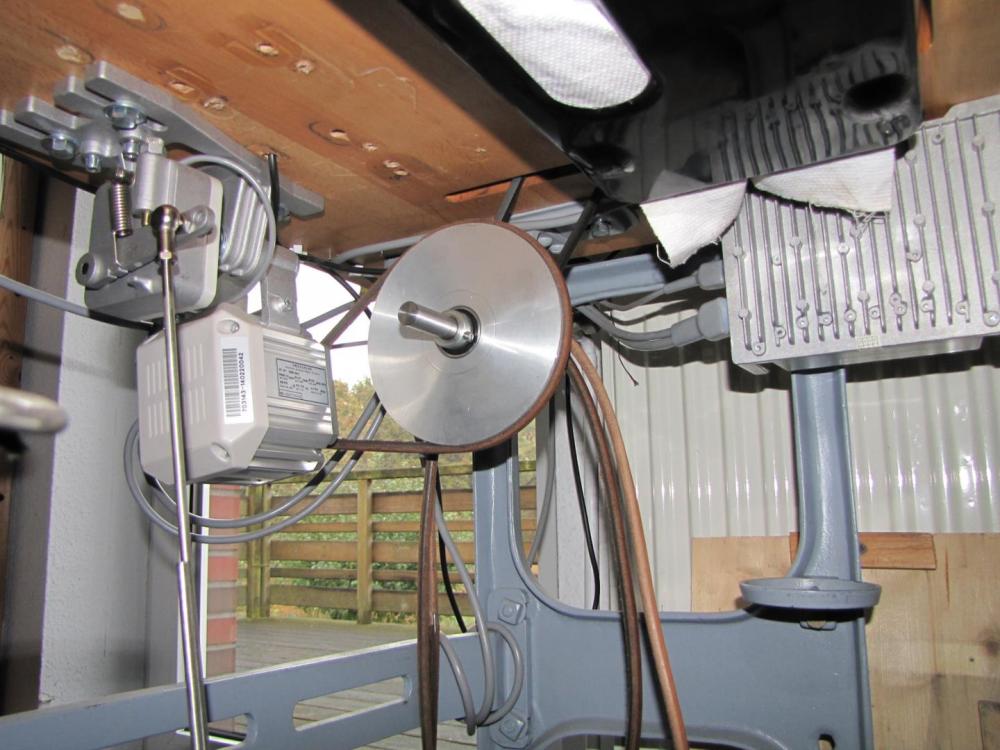
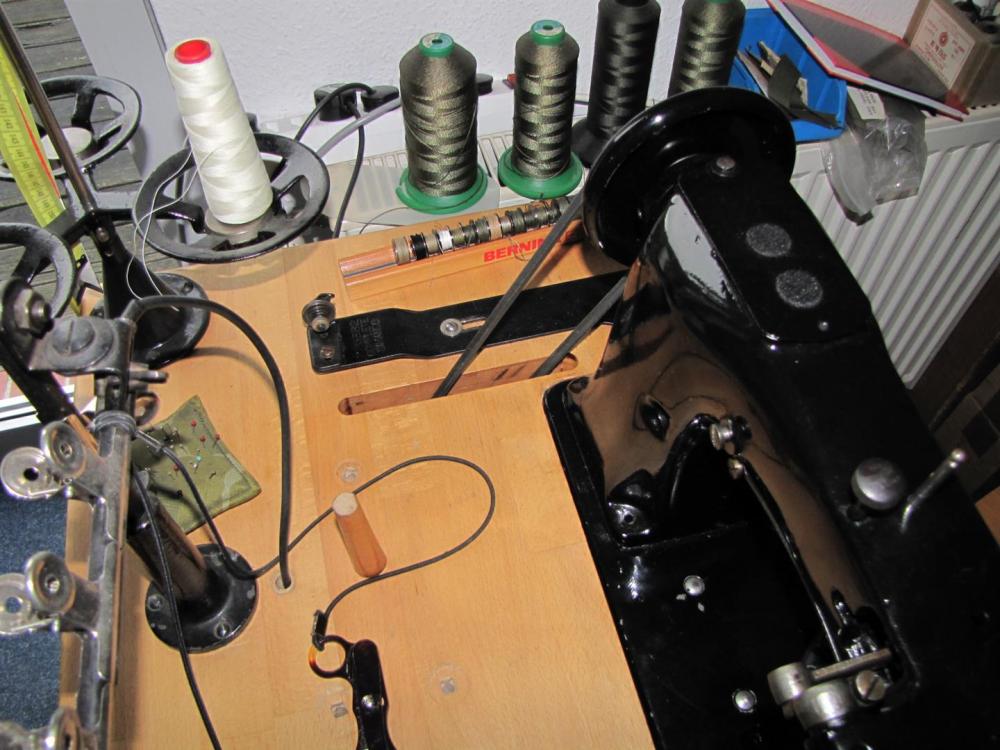
My servos also run at 200rpm min and thats what the speed reducer is for - reducing speed!!!! RPM on the motor does not mean stitches per minute except you have a 1:1 ratio (75mm pulley on hand wheel and 75mm pulley on the motor). With a speed reducer with 1:3 ratio you reduce the speed by 2/3 and that would be 1.1 stitches per second. 200 rpm / stitches per minute : 3 = 66.666 rpm / spm : 60 sec. = 1.1111 stitch per second And when you add a smaller pulley to the motor its even slower. You don´t have to cut the table you can put the reducer under the table. But you have to reposition the motor. Again - check the forum for Speed Reducer - almost everybody is using them and there are dozens of different solutions - thats the way to go! This is how it looks on my table and and underneath.
-
Thanks again @dikman - I know but the few runs dried out quite well you barely can see them. Hammertone sometimes can be tricky. I cannot claim that my machines have a perfect paint job but I´m pleased and thats good enough for me - well, I have seen many worse @bikermutt - I yet have only hand cranked it as I have no V-belt atm Well, capacity depends. The foot lift with hand lever is 14-14.5mm. But you can tweak it a little bit when you raise the presser foot bar a little bit. But that depends on the presser foot you are using as you have to take care of that the needle holder is not hitting the presser foot when you have lifted the foot and spin the hand wheel. So with a bit good will you can probably get 1 or 2 more millimeters - but that does nor make sense anymore, I think. So 1/2" of thickness is the standard capacity I´d say but of course depends on how hard / dense the martial is you want to sew. EDIT: regarding tweaking - the max. is barely 17mm with a slightly shorter shank ADLER 5 presser foot (Singer 45K and Adler 5 feet are interchangeable but Adler feet as slightly shorter) and the foot is not touching the needle plate. Thats cheating (or tweaking) but that's how you can get the most out of it. If it makes sense is another story. So maybe you can sew 14-15mm this way - MAYBE! Some pictures
.thumb.JPG.832c4620d0f41f01085a18d6729af0f9.JPG)
.thumb.JPG.fbcdc5f61c77d48f9d0b9b90443c624e.JPG)
.thumb.JPG.b3630c7bd4eee15fbad435eabf27ccc6.JPG)
-
can´t help much but I´d compare the parts list of a 145 and 545 if the # are the same Haven't checked but I doubt they are the same. What is the Pffaf using I guess 134-35 / DPx35, right? No problem to switch to 135x16 needles you just have to raise the needle bar a tiny bit - not sure how much longer the 135x16 is but I´d guess 1 or 2mm EDIT: http://www.sewingneedles.org/leather-stitching-needles.html I also have set all my machines to 135x17 / 135x16 - no problems at all.
-
New to industrial sewing machines Juki LU-562
Constabulary replied to jshep's topic in Leather Sewing Machines
It most likely will not mess up the tension but you better find a new one it´s there for a reason. Check with TECHSEW or other dealers in your era they should be able to help. They should not cost more than 10 bucks. If you can´t get out the remains fo the old thread guide drill a new hole and put in a new thread guide. Some don´t require to tap a thread as they have a tapered end but you probably want to glue them in with Loctite or s/t similar. F.i.: http://www.ebay.com/sch/Crafts/14339/i.html?_from=R40&_nkw=thread+guide+pin -
A treadmill? Whats next - an electric lawnmower or an E-Bike? I absolutely agree with dikman. Tinkering is nice as long as it is much (much) cheaper and / or you get much more performance out of it but in general I´d (again) say an out the box servo + speed reducer is the best you can do. But thats entirely up to you. If you like tinkering start with making a speed reducer.
-
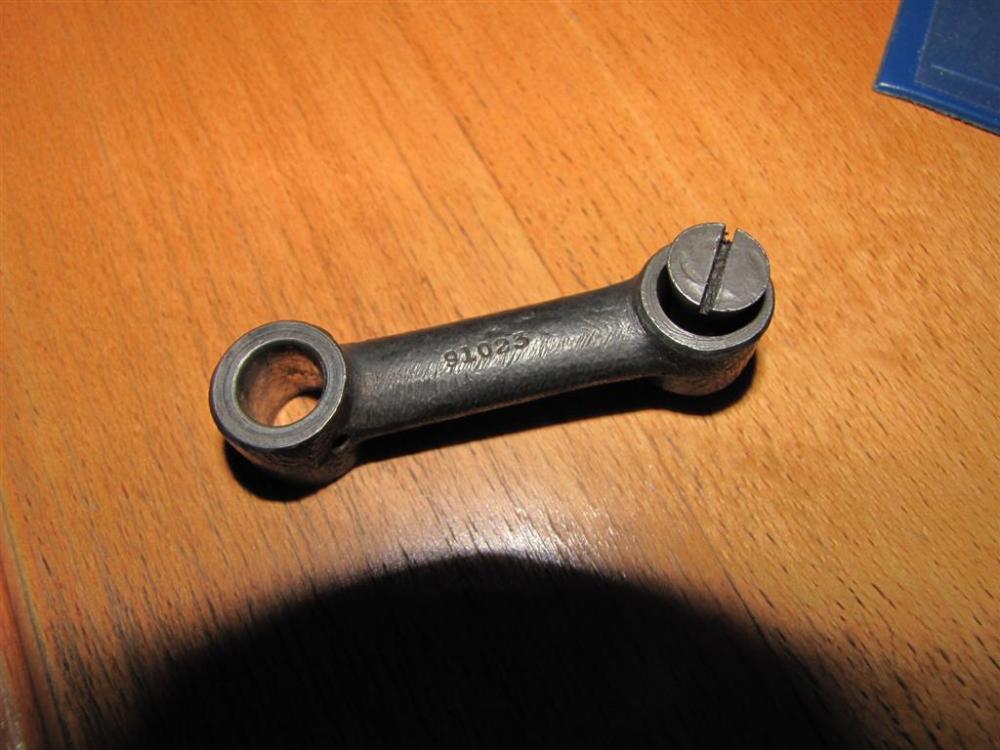
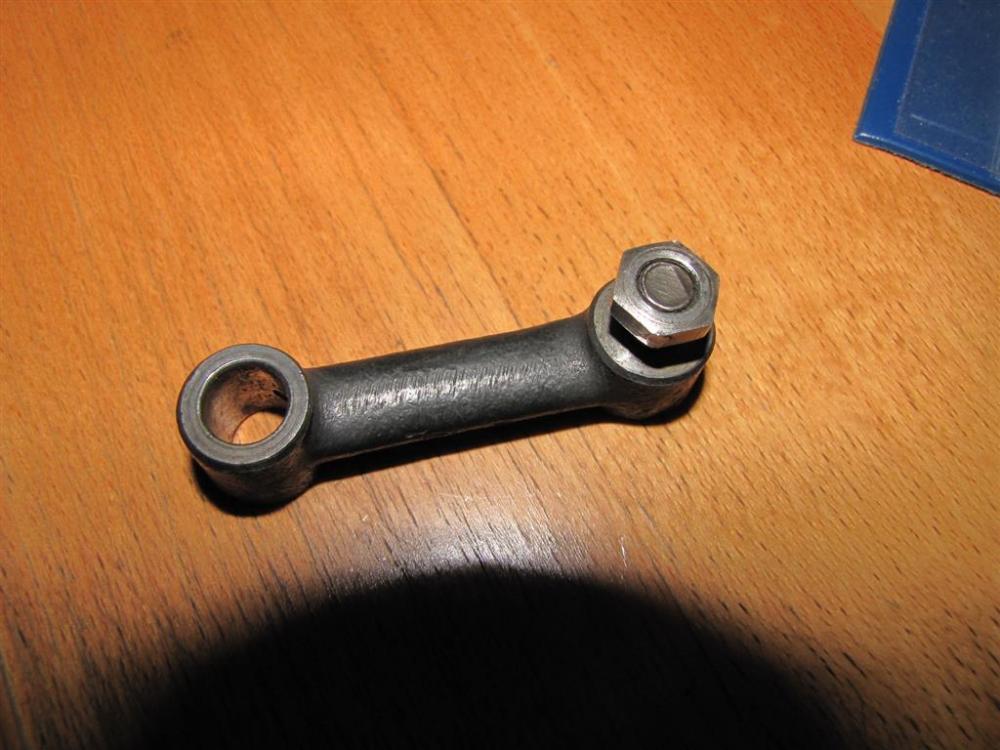
Thanks folks! I´m now hopping to find my personal holy grale of sewing machines one day - A singer 97 head. Hey Jimi - seems you can sniff 45K threads on the web . Just have checked the parts and yes I have one. Send me a PM
-
depends on the actual specs and "how similar" your motor is. Motors like this sometimes find use on patcher machines (at least on my side of the pond) but they just have 90Watts. You still need an accelerator pedal that is matching the specs of the actual motor. But I´m not an electric expert so someone else has to jump in here. http://naehmaschinentechnik-forum.de/viewtopic.php?f=14&t=1183 See pictures http://altenaehmaschine.de/Adler-30-1-9
-
Meanwhile the decals have arrived. I know the whole paint job is not authentic (obviously) but thats not too important to me. I think it turned out quite nice and I´m pleased with it. Next thing is the bobbin winder.... Once again I rescued some old cast iron
.thumb.JPG.81b74dbaec9b11b5b468c07e6ddcf19a.JPG)
.thumb.JPG.f60f189fc6b4c34f386a08899a88db8e.JPG)
.thumb.JPG.cd48207eb4384e9f1c752c23de9d2d2f.JPG)
-
Almost done! Now that I see the pictures I thing some parts still could use some TLC... maybe later... Since there are no Singer Wittenberge plant badge decals available I have put a brass badge on. A member form another forum said thats still authentic as the machines from the Wittenberge plant also came with the "british" badge reading "THE SINGER MANFG. Co.. Well I had no other option anyway
.thumb.JPG.b521a87cbb3f5df18df2d02dd04f8a08.JPG)
.thumb.JPG.874f3175619ebe682aaab516b413f49a.JPG)
.thumb.JPG.7bf53bc14ac3e9c86f9af8b0d2f13864.JPG)
.thumb.JPG.2d32cfbd27287565269ac0b238c15341.JPG)
.thumb.JPG.70caa7be08a6e77a79011d5f1556bff7.JPG)
.thumb.JPG.9f99228aa6c7d55cd993f58dcfae2348.JPG)
.thumb.JPG.9501fec7636a9a7f4b2f15083a3b113e.JPG)
.thumb.JPG.0dc517799530371ba4bc8b9a963b8bd4.JPG)
.thumb.JPG.b609edbf587bead242a00d327836c60b.JPG)
.thumb.JPG.b905a2e177718e9cf6e55816c6b7511a.JPG)
-
Reassembling
.thumb.JPG.6988d058ec520bd46fefe5f8cb387955.JPG)
.thumb.JPG.0de8691d86005127448e28889525a51a.JPG)
.thumb.JPG.6ebcc253b2b8af607a927cda513ce7d6.JPG)
.thumb.JPG.4880977324dd19820fd1403a6b3acc43.JPG)
.thumb.JPG.14b499f96a22fb7ca789cf8a68f2e112.JPG)
.thumb.JPG.d8ce324a4b95b473c243b32f6010fd28.JPG)
.thumb.JPG.7e8568556e219ad64d3a4ccc18f12160.JPG)
.thumb.JPG.0e21e73cdc2c030c9aae9d30a6a0d6c5.JPG)
.thumb.JPG.d2fc1e95aa8eae8d62d1a72064a995bf.JPG)
.thumb.JPG.d76915ce7826f1d353700ad8e2217da8.JPG)
-
Hammertone silver
.thumb.JPG.3d5c215f3522cab555591b7df392a944.JPG)
.thumb.JPG.9c3c645528a840578066ceda5a8feb32.JPG)
.thumb.JPG.b2837807c1f1292516e7ca9bc49191b8.JPG)
-
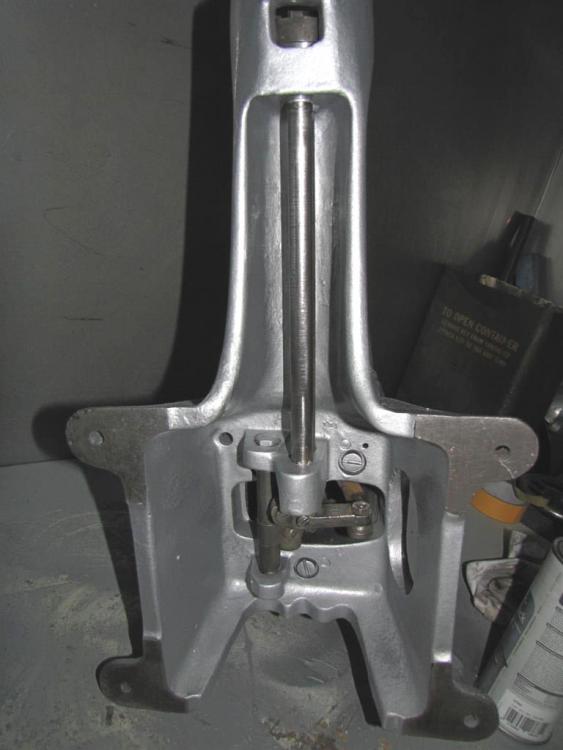
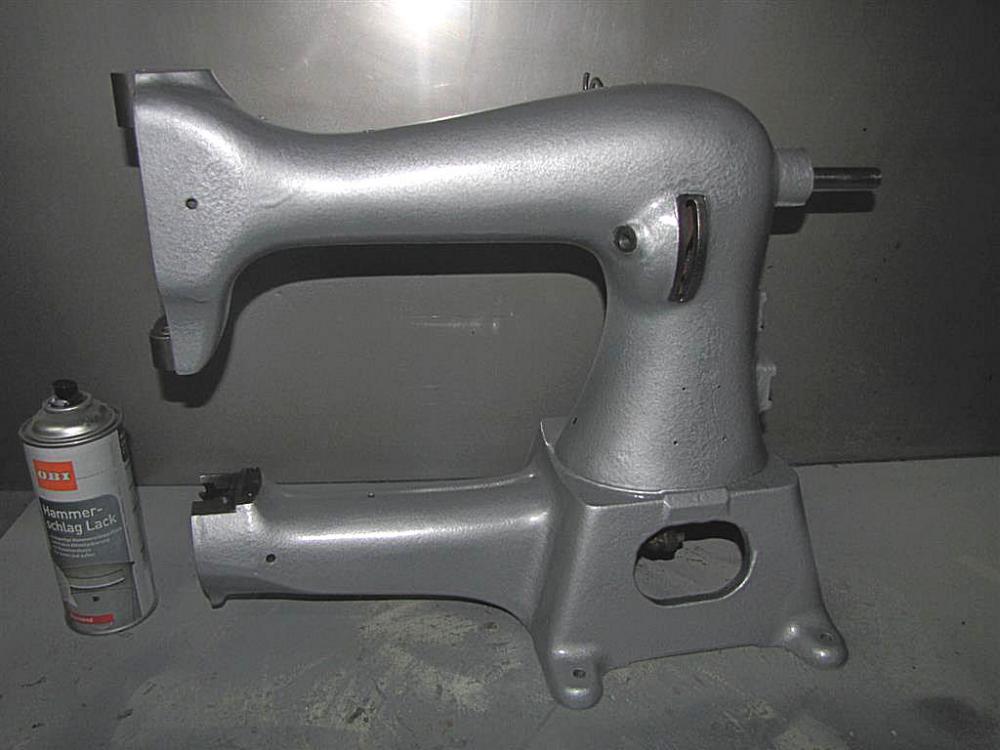
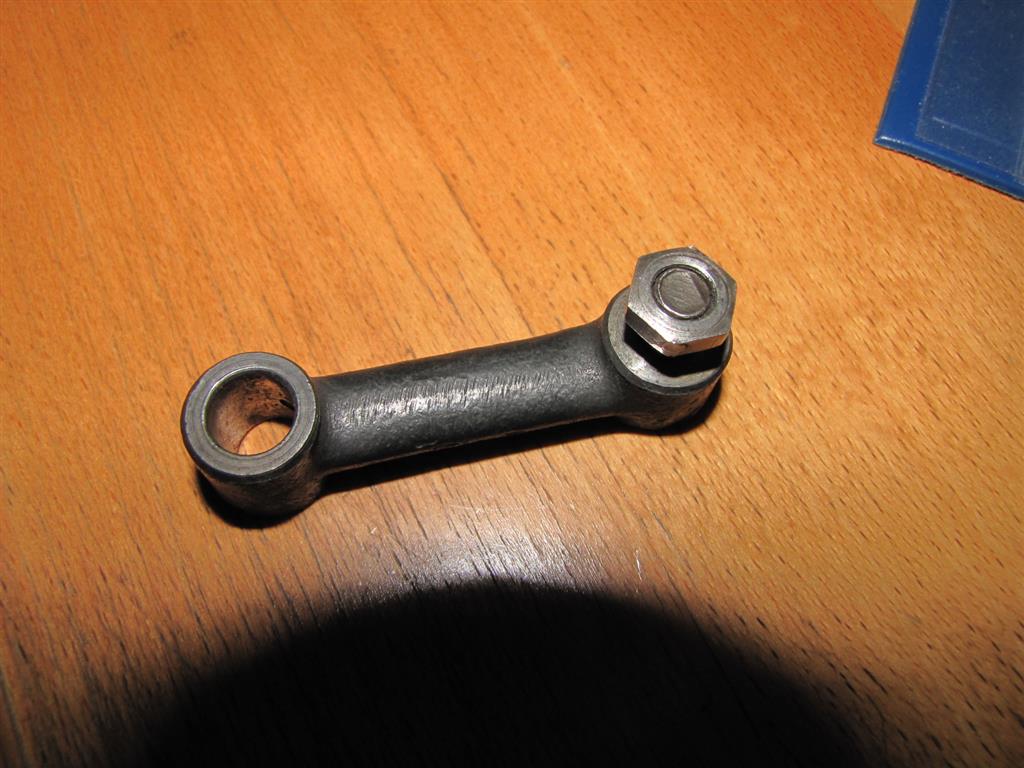
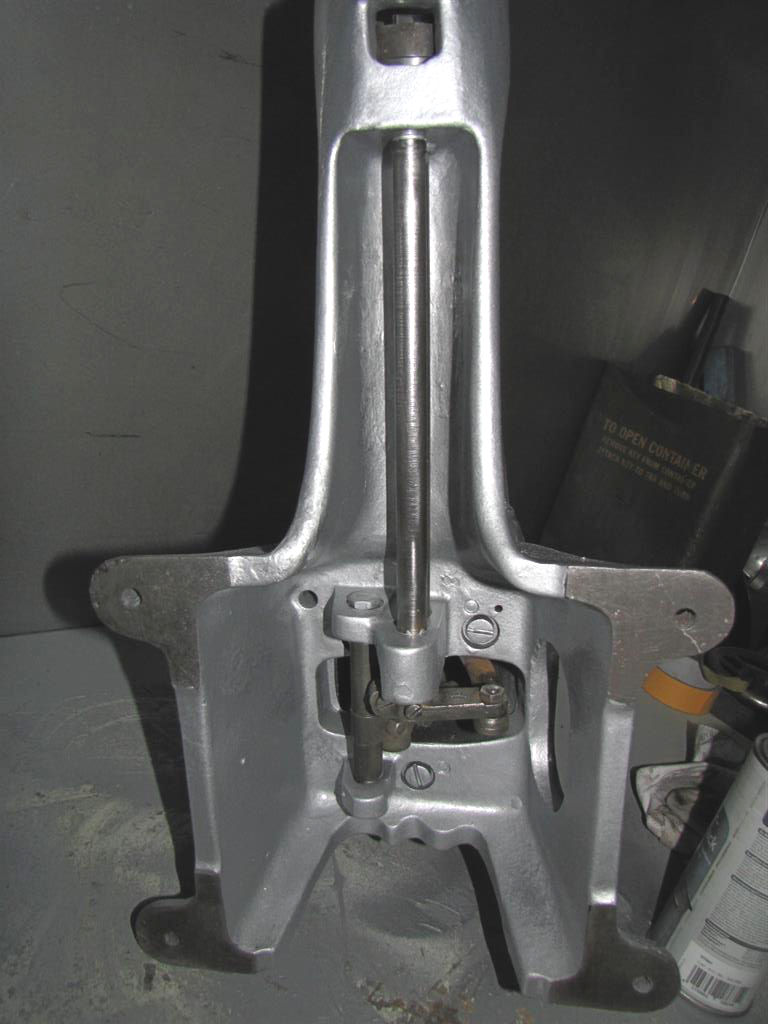
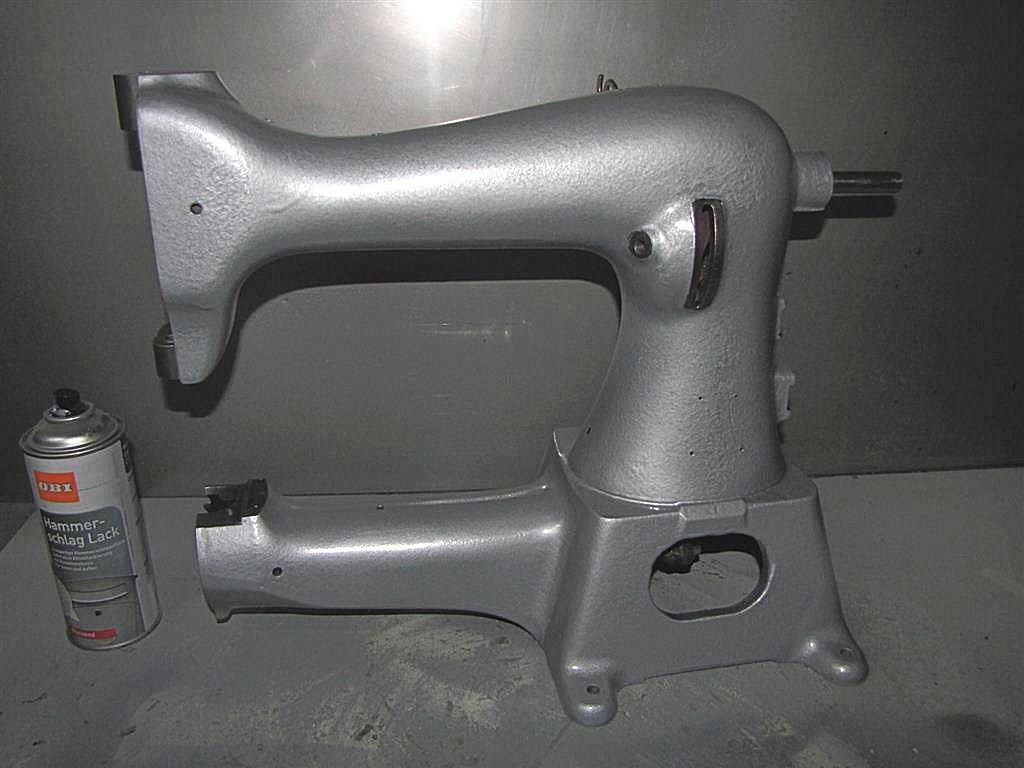
Grind down all the rust infiltrated paint and smoothed the chipped of spots. Under the paint I even found the drill holes for the Singer badge. This machine originally came with a Singer decal instead of a Singer brass badge (Wartime metal saving I guess). Then gave the machine a good inside and outside paint thinner shower and washed out (hopefully) all the internal gunk of old grease, oil, dust....- what ever this machine has collected over the years. Then taped everything and painted it with hammertone silver.
.thumb.JPG.110770b48fe273a49b11ad587973eba3.JPG)
.thumb.JPG.cf53f30bafe5e4133afa098d2c4cafc8.JPG)
.thumb.JPG.aeb6c67296f814bcbd49722624eaa67f.JPG)
.thumb.JPG.3c6dad1ac327c364d3eb18cb6d0ddafc.JPG)
-
Fortunately after some oiling the machine spun freely. Then I washed off the odd paint with paint thinner and stripped it as far as necessary. Lots of chipped paint and light surface rust on the lower arm and rust spots where the paint chipped off. Parts turned out quite nice after a thorough cleaning.
.thumb.JPG.fd0f806aa6dff86dd5d8791248da7a47.JPG)
.thumb.JPG.61468ebbb0b7d63bb5a1abb15f3be527.JPG)
.thumb.JPG.e60c55fa428ef16a70b9e5a80bc7df3d.JPG)
.thumb.JPG.46d09e3827c67b88278dabb190be9aa2.JPG)
.thumb.JPG.d5a532566e3b27236fae47cbfaa9c7d4.JPG)
.thumb.JPG.fa13ea8ea8f5aa3a34c43bbab7fdd36c.JPG)
.thumb.JPG.da2f8b2035f99d969e3cb6503386cf55.JPG)
-
A while ago I cane across some vintage machines that were used as garden decoration for a while. Some were exposed directly to the weather all seasons and some had a "roof" over their head but still outside all the time. I had 2 Singer 45 one was a 45K21 but that machine had too many issues like welded driving rod, missing and broken screw so not worth the trouble - I just kept some good parts from it. Fortunately the 45D91 (a pre 1945 German made variant of the 45K) had a roof over its head and survived in "quite" good condition but it has been oddly over painted. This is one of the few Singer 45 models that have a reverse function and I have been looking for one quite a long time. ... just reminds me of Billy Talent: Rusted from the Rain (kind of - not necessarily the lyrics but the Video) I unfortunately have deleted some of the pictures I have taken so I just have a few from the machine as found. I wanted to post this earlier but other things crossed my way so here is the whole story at once.
.thumb.JPG.12716e4f31faed9454052ab946c2367c.JPG)
.JPG.ec8bc6683ae3d95de8beba4af910a862.JPG)
.thumb.JPG.57ca9809e8a9bf8242ef78fa3f66a96d.JPG)
.thumb.JPG.c132703108bcac6b242d9299a45b0fea.JPG)
-
All servos work will with speed reducers. I have 2 JACK servos both bought from College Sewing and both run with a speed reducer. BUT Jack servo motors with needle positioning system do not work with speed reducers. At least the NPS does not work with a speed reducer but you can tun off the NPS. CS probably does not know speed reducers because they don´t have em for sale or have not setup a machine with a speed reducer ever. It does not matter if clutch or servo motors - they all can work with speed reducers. Check this forum you will find dozens of different SR setups. https://www.google.de/search?q=speed+reducer+site:+leatehrworker.nert#q=speed+reducer+site:leatherworker.net
-
what do you think how much torque you need? Better buy an electrical safe and out of the box servo motor. College Sewing sells 550W Servos for 99GBP + tax. At the end it´s cheaper than any tinkering + no electrical experiments and you have warranty. An additional speed reducer for sure is a good idea but depends on your purposes. My 2 cents.
-
I once made one my self. I´m barely using it but it indeed can be helpful. Well, it´s not really a (physical) guide it´s just a light that gives you some orientation between 2 points but it does not make you sew straighter seams. When your hands have a "nervous twitch" the laser does not help you - if you know what I mean. But magnet laser Uwe has linked is way better than what I have built - too bad not available on my side of the pond.

.JPG.6974cc62900ba967357df1945e5cf6e6.JPG)
.JPG.dce3378621e994812b3dc8dd2e8105df.JPG)
.JPG.9f818d9084ac20c49b74f2222ab3d457.JPG)
.JPG.16158c80b75fa0cd49f268aa0c21ed2a.JPG)
.JPG.02d3bfd3afb72ffaab2acd02a24cd880.JPG)
.JPG.d671d302a985569b589885e6143a08b1.JPG)
.JPG.2989d9a31482cc893efd9c3b17900975.JPG)
.JPG.b2736aebafa297898d069b499792cd42.JPG)
.JPG.ce962db4822b5cb9fa135358f8701a9c.JPG)
.JPG.b0a52e1b70f54a440e8fdffffe9d48e2.JPG)
.JPG.21ace3cc68e5c9fe4def09f8075fbe6b.JPG)
.JPG.402a1fb00d057ab73d387e925ff883d5.JPG)
.JPG.82e4c38ed22991d1c0700fe6c3319622.JPG)
.JPG.71e9139fdf2509e6ca55bfa29dfc42ad.JPG)
.JPG.3ebe53bf6b56e761ce5260d055cccb49.JPG)
.JPG.5bf6c37eb22cbeb5051efe507e15381a.JPG)
.JPG.d7ce3851c4f6483cf8d9b73ca0dd7f82.JPG)
.JPG.046c0c3369ef4076d80b777b0a0a0399.JPG)
.JPG.bdfaa38b798aba6bbab249db6f9c4102.JPG)
.JPG.18b36dbca868f03442a0194bea7004ed.JPG)
.JPG.e3066e2c3331a3e1ed505c34d3000bb1.JPG)
.JPG.af3d20334e3593f2efd5d6d8f4c49945.JPG)
.JPG.712a0e92c2a175a3c03759d3ca90d30b.JPG)
.JPG.cf998c1d736f0a2f9f4d72a13940ad6c.JPG)
.JPG.c6390961e8c95e3f69509dbac412928c.JPG)
.JPG.05ce8fd3b704c94474a54e1bfdf9c525.JPG)
.JPG.cbf231ef164a42b61e53145702e72ad3.JPG)
.JPG.38e4672f215a1814c03375b01c6cf229.JPG)
.JPG.717da5f5d0363bfbc69a91978811d57b.JPG)
.JPG.513df47ff770a156260a3bf243955b46.JPG)
.JPG.c6526a3bd83856750fcd5d1cb90faf9c.JPG)
.JPG.c825368ccfdbab52218ab4496db43ad0.JPG)
.JPG.702234fee864bb35dcb3765d60b79b83.JPG)
.JPG.7bea6efaaa3fa5e2ee6552ecb968954e.JPG)
.JPG.6d82299377b50d3e55f5adba92d63d7e.JPG)
.JPG.dc58a83345f2ed21c16da529df669ee3.JPG)
.JPG.00d68b5e3761642636132d2f5a105eb4.JPG)
.JPG.42891d1e95b0329b96c767c45a323a43.JPG)
.JPG.48eb342e04d174368c3e4c37dd79dd3b.JPG)
.JPG.aa4f11b874d7d79e44c5bdc5eee28430.JPG)
.JPG.0542b262f6b4438fdfd6ebfad5900309.JPG)
.JPG.d8b77c1871bee9d6b4a6ede81d61e649.JPG)
.JPG.12fc42cc7821c0ccf87ab2a3cade1b5f.JPG)