



Constabulary
-
Posts
5,801 -
Joined
-
Last visited
Content Type
Profiles
Forums
Events
Blogs
Gallery
Store
Everything posted by Constabulary
-

What Type Machine Is A Chandler 500?
Constabulary replied to DaltonMasterson's topic in Leather Sewing Machines
Just from looking at your picture.... Look for Juki 415 or 555 - they are pretty much the same class - maybe a little bit bit different. I would even guess this one is probably a bit an earlier model. -
Forgot to add Nakajima
-
Mitsubishi - Juki - Seiko - all the same
-
I think I have seen a Mitsubishi machine that looked the same but I don´t recall the model. However the Techsew 2750 looks similar to it but the Nakajima has no walking foot. http://www.techsew.com/techsew-2750-cylinder-walking-foot-industrial-sewing-machine.html/
-
You are welcome - hope your problem is solved.
-
You can download a Pfaff 238 manual here - 238 is the same as the 234 but the 238 has zigzag - threading is the same: https://www.google.de/url?sa=t&rct=j&q=&esrc=s&source=web&cd=1&cad=rja&uact=8&ved=0ahUKEwipwN6l1MjQAhWBLsAKHflsDswQFggiMAA&url=http%3A%2F%2Fwww.supsew.com%2Fdownload%2FPfaff%2FPfaff%20238%2C%20238-0%20Instruction%20%26%20Service%20Manual.pdf&usg=AFQjCNH1Y4jfNiAfzWWpHecKAYVXU-3Zxg&bvm=bv.139782543,d.ZGg
-
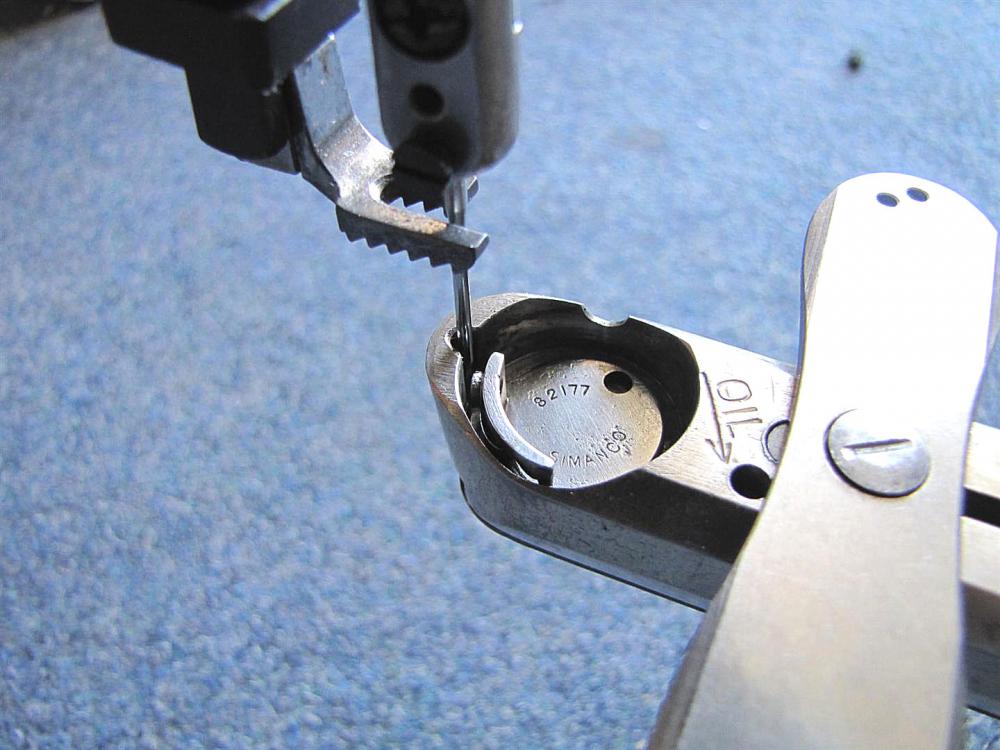
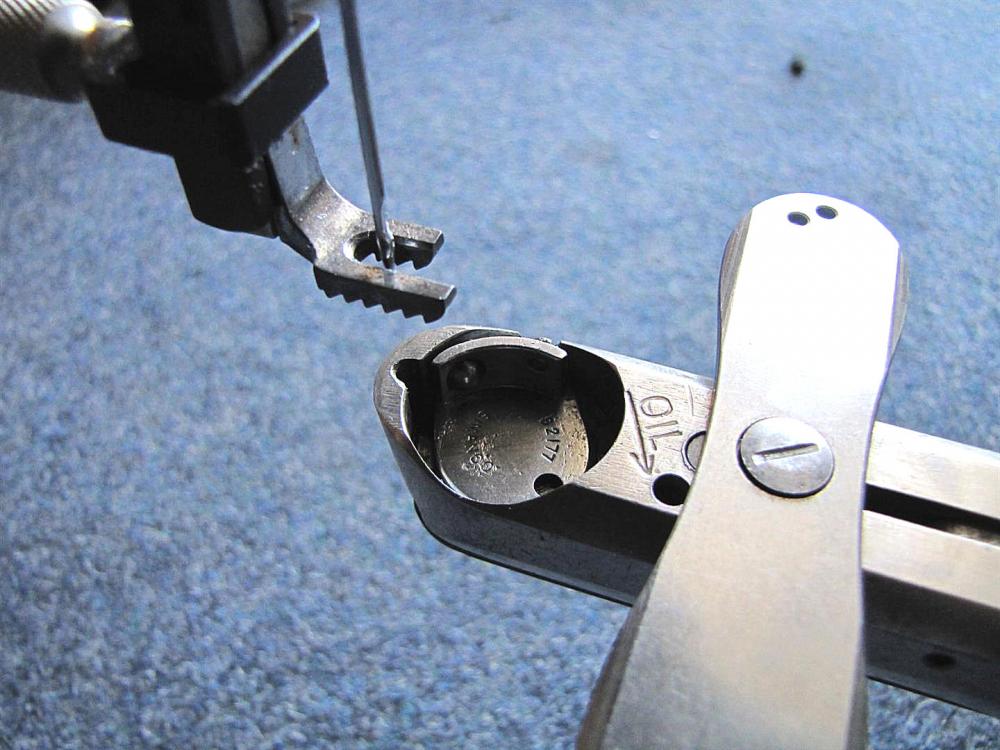
The bearing screw just holds the shuttle driving lever, there is no eccentric on it for adjusting the timing. The screw has to be tighten. My guess was that the cam pulley at the right end of the machine which drives the arm up and down needs a 180° rotation. May I ask if you have taken apart the machine for cleaning and probably have reassembled some parts (cams and / or gearbox) incorrectly? There are 3 cams on the main shaft and they all have to be in correct position otherwise the machine does not work. The small cam on the left side (feed motion cam wheel) is usually has a mark that needs to align with the mark on the shaft. The other 2 do not have marks but they have tapered pins which usually just fit from one side and you usually can see the "foot prints" of the set screw on the shaft. Still a guess form the distance I don´t claim that I´m right with this but I still think the cam pulley needs a 180° rotation. So I would drive out the pin (remember - its tapered), loosen the set screw and turn the pulley by 180° and test again. Pulley might be tight on the shaft so you probably need a gear puller and clean the shaft and inside of the pulley with some 320 grit sand paper before you reassemble it. EDIT: This is needle up and needle down at my machine - notice the position of the shuttle carrier - it´s just the opposite as on your machine so I´m sure your cam pulley needs the mentioned 180° rotation.
-
Not sure but I´ts possible. On external clutch systems like this I have seen leather as well as some very hard dense stuff same as used in some clutch motors. I know some clutch motor had asbestos fibers in their clutch plates. I think LW Member EVO160 once replaced a clutch plate on a similar system like yours with some hard sole leather if i remember correctly.
-
MoMatt - a lot of the early 29 / 29K models do not have the timing eccentric. Not sure when (or what year) they have introduced it but in this case I doubt it has the eccentric but I´m not 100% sure. I once restored a 29K1 from 1905 and it also had none. So its quite possible that this one from 1902 also has none. @DeiDragon Don´t know if you have removed the cam pulley before if you did you surely know the pin thats holds the pulley on the shaft is conical / tapered so you can drive it out only in one direction, otherwise you can probably damage something.
-
What you wanna know? Its a made in Japan 29K machine similar to the 29K73 small bobbin long arm patcher machines
-
Since the needle hook timing is way off as it seems problem could be a wrong assembled gear box or the driving cam pulley at the right side of the machine is in a wrong position. From just looking at you picture I would GUESS the driving cam pulley needs a 180° rotation.That would me my diagnosis from a distances.
-
right - haven´t noticed the stitch length so 138 thread does not make sense! Sorry!
-
if it is not too expensive - why not - I would make the trip and test it. I also have machines (just the heads) that I'm barely using. So what - they don´t eat bread and just need some oiling from time to time
-
I guess it has the same hook as the 153 though I´m not sure. In case it has the same hook it most likely can handle 138. So I would go and test sew the machine. The seller should not have a problem with that. Needle system is 128x3 so a 22 needle should suit the 138 thread.
-
just found this: http://www.industrialsewmachine.com/webdoc1/used/used-brochures/47w66.htm
-
I think it is not as heavy as the 153. I would guess 5-6mm thickness. it is not a walking foot machine. It has a jump foot system if I remember correctly. These were mainly used as binding machines afaik and for lighter leather work I guess
-
No - they don´t pay me money - I just thought its a good opportunity if someone needs parts. Sometimes its worth using a google search or their site search as not all parts seem to be in the correct category. EXTRA 10% OFF All Sewing Machine Parts, Needles, Scissors and Accessories Code: BLACK10 Enter The Code During Check Out AVAILABLE UNTIL SUNDAY 27TH NOVEMBER 2016 AVAILABLE ON THE WEBSITE ONLY www.college-sewing.co.uk
-
The "felt" must have been of mixture of old compressed dirt oil and lint See above pictures of parts or check the parts list - there is no felt.
-
The 29K58 is very close to the later 29K71 and almost every parts for this machine is still available. But as Wiz said, this machine has its limitations. Though it is very versatile because of the narrow arm and 360° revolving foot it is still is a repair sewing machine for slow sewing operations and not really a machine meant for production quality leather goods. Be aware - the more worn these patcher machines are the shorter the stitch length is. Max. is 5 SPI but most used machines just do 6-7 SPI. Short stitches means some parts are worn and require replacement. Check SPI when stitch length adjuster is set to 5 SPI and make 10 Stitches / 11 holes on some cardboard and measure the distance between center of 1st and last hole and divide by 10 - that's how you find out the actual stitch length, When you want to sew more than 6mm and with thicker thread you should look for a walking foot / triple feed machine like Singer 111w155 or similar models. They can sew up to approx 8-10mm and are in approx the same price range.
-
Manufacturer's Mark on Sewing Machine Hooks
Constabulary replied to Uwe's topic in Leather Sewing Machines
Pretty obvious but for the records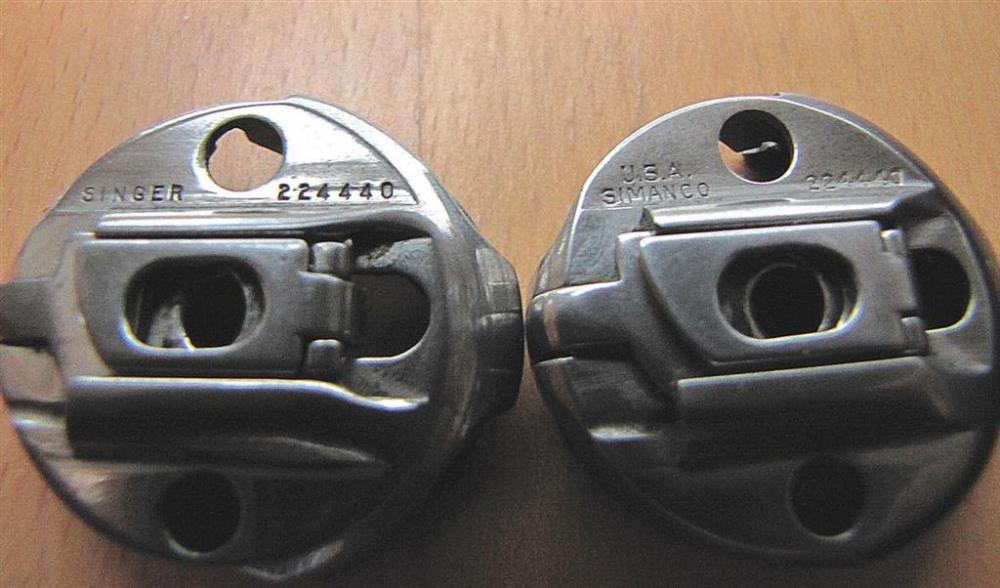
-
Manufacturer's Mark on Sewing Machine Hooks
Constabulary replied to Uwe's topic in Leather Sewing Machines
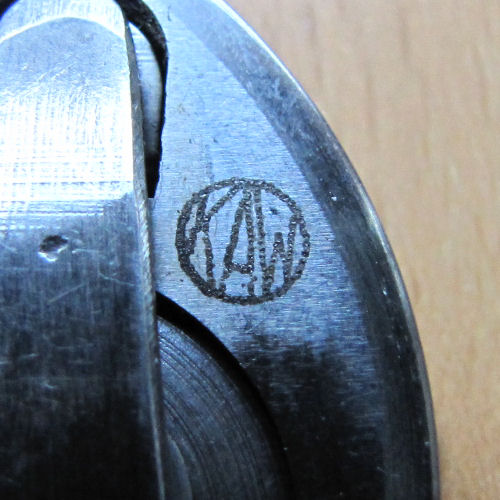
I have two more, they come from vintage hooks. KAW = KOCHS ADLER WERKE (Nowadays Dürkopp-Adler) This one is from NÄHMATAG = Nähmaschinenteile AG (Radebeul, East Germany) or from 1953 onward NÄHMATAG Nähmaschinenteile GmbH, (Aachen, West Germany) Company no longer exists but at least on my side of the pond you find this mark them quite frequently on different sewing machine parts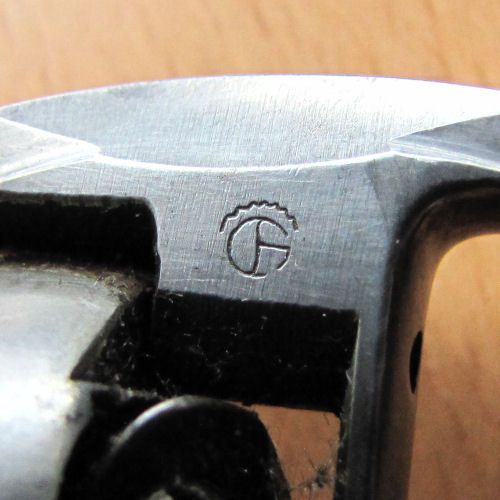
-
New to industrial sewing machines Juki LU-562
Constabulary replied to jshep's topic in Leather Sewing Machines
different - compared with what? Please post some pictures, -
190Lr/r Needle Not Work For My Pfaff 1245, Too Long :(
Constabulary replied to piheart's topic in Leather Sewing Machines
depends on what needle system it is. -
190Lr/r Needle Not Work For My Pfaff 1245, Too Long :(
Constabulary replied to piheart's topic in Leather Sewing Machines
College Sewing https://www.college-sewing.co.uk/?s=135x16 -
You still can buy both types.


