All Activity
- Past hour
-
 @keenbean To add to my previous comments, even if you are able to source thinner needles in system 7x3 - for a Juki 441 class machine - know that they are very long and easily deflected. With a lot of layers taped, glued, or stapled together there's a good likelihood that some deflection will occur. You can reduce the deflection by limiting the smallest needle to a size 20. This will poke a slightly wider than usual hole for #92 bonded thread, but it's still much smaller than a #23 needle. Since the 7x3 is a round point, the ends will still be on the surface, as opposed to leather point system 794 S point that submerges the ends. If you can live with a thread range of #92 through 207, a Cowboy CB3200 will handle everything you can throw at it. It sews 1/2 inch, but the feet lift 5/8 inch. I have seen folders on the Cowboy/Hightex website, which would be a special order. You can ask Bob Kovar, the owner of Toledo Industrial Sewing Machines, about folders and other attachments for that model. If anybody could fit one onto that machine, it's Bob. Addendum: I wrote a blog article about dumbing down a Cowboy CB4500 or similar class 441 machine for use with thin needles and thread. You might find it useful if you want to consider a CB3200, 4500, or similar machine. Note, most of the machines you're looking at are manually oiled. It's no big deal. It's a routine you develop.
 -
Recommended Source for Hermann Oak Tooling.
bruce johnson replied to Latigo Smith's topic in All About Leather
Have you looked at Panhandle Leather? That's another source and good feedback. Personally I have been dealing with Matt at Maverick for at least 25 years (before it was Maverick). They knew what I liked and I never had an issue with any side being misrepresented that I bought from them. If I said "I need clean" it was clean. If it was going to be fully stamped I told them and got a probably B. If I said I need the crappiest side of 8/9 you have to test splitter blades and tools - it was crappy or had some test pieces cut out of prime areas. There is something to be said for that kind of a relationship. Since I transitioned to leather tools, my wife started doing leather work. Her source? Maverick. Good people, fast shipping, and no surprises for her either. -
Thanks for the advice, I will be giving what you suggested a go. The coats thread is Terko Satin is a cotton wrapped polyester core spun thread with a satin finish
- Today
-
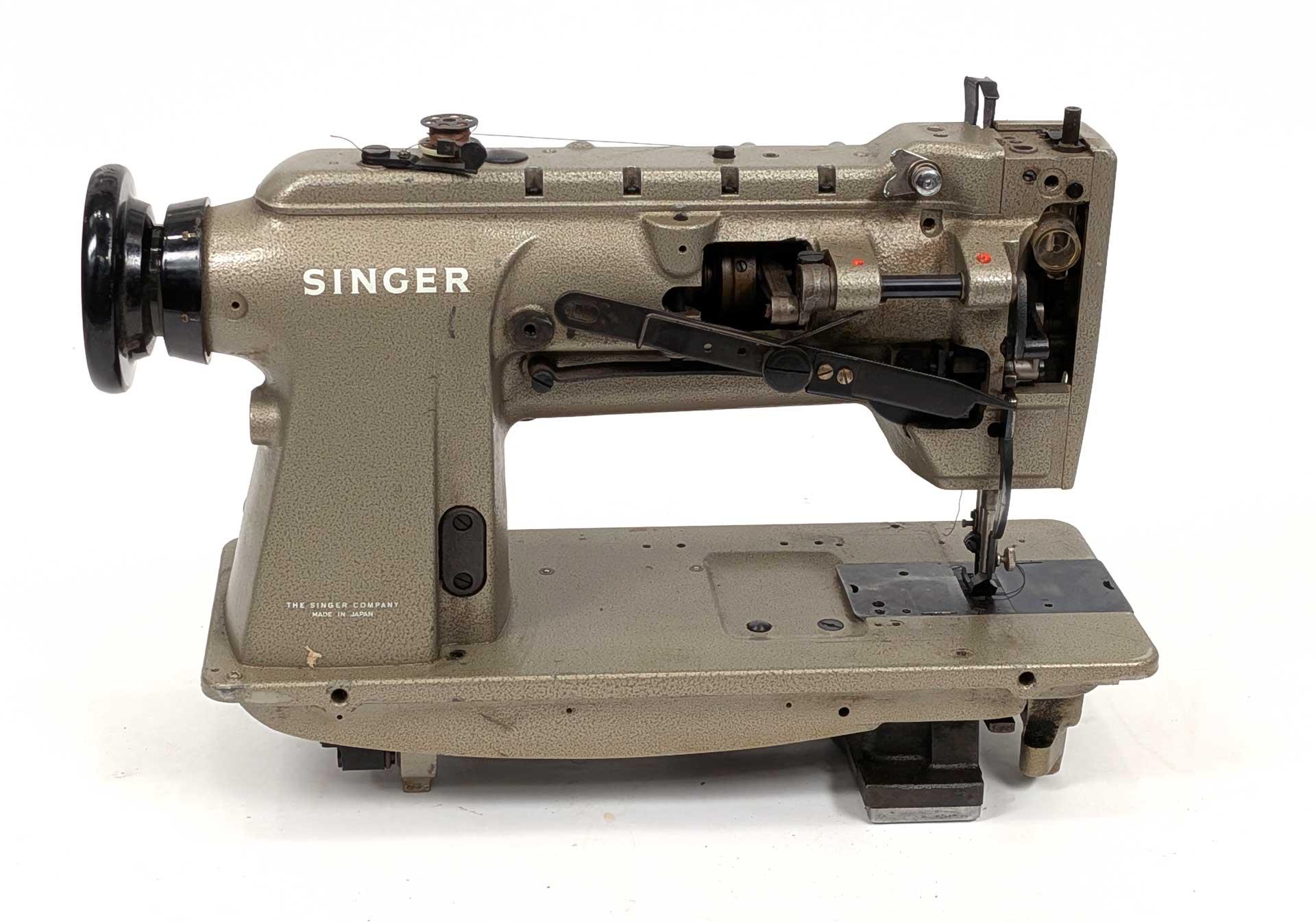
 Nicest condition 211 I have ever seen. Professional walking foot Singer excellent for thick leather, webbing, upholstery. 1/2" foot lift. Lightly used: Movements and stitches are smooth and beautiful. A few light paint scratches but none of the paint is worn off from the heavy use that most of these units have seen by now. Asking $1000 Can be crated and shipped or personally delivered depending on your location. pm me here or email solowiejs@gmail.com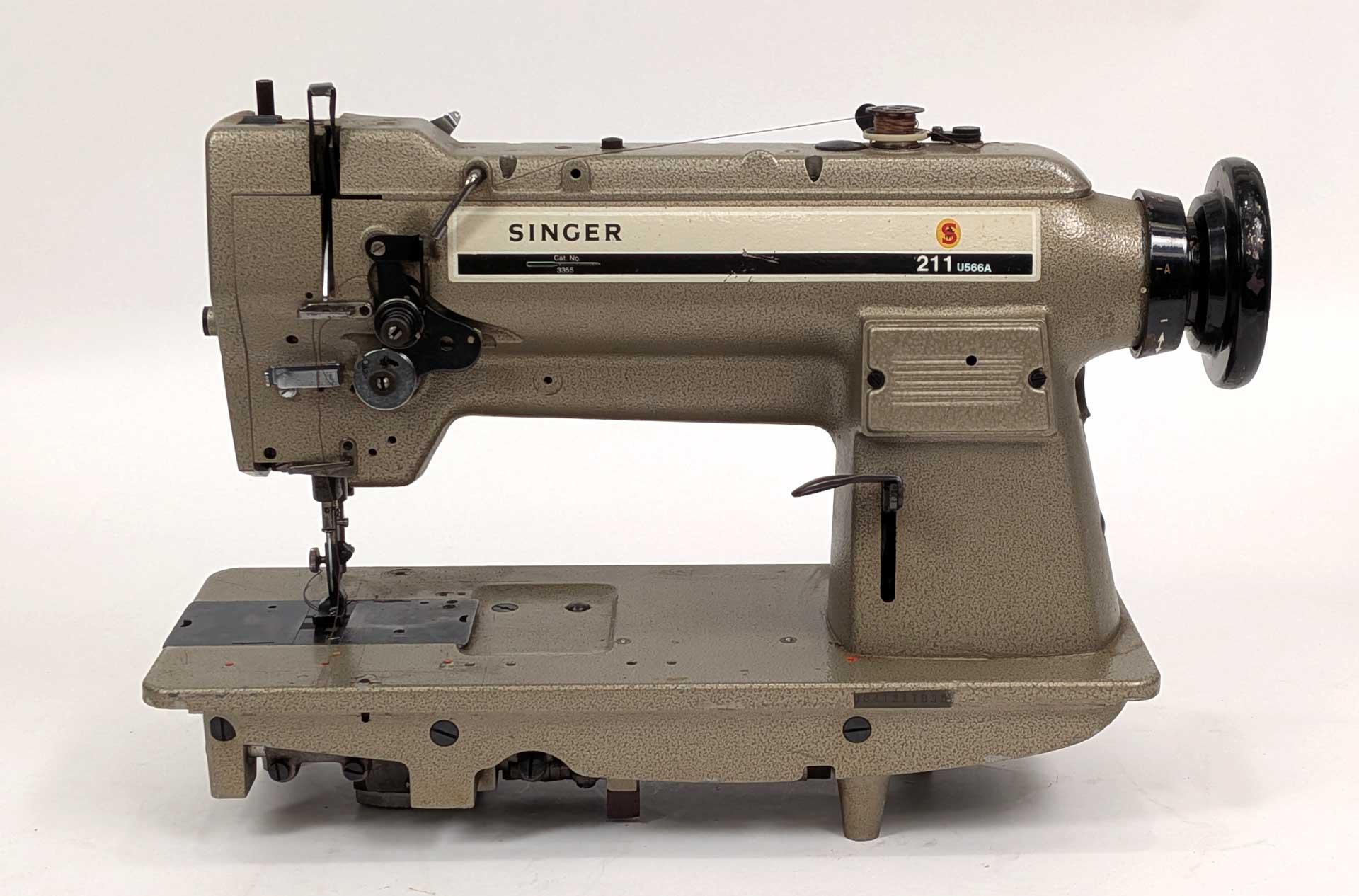
-
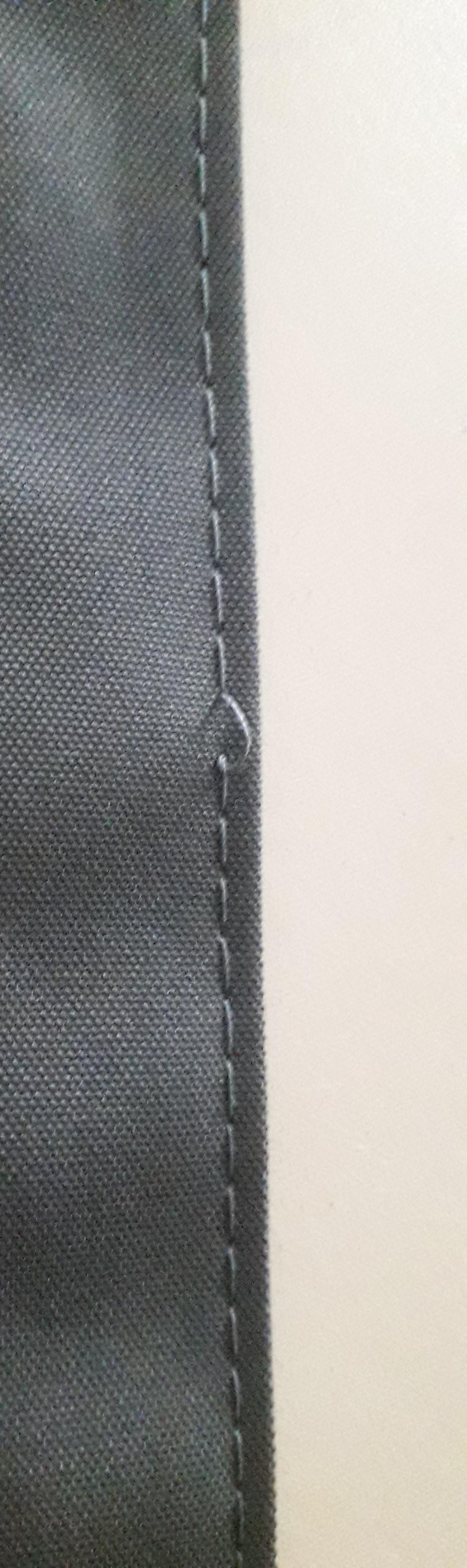
I think the problem is related to the thread and needle configuration you have selected. A good reference chart for needle to thread size is located here ( https://www.tolindsewmach.com/thread-chart.html ) The #19/120 is too large for thin acrylic, causing inconsistent penetration and hook timing issues Inconsistent top stitches like loose loops every few stitches on thin acrylic canvas probably the result of an oversized needle creating slack in the coated acrylic canvas holes, mismatched tensions, or threading issues in this industrial walking foot machine. My understanding is the Coats Tkt 036 thread is a all purpose core-spun polyester probably Coats Epic and more linty / woolly then the bonded polyester like Coats Dabond. If the item is being sewn for an outdoor item or upholstery maybe change to Coats Dabond. I would suggest: i) Change needle first: Drop to #14/90 or #16/100 sharp/microtex (not leather point). The #19/120 is made for V92 and properly leaving a small gap where top thread doesn't catch consistently on the thin acrylic canvas. ii) Top thread tension. If the the top and bobbin tension isn't balanced properly where the top thread tension is to great it will cause top-side loops. iii) Stitch length properly should be about 4mm and sewn slowly so to help reduce hook timing issues. kgg
-

spring flowers and good food
Darren8306 replied to chuck123wapati's topic in All About Us and Off Topic
These will likely be of no interest to anyone buying leather goods, but I found a cool coin, bought a few, and made cases. This 'morse code coin' is really the first time I understood how easy, teachable and usable that code is. An old friend is a bit of a radio nerd, so I'm sending one to him. Another pal is a younger, newer radio nerd, and I'll be giving him the grey one. As to the other two, they'll sit with my growing stock of leather products, and probably be more of a conversation starter than sellable product.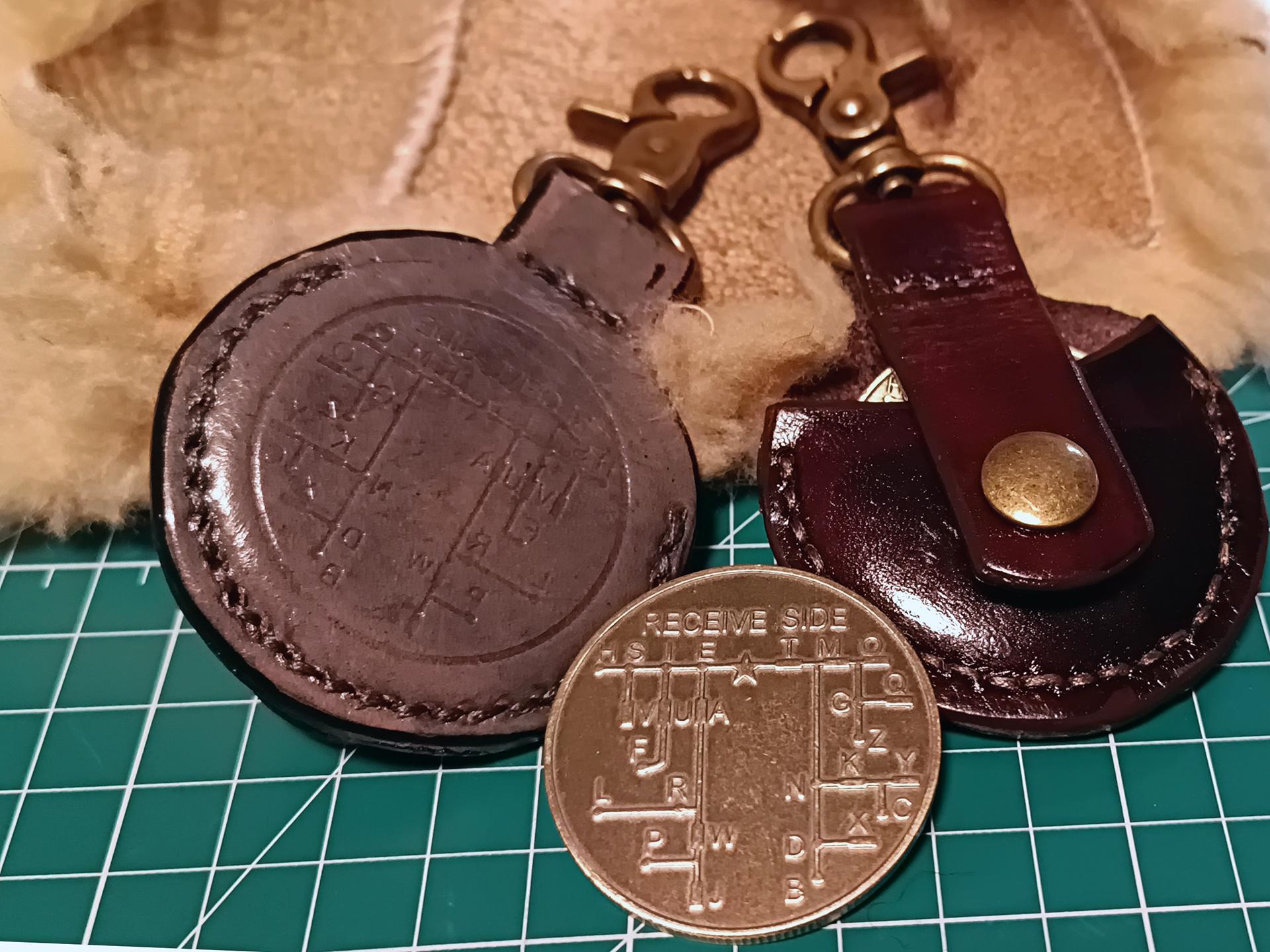
-
Thank you
-
Bit of a problem if anyone can help please. I am sewing acrylic canvas and occasionally get a loop on top and getting a bit of pucker too, please see picture. I have adjusted tension, checked hook timing, stitch length etc I am now wondering if there may be a mechanical problem with the machine or is there something I'm missing. The machine is a Brother LS2 B837. Needle is a 19/120. Thread is Coats Tkt 036 Many thanks
-
I use lots of water-based contact adhesive on leather and double-sided tape only when I need to combine textile and leather (eg zippers). I use double-sided tape because glue would wick through the textile and become visible. Note that tape adds more thickness than glue and glue is easier than tape to manoeuver around curved edges. Both glue and leather for me are tools to keep stuff together for stitching. I'd never use glue alone for keeping things together. While a properly applied good adhesive should never come loose, that only applies to the few fibers of leather it contacts, the rest of the thickness of the leather can still rip through depending on the foce applied. The thread of a stich goes all the way through the leather and keeps the layers together accross the entire thickness.
-
 @keenbean, this sounds like a classic case of "no one machine can do it all" and at least you recognize that fact. You're talking about buying a machine that'll be working right at the upper end of it's capability. No room for growth, no room for one more layer. And given the fact that you're apparently working with found materials, who knows what you might run into? You need 2 machines. One in the range you're talking about and one in the 441 clone range. At least that's what it looks like from here. You'll probably need a bigger shop to put it all in, too. Hey, it's easy spending someone else's money ... 💸💸
 -

spring flowers and good food
chuck123wapati replied to chuck123wapati's topic in All About Us and Off Topic
It's been a warm winter for me, this last week in the high 50"s and that's in farenheight lol. No snow, but the wind is still blowing pretty good. I have been able to get my old bow down and shoot a few arrows lately its been so nice here. I decided to take it down to the bare bones and shoot totally traditional (American traditional). LOL, all it had was a flipper rest, but I pulled that off and used a piece of my hair on elk hide for the rest. Man, did it ever quiet the thing down. I haven't shot much in the last few years and had forgotten how relaxing it is. Been trying a three-finger under release, and built a couple of diferent tabs, but i dont think I'll change from my old ways. -
 Be careful. Juki rates their machines on what it can sew at max thickness not what you can stuff through the eye of the needle. Example: Juki LS-1341 rated for a #24 (180) needle which can accept V207 however the spec for max thread size is V138. Some clones would spec it as being able to sew V207. kgg
 -
 Steve855 joined the community
 -
spring flowers and good food
chuck123wapati replied to chuck123wapati's topic in All About Us and Off Topic
Those are a PITA!!! and pretty much useless except for making money on callouts. -
 Any Adler 205-370 or it's clones will do the job if set up properly (needle hole in feet dog, hook clearance) but be aware that this class of sewing machine is not on a budget and requires regular maintenance.
 -
I just noticed that my preferred source for Hermann Oak sides, Maverick Leather Company, has recently raised their prices on the HO B Grade tooling sides from $268.99 to $299. This increased price plus their $19.99 shipping for sides makes the price more than I care to spend for B Grade sides. I looked at Springfield Leather Co., and they raised their prices on the B Grade recently too, but only by $10 per side, and I can add a side to an existing order without any increase in shipping cost. Do any of you recommend ordering Hermann Oak sides from Springfield Leather Co., and if so, do any of you recommend requesting that a particular customer service representative pick out good sides for me? Thank you for any guidance. A secondary question; Do you guys find that it's worth spending the extra $35 to bump up to the A Grade? I've been pretty happy with B Grade, but I'm considering going for the A Grade if it'll give me a noticeable difference in the number of blemishes.
-
 @Wizcrafts I should have been more clear but I only meant the presser foot lift being 15mm, not the actual thickness the machine can sew. When upcycling it's helpful to have more room to move things around under the foot. All the machines I mentioned have a listed clearance of 15-16mm. They also claim to handle #207 (Tex 210) thread. That's a great thread and needle chart, thank you. referencing that and some videos, I believe #138 would be plenty for my applications and the apparent option for #207 eases my doubts there. And the low end at size #69 is perfectly fine too. The 441 class threads and needles would definitely be a commitment though. My being on the border of heavy and super heavy duty is exactly what I was afraid of. Great point about the throat plate as well, I didn't think about that. I do not have the budget for two machines right now, maybe in a couple years, though that seems like the best eventual solution. I suppose a 1341 class machine will at least allow me to handle some heavier stuff now while the super heavy stuff waits for the future.
 -
@keenbean Just to tag in on @Wizcrafts comments: The Juki TL Haruka uses HAx1 needles with a shank diameter of 1.63mm and uses up to max #18 needle which means the max thread size is V69 (metric 40). Typically the largest thread size for a domestic machine. The machine weight is about 25 lb. The Juki LS-1341 is a cylinder arm uses 135x17 and 135 x16 (leather) needles with a shank diameter of 2mm and uses up to max #24 needle which means the max thread size is V138 (metric 20). The head weight alone is about 82 lbs. The Juki LU-1508NH is a flatbed uses MTx190 needles with a shank diameter of 2mm and uses up to max #25 needle which means the max thread size is V207 (metric 15). The head weight alone is about 93 lbs. The Juki TU-1508NH is a cylinder arm that would be the equivalent to the flatbed Juki LU-1508NH. The head weight alone is about 97 lbs. The Class 441 machines like the Juki TSC-441 cylinder arm uses 794 needles with a shank diameter of 2.5mm and uses up to max #28 needle which means the max thread size is V415 (metric 7). Think of a needles with similar shank diameter as a 2.5" finishing nail, big hole. The head weight alone is about 123 lbs. kgg
-
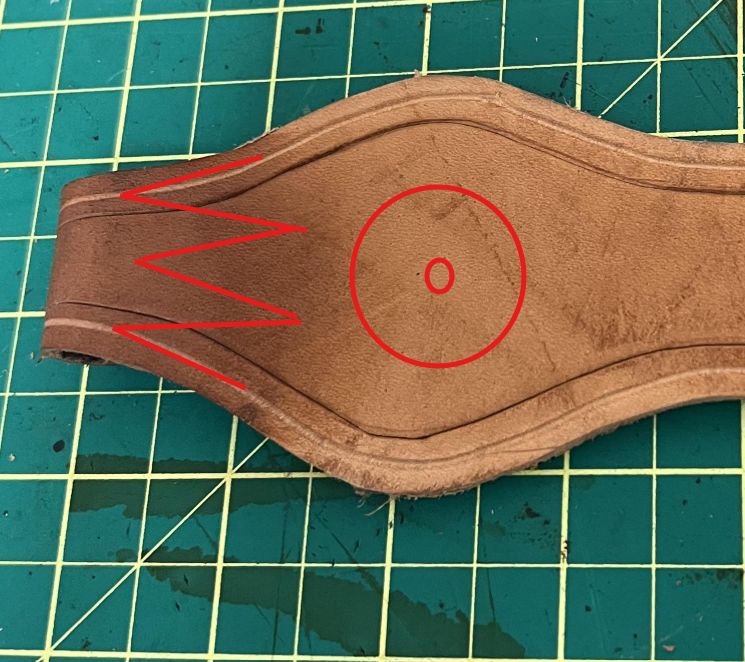
A few questions first. What weight of leather are you using? Are you going to line this? Is this the side leg of the breast collar? Are you attaching a two inch D? Will the breast collar be under heavy use or will it be mostly decorative? Is this for you or someone else? To me it doesn't look like if you centered rivet of the concho will catch the tab. You could add a couple copper rivets and/or stitch it with a W or V sort of like the picture below. Looks like you have about two inches of tab you can catch. The tab is not optimal shape to take advantage of the strength of the entire stitch line. The transition will be a little high and rough it needs skiving and you don't have much lenghth to skive down and maintain strength. Lining the breast collar will help some. The answer to your question is, the choice is up to you.
-
@keenbean First, take a look at this thread and needle chart. It shows the diameters of various sizes of thread and needles and tells you which needle to use with a particular thread size. You really need to define a range of thread sizes, then find machines that can use the range of needles that are best matched to the thread. But, keep in mind that lockstitch machines for overlapping knots that must be pulled up inside the material without seeing them on the top or bottom. The thicker the thread, the harder it may be to conceal those knots. Different classes of sewing machines are able to handle different ranges of needles and thread. Most upholstery grade machines are meant to handle a range of thread from #69 through #138, with a corresponding needle range of #18 through #23. Extra heavy duty machines may extend the thread range to #207, which calls for a #24 needle. From your description of the range of materials and thicknesses involved, you will be on the borderline of heavy duty and super heavy duty. The Juki 1341 and its clones may or may not live up to your expectations. You want a 5/8" clearance under the foot (15mm). The only way you can get that amount of lift on a walking foot machines is if it is built to lift at least that high without the tip of the needle sticking out of the inside foot. The 1341 and its clones are probably not built with that extreme amount if foot and needle lift in mind. Ironically, the Juki LU-1508NH flatbed machine is built to lift that high, including the tip of the needle. It accomplishes this by using a longer needle system with a longer stroke. The 1341 and clones are made to use system 135x16 and 17 needles, with are standard length for upholstery grade machines. At their maximum rated lift, the needle bar just barely clears the lifted feet and the needle's tip is just inside the bottom of the inside foot. You'd have to ask a dealer, or somebody who has tried it to know if these machines can accept the longer system 190 needles that would be needed for a higher than standard foot lift. While the upholstery grade machines run out of lift around 1/2 inch, and are limited to a maximum thread size of #138, the 441 class machines are happy with thicknesses up to at least 3/4", with some able to sew 7/8 inch. However, these machines are built for super heavy duty sewing with large thread sizes and correspondingly large needles. As such, it is difficult to find any leather point needles under a #23, and even harder to find round points under size 22. These needles are perfect for #138 thread, top and bottom, but are way too big for thinner thread. Further, these machines have very large oval holes in the feed dog to clear needles up to a #26 or 27. Thin material can get pushed down inside the hole. To solve that problem, at least two people are producing narrow feed dogs and throat plates for the 441 class machines. So, you'll have to choose between modding a lesser machine to use a longer needle, then figure out how to increase the foot lift, or dumb down a more powerful machines to use thinner needles (if you can find any) with thinner thread.
-
 Heafty turnip joined the community
 -

spring flowers and good food
Sheilajeanne replied to chuck123wapati's topic in All About Us and Off Topic
Northmount, YES!! That's exactly the problem I was having! Too much water in the condensation drainage line, and the pressure sensor wasn't working properly! Maybe it's a design flaw that's common to a certain make of furnace. The furnace is only about 2 years old, and replaced the oil furnace which was installed when the house was built in the late 1960's. Anyway, he's order a new pressure switch. Hoping that will fix things... I can only get the temperature up to around 18 C. I can live with that, but I have to bundle up. The night it was really bad, it was extremely cold and windy outside, which made the temperature inside the house drop quite low. -
.thumb.jpg.6e903dd66163ad5672f00f144058c571.jpg)
spring flowers and good food
Northmount replied to chuck123wapati's topic in All About Us and Off Topic
My furnace started acting up a couple weeks ago while we were away for a couple days. I can remotely monitor our house and could see that the thermostat was calling for heat, but none being delivered. I have a separate heating system for our basement (glycol boiler and perimeter baseboard heating loop) so I just turned up the basement thermostat. When I get home, I find that the pressure differential switch that detects whether the draft is adequate or not was acting up. It had water accumulating on one side so couldn't provide a correct signal to light up the furnace. After fussing with it several times, I decided it was time to find a supplier for that switch. Finally found one and placed the order. 5 days delivery time. Continued to have to clear the water out of the sensing tubes for a couple days. The guess what? It starts working correctly again. Now I have a spare switch. Decided it is a good idea to keep the spare as insurance. It's been working just fine for several days now. The real problem is poor design. The switch is mounted low, below the the pressure sensing lines. So condensate (water) from the wet exhaust gas builds up over time and offsets the actual pressure differential. Had troubles with it when we first had the high efficiency condensing furnace installed about 20 years ago. Pointed out the problem to the installer/supplier and the "Maytag Man" wouldn't do anything about it. So over time, condensate builds up, and the problem re-occurs every so often. But not for the past 5 or 10 years. So I should move the switch to a location higher than the pressure taps so any condensate drains back to the source. May I'll get around to it some day! But I have a spare switch that should keep it at bay for ... -
 arlen.myles joined the community
 - Yesterday
-
nice
-
Hello all, I'm an upcycling artist based in Minnesota. I make various bags and clothing. I love working with heavy fabrics and I'm finally running up against the limits of my trusty Juki TL Haruka. Case in point, I tried making a canvas bag with some #8 (18 oz) canvas this past weekend and, while it did great up to around 8 layers, it really struggled past that which is understandable since the design I used involved some areas with upwards of 12 layers (20 on the side seams!). And that's without things like flat felled side seams. As my main focus is bags, I am looking for a cylinder head, triple feed machine. I am looking to sew heavyweight canvas (up to 30 oz preferably!), 4-8 oz leather, heavier vinyl, as well as upcycling some odd materials such as carpet samples, bath rugs, jellyroll rugs, vinyl banners, etc. I began looking at the Juki 1341 and it's associated clones and after LOTS of research, I narrowed my preliminary selection to the Thor GC1341, the Cobra Class 26 and the Cowboy 6900. After making the previous tote I realized that a bag with heavyweight canvas and leather will have some very thick and dense sections so punching power is obviously a concern. Beyond that, I'd prefer a decent presser foot clearance (15mm+), relatively low maintenance (the reason why I'm a bit hesitant on the cobra, as it appears to require significantly more involved manual oiling), a servo motor with EPS and speed reduction (I'd be willing to buy and swap in a kinedyne 750 motor if need be), easily sourced accessories including a double fold binder and a "space saver" table although I'm confident in mounting the machine to a third party or home-built table if need be. Some nice-to-haves would be easily adjustable presser foot height, dual thread tensioners and a foot operated presser foot lift (I'm tall with long legs so knee lifts can be a big awkward for me). It would also be a plus to have the ability to use ~18 size needles so I can use the cylinder to get to hard to reach areas on less heavy articles without shredding them but I understand that that isn't what this machine is for. I'm not super familiar with industrial thread yet but it seems like all the options I looked at can use thread which would be fine for my uses. So given all that, my main questions are: Are the class of machines I'm looking at capable of sewing what I need? Are there other better options I'm overlooking? Do I need to look at 441-level machines or similar to sew with the mentioned weights of canvas and leather reliably? I should also mention that I am pursuing a mechanical engineering degree and am mechanically inclined, so I would be comfortable servicing and modifying parts/machines. I also have access to a fairly well-equipped machining shop at my university. Let me know if any more information is needed and thank you for your time! This forum is a wonderful resource.
-
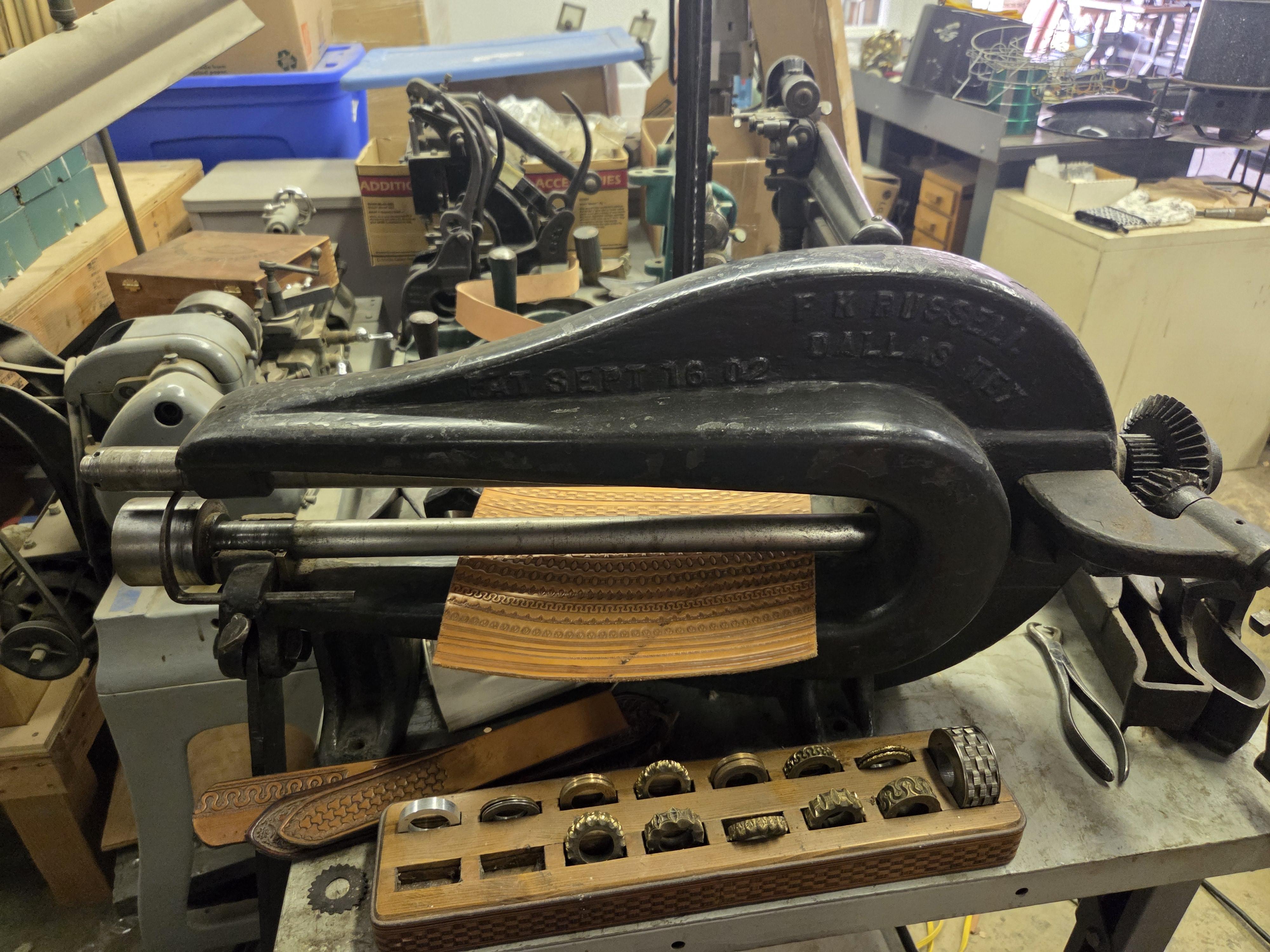
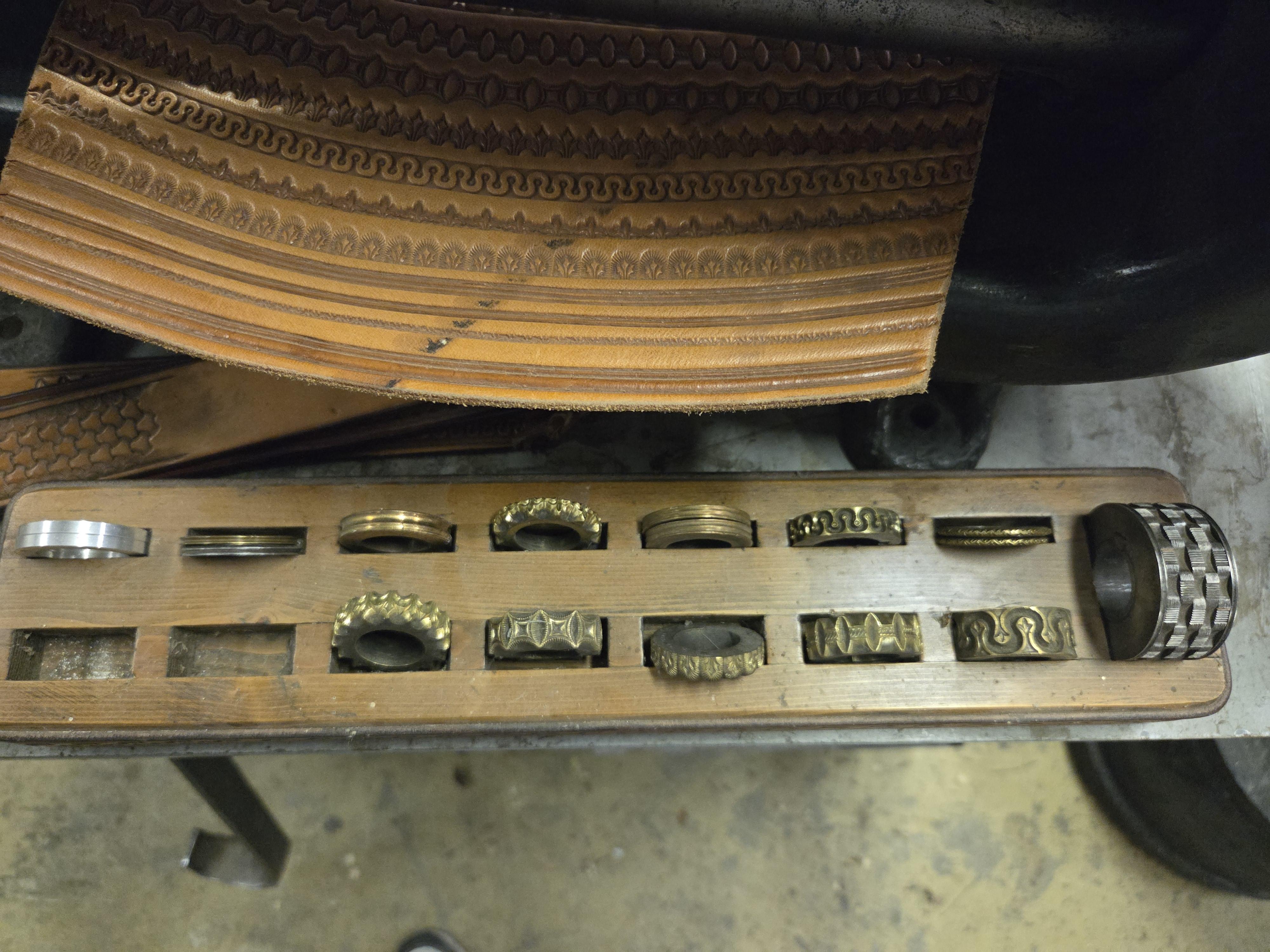
 An original Russell belt embossing machine with 10 embossing rolls original to the machine. Rolls are marked Russell. Pick up in the Denver area or delivery to the Sheridan leather show possible. Thinking $2,000. Line machine $500 5 in 1 $500. And feel free to make a reasonable offer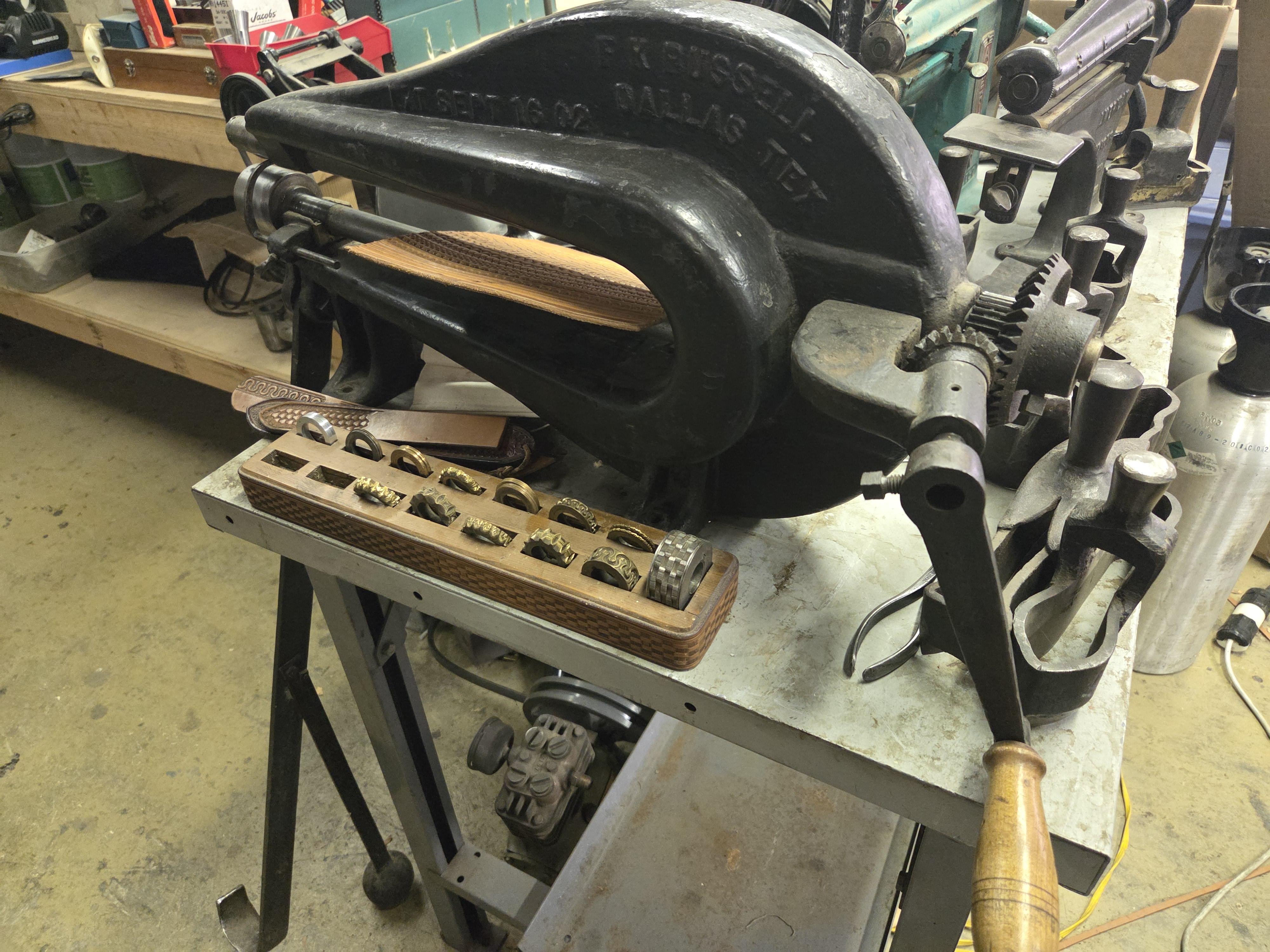
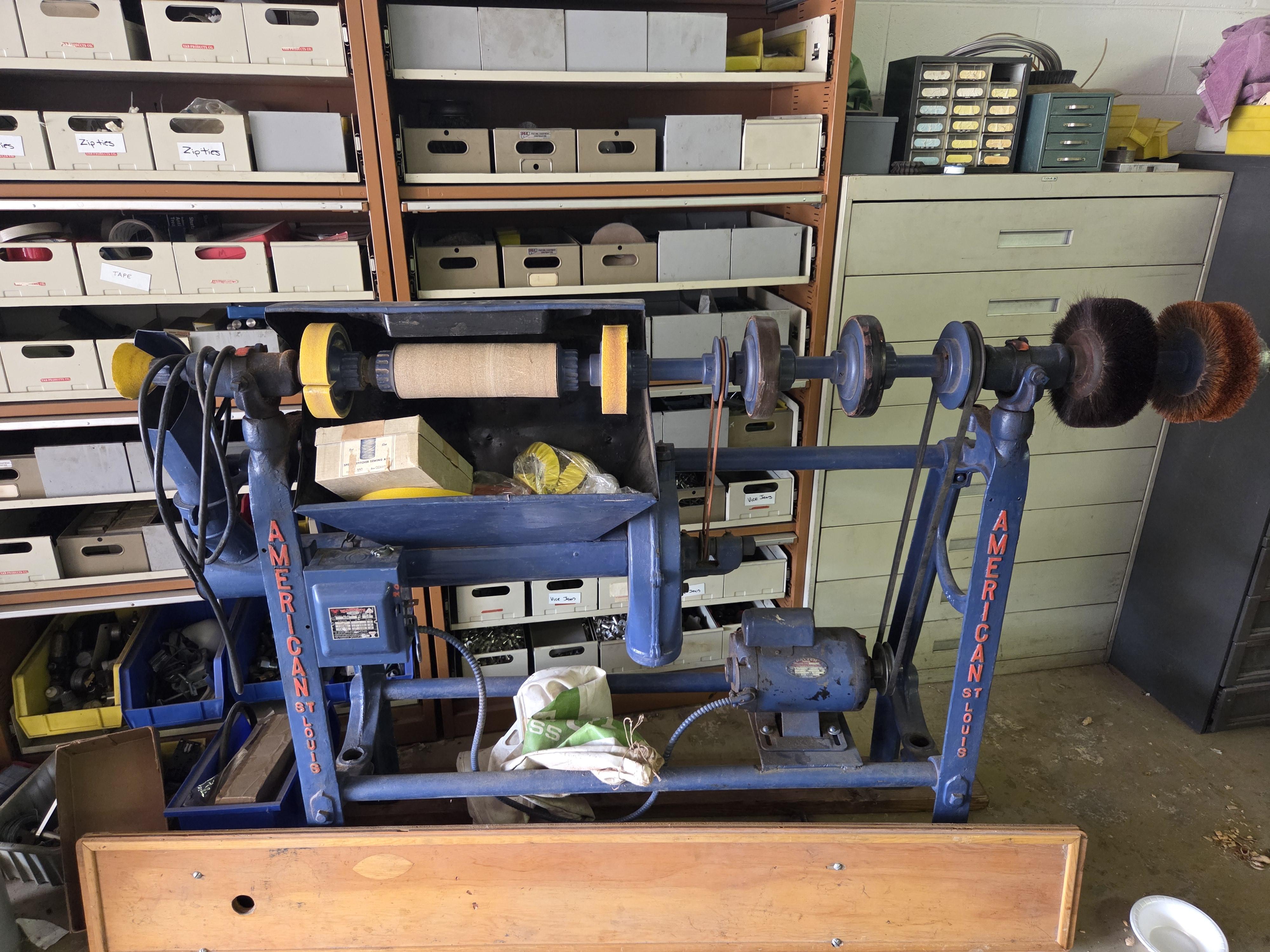
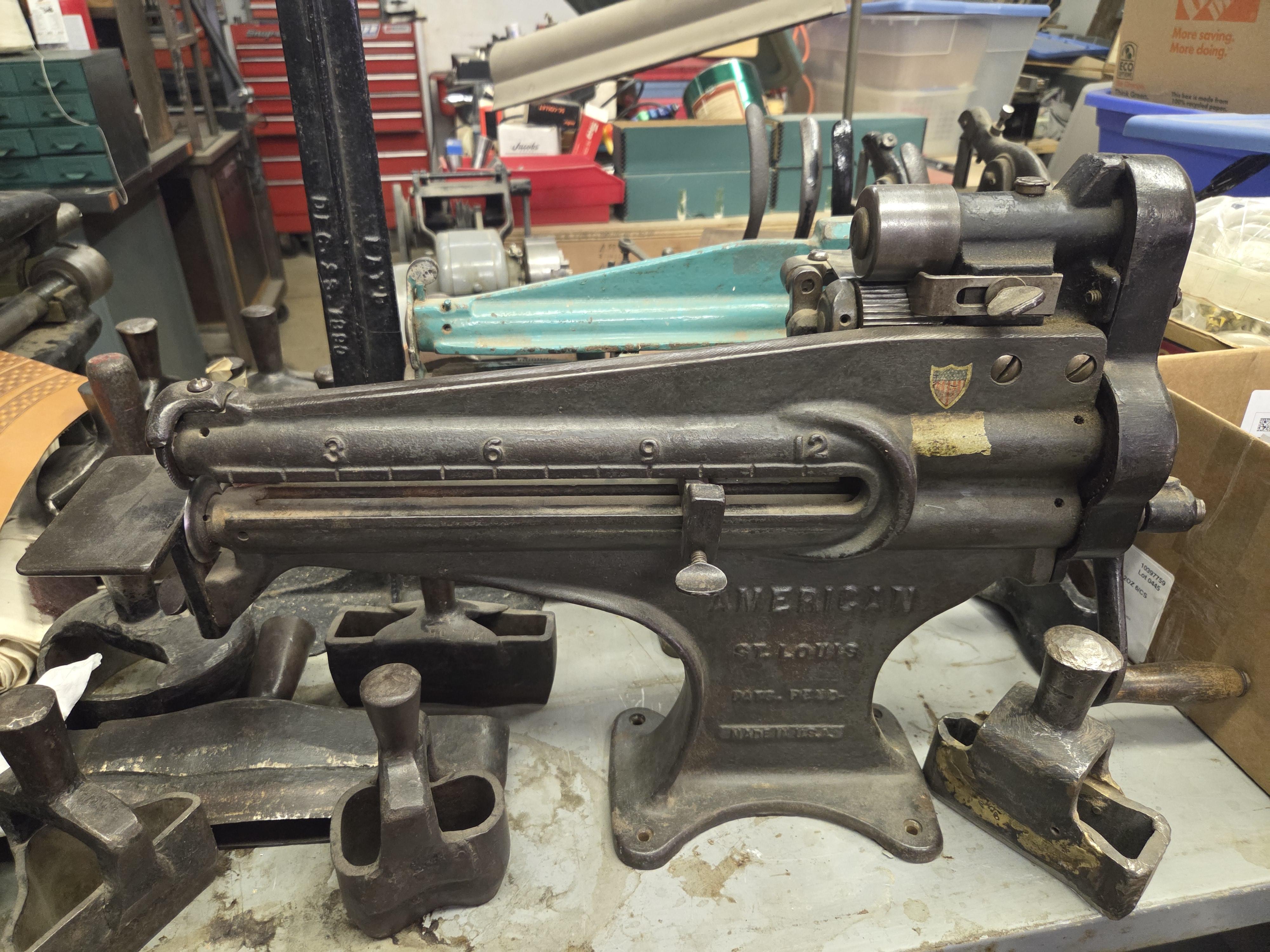
-
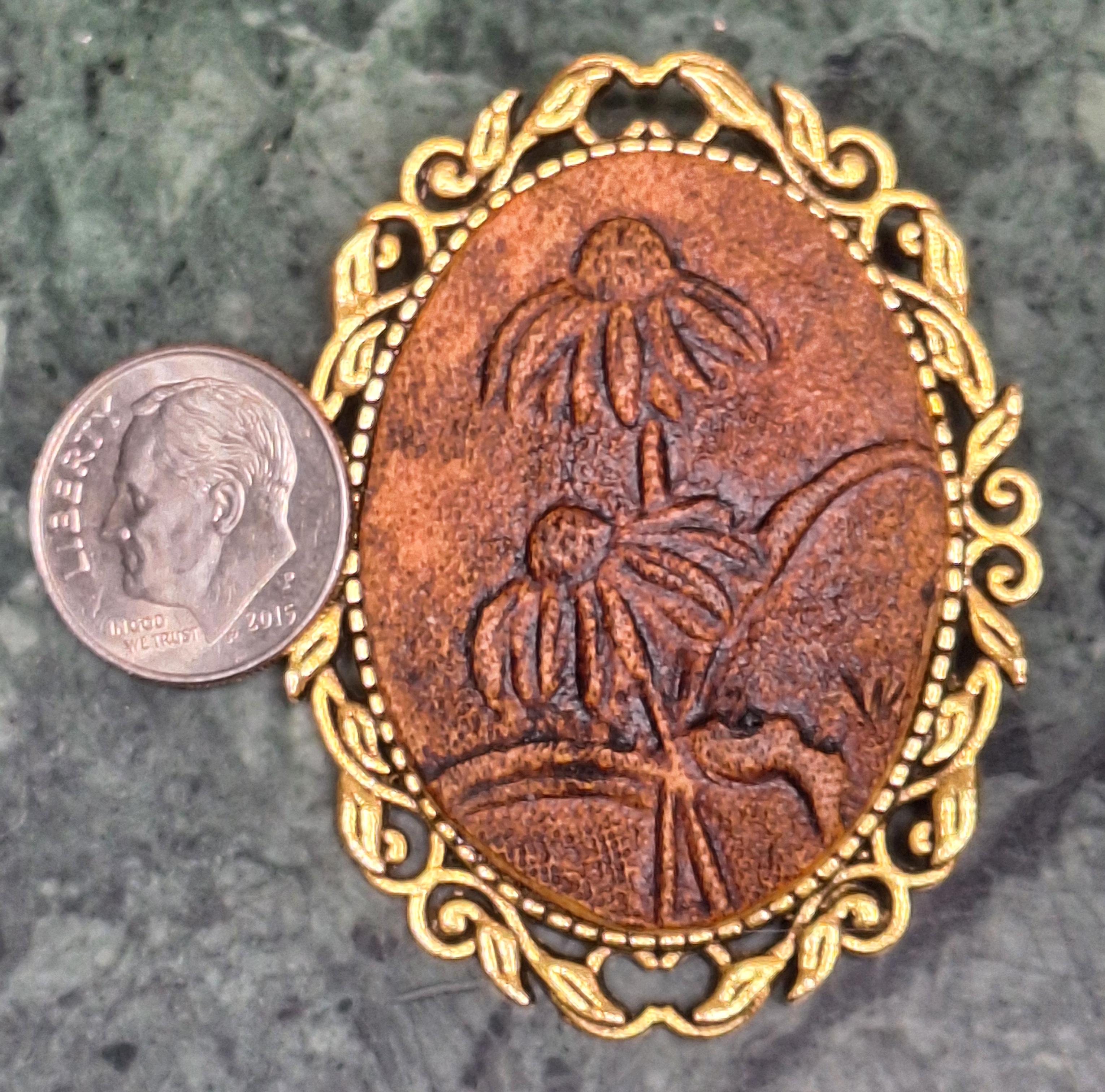
A brooch