All Activity
- Today
-
Thank you, making a few stamps also, background and border out of bolts. It is cheap to try and if it fails put it in the scrap metal pile. I do buy good stamps too, their is a skill to it and I don't have it. Simple things are fun who knows what happens though. I like the stacked handle. I wouldn't say fancy, more options.
-
Thanks Keith. Seems like a foolproof way to do it. I wondered if I was doing something wrong.
-
putting a belt in the fridge?
Dwight replied to LakeOtter's topic in Purses, Wallets, Belts and Miscellaneous Pocket Items
I've never done that . . . and it would take a bunch of convincing to get me to do that. Stuff dries out in the fridge almost as fast as laying on the counter. For what stamping I do . . . if I have to shagnasty for a while . . . I leave it and hit it with the sponge when I get back. Works fine for me May God bless, Dwight -
That is correct for the Cobra Class 26 it does not have a Juki compliant bobbin assembly. Here is a video for the bobbin installation. kgg
-
 I got so used to working on small items I could tape down to a modest stone slab, and stick it in the fridge in plastic, when I'm not finising it in one evening. This is about keeping the work moist until the next go. Now that I'm moving to giant-breed dog collars (and probably human belts) I was wondering if there was any option other than carefully, loosely coiling the belt and placing it in the fridge on its side...? It gives me the willies not lying flat becasue I don't want it to deform r get squished etc. Or... presumably people put work in the fridge because they don't want to start rotting the leather, moist in a bag without cold, but I'd never tried just leaving work room temperature for two or three days, in a more convenient spot to spread out than a fridge. I don't know how much preservative is left over in veg tan leather. There seems to be something. I mean, I've used oils that go rancid smelling in wood or rags, but which seem to do so much, much less in leather. This made me think there is at least some light preservative left over in veg tan leather, but I don't want to start unecessary bacteria colonies. The real pros seem to trace and tool a belt all in one go. If you don't, I'd like to hear how you store the long, moist leather belt overnight for finishing the next day or so. Thanks! Jeff in FL
 -
Oh wow thanks! This was a post I made back in June but I'm glad I popped in just now and learned this term escapement files. I looked at some based on your reply and, indeed, found files useful to this end which I'd not found, before.
-
That cabinet manual might be interesting to important for Singer collectors. Cabinet information for antique machines is sketchy. Ismacs.net has a number listed but it's far from a complete list.
-
Ohhh ok. Thanks
-
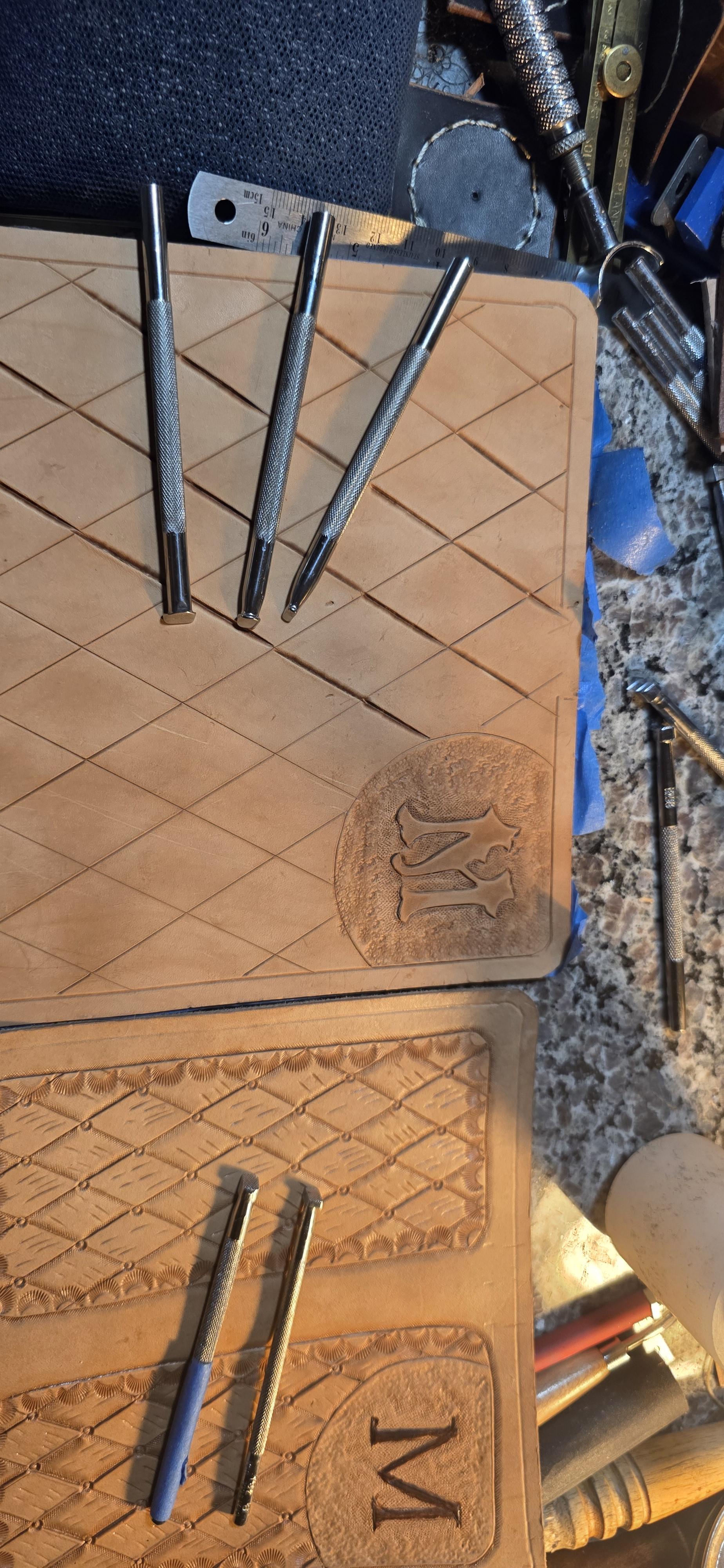
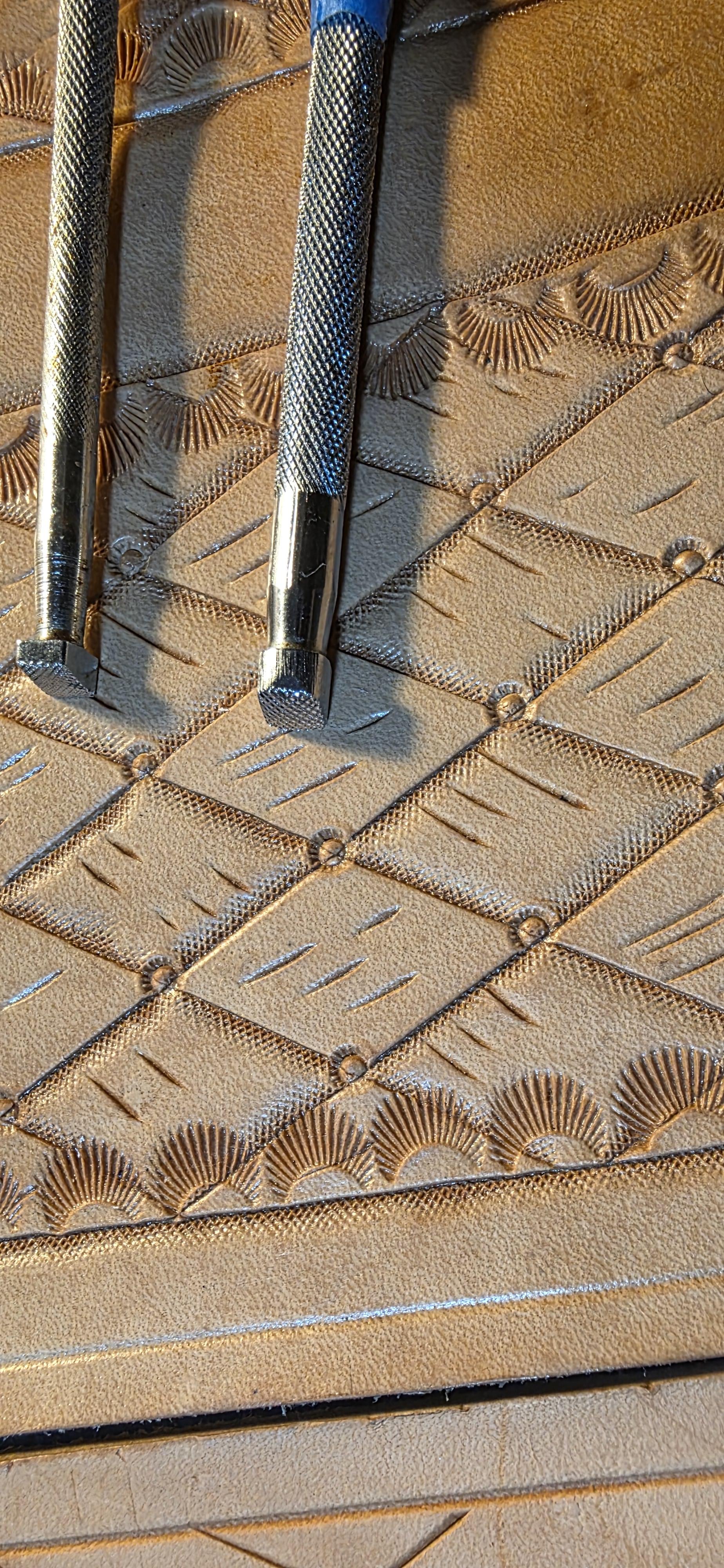
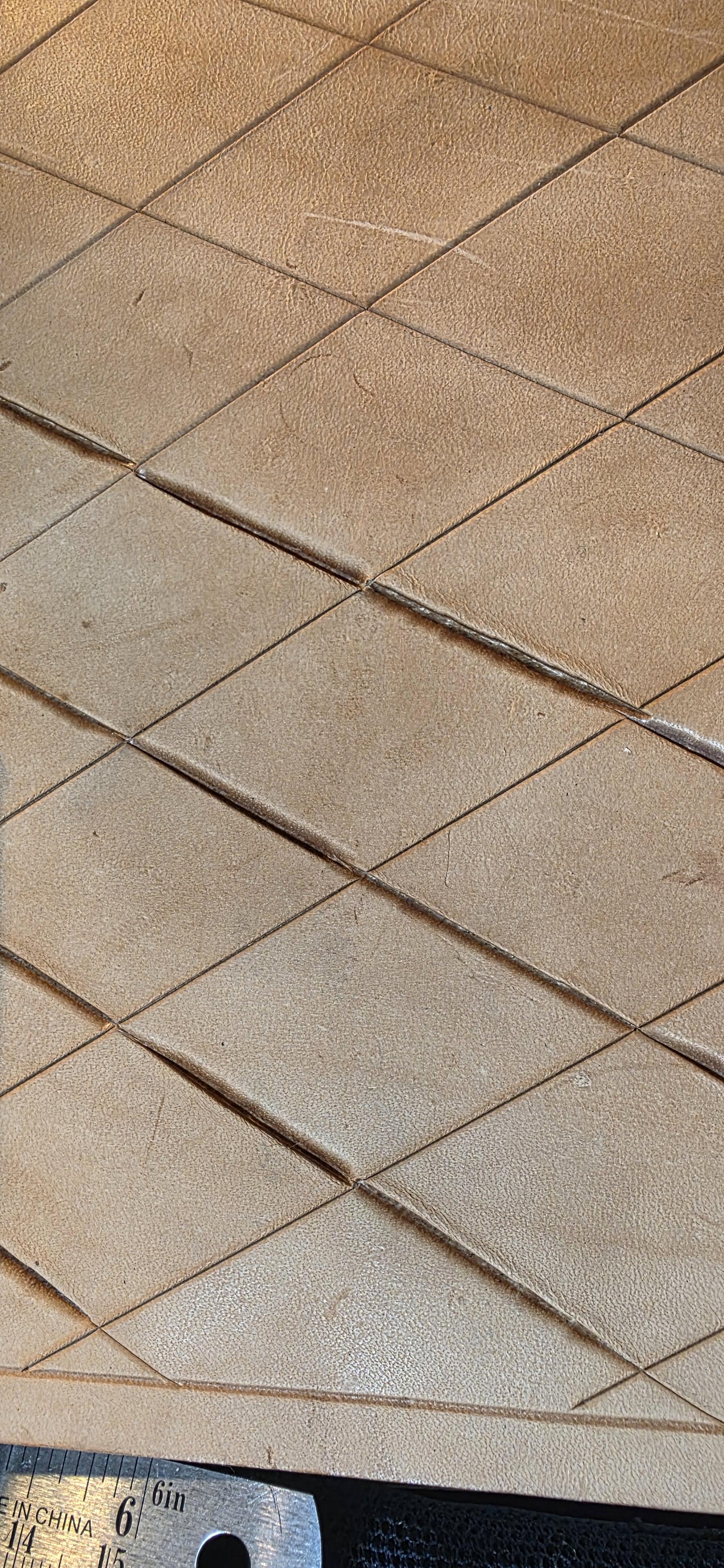
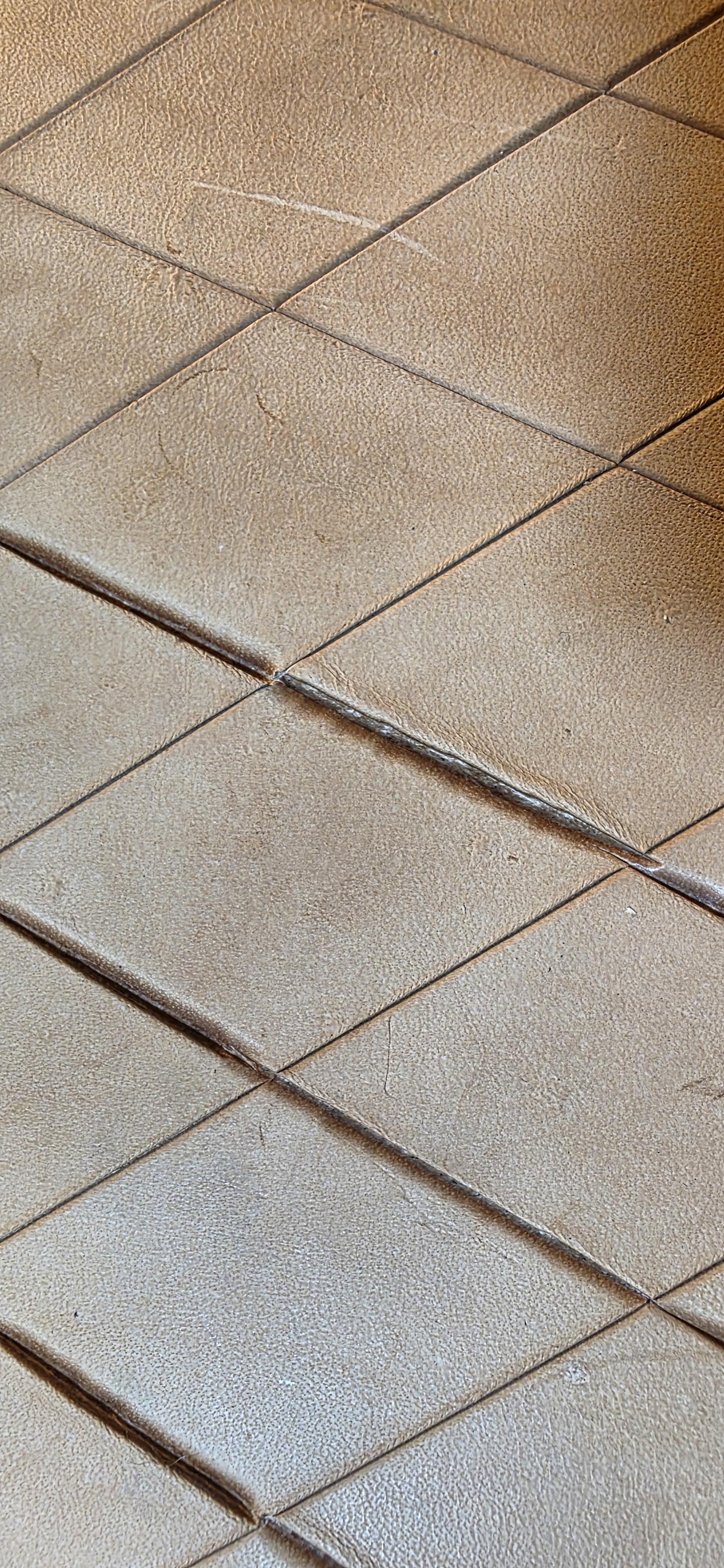
That is how they are supposed to look. They are designed mainly for floral carving and especially beveling tight stem work with close lines. You can bevel a line without mashing down the adjacent cutc. Also to bevel a crossing element without mashing and leaving a large halo on the part below lie a flower over a stem or leaf. I liked steep bevelers for lightly breaking over the outside of a cut line for beadlines too. just lightly break that square edge.
- Yesterday
-
Just got my new set of steep angle smooth bevlers from Barry King. When I compare to recent project with my textured craft tool bevel I can barely notice the bevels with the new steep angle. Am I using the steep angle bevel wrong or is this how it's supposed to look?
-
 Wayne Wiley joined the community
 -
 RLBar joined the community
 -
what you really want are escapement files, originally designed for watch and clock maker use
-
You can get a trial version of LightBurn and you won't have to do all this fiddling you guys are doing. Yes it has a learning curve. I find anything worth doing is doing it with the right program or tools. Personally, I hate InkScape.
-
I have an xTool S1 40w. I tried using the "score" feature to place the pattern on a knife sheath. Then used my SK and tooled it like I normally would. I'll try to post a photo of what it looks like. The only problem I had so far is A) some of the finer lines it combined in the bitmap so the laser made some odd figures to try and tool and B)its less forgiving if you stray off your original line since it puts such a dark line on the leather. I have not tried to dye it yet so it might cover it.
-
The knife was made by my blacksmithing mentor, I have tried teaching him sheath making but something just don't work out for him. I don't make many knives.
-
 POIRIER joined the community
 -
Bruce, that's the simplest solution. 15 cents at most yard sales. That said; Chuck, I like your stacked handle on that double-ender.
-
Both look good. Nice sunburst dye jobs.
-
I wouldn't deliver a flawed product in this case.
-
And here I just make them out of old screwdrivers...you guys are fancy!
-
Thanks but there are lots of Cobra users on here and it's not a very difficult question.
-
This right here. I am not picking on you but if I have to do anything more than once, every pass is a chance for error. It doesn't matter what. Two coats of dye on an edge, multiple hits on a stamp, whatever. Two or three passes with something with no steering like a wing divider - I am not that consistent either. Saddle divider with a wide flat inside surface to follow an edge then yes. Now the crabby old guy perspective and not pointed at anyone, just how i learned and was taught. I get this question a lot and here is my answer. The only place I did not groove was stitching into crease lines on wallet interiors with #69 thread. The purpose of a stitch groove is to recess the thread to prevent thread wear and/or add comfort to user in contact areas. They make different styles of groovers and different size grooving tips. You can match the groove width and depth to the thread size. even the amount of pressure you use can control depth and width with some groovers. You don't have to dig a 3x3 ditch for #92 thread and a scratch line for #346 is just a target line for straight stitching and not functional. For the people who say that you weaken the leather, I hear that a lot. The "strength of leather is all in the grain". OK, take that little spindle of leather you grooved off and pull it apart between a two finger grip. If that is the strength you need to keep your work together you have bigger problems. There is essentially no added strength in that little hair of leather. If there was then there would be instructions on how to make projects with it (actually you can make decorative miniature bird nests with it). The strength of the leather is all in the density of the dermis, thickness, and what part of the hide it comes from. That little sliver of epidermis is inconsequential. I have stickers made up (see below) on all the sewing machines in the shop for my wife and anyone who comes over and borrows some machine time.
-
ask here: https://www.facebook.com/groups/101589880193668
-
If this is something you are looking at as a show piece for your work replace it. Todd
-
yes they did, they look great.
-
yeah good job!!! I buy all the old books I can find.
-
Thats a cool build indeed. I take it you made the knife also.