All Activity
- Past hour
-
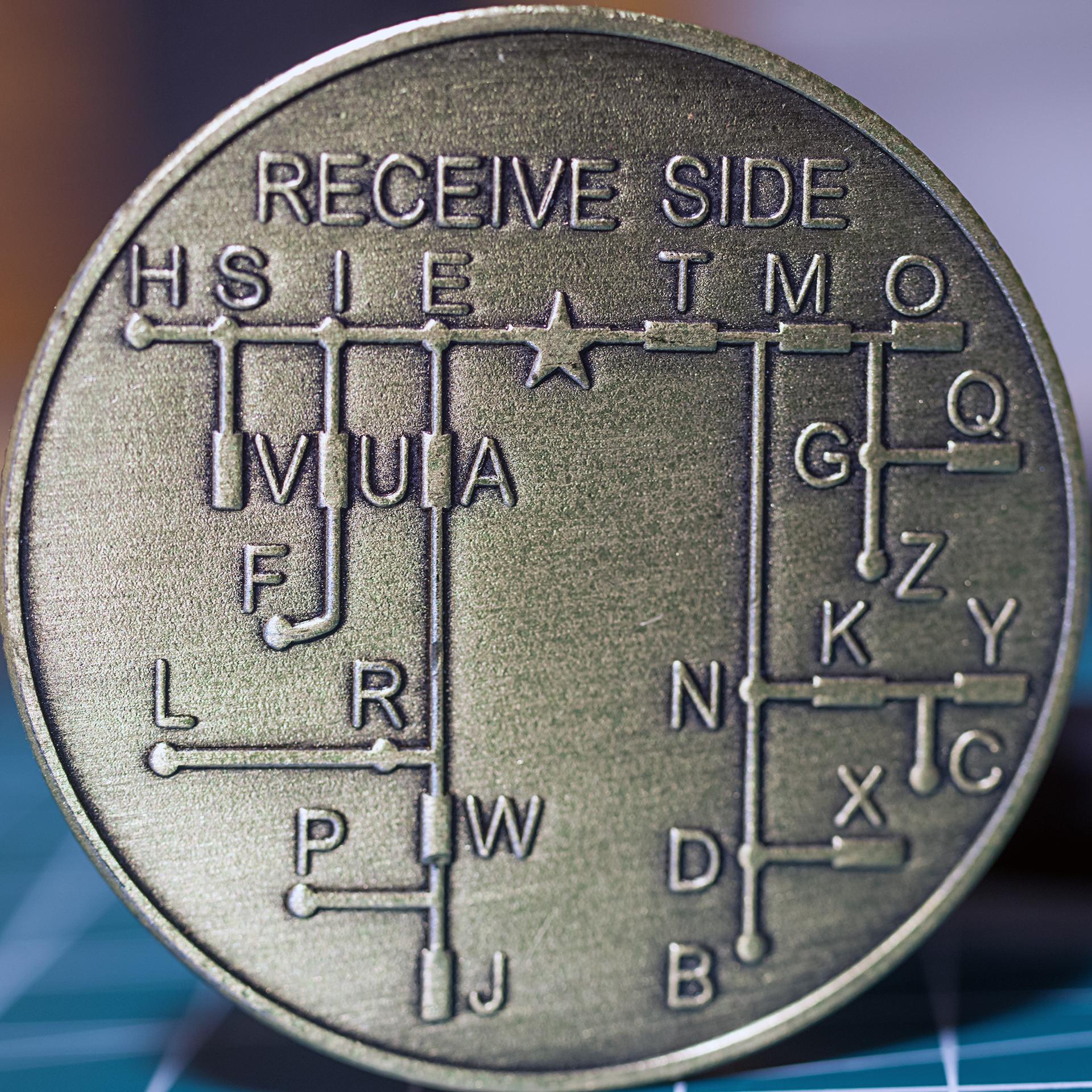
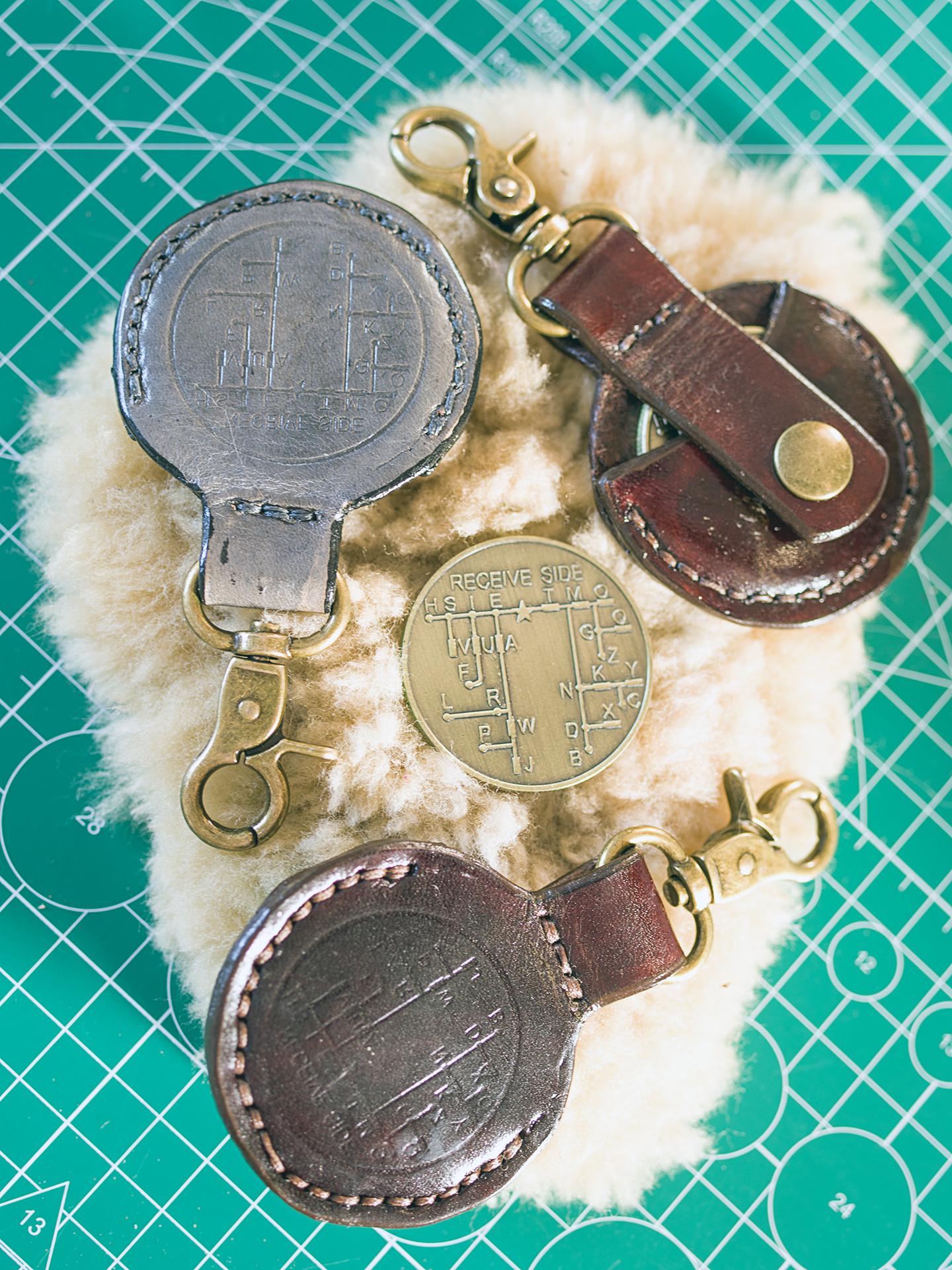
I found a nifty old coin for morse code on the temu site, and grabbed some, mostly because of how I learned something. In movies, I've seen actors send and receive messages over telegraph or other morse codes, but never saw how they did it. Turns out it is the opposite of magic. With this coin (other side has the sending info) and knowing how the code works, this will allow even a novice to decode a message. The code not only works, but is WAY easier to teach/share than I thought. I made a few wraps for them, and will be gifting them to a couple radio nerd friends. I kind of doubt it is an item that would sell well, but I'm still going to have a few made up just in case. They look, and ARE cool. By the way, feel free to offer critique. Especially if it is related to radio, since I'm not very deep into that hobby.
-

Recommended Source for Hermann Oak Tooling.
Darren8306 replied to Latigo Smith's topic in All About Leather
ya, same with ordering food from the ubereats or deliveroo. I have a source in Edmonton, called Buckskin Leather. Found the store in the 1990's in my neighbourhood, then found it again when I sought out a supplier of HO leather. The lady there listens carefully, and takes the time to understand what I'm asking. Being less experienced, I'm sure I couldn't tell between A, B and undergrades, but there isn't another source near me, so I guess I haven't compared it to much aside from Tandy's offerings. -

New to the forum and wanted to introduce myself
DoogMeister replied to Second_Chance_Leather's topic in Member Gallery
What chuck123wapati said. I retired about 4 years ago. You have to engage your mind, body, and soul. Get a daily devotional book or something and spend time with your Bible. Get some exercise or other physical activity - you don't want to get fat and slovenly, and you'll feel better. Go explore that park or trail you've always been wanting to. Read. Energize your mind. The number of books I've read in the last four years is astounding. Those hobbies you've been wanting to get better at? Now that I have the time, I've been doing more wood work (already had the tools), built a few more radio control airplanes, and started making knives. Then I can make sheaths to go with them. 😁 Everyone needs one more belt or holster. Travel. Have done 2 cruises, and we hook up the RV and make a long road trip at least once a year. Go fishing during the week when everyone else is at work. I don't know how we had time for jobs . . . . -
lol I posted the tandy wallet kit above, I think it's 30 bucks. Thats a kit wallet if i ever saw one. They're a good learning tool. The second time you stitch them back together, you learn what is wrong with them lol.
-

Recommended Source for Hermann Oak Tooling.
chuck123wapati replied to Latigo Smith's topic in All About Leather
I think they accept crappy leather from the tannerys and just don't do their diligence and send it back to them. Instead, they know they can sell it onlione, and if it's returned, they just sell it again to some other dummy online. If you order online, be prepared to get second best at best. -

Recommended Source for Hermann Oak Tooling.
Randy Cornelius replied to Latigo Smith's topic in All About Leather
I agree with Bruce that Panhandle Leather always seem to have the best prices on HO. That being said they have also went up in price, a year ago I was paying 225.00 a side and if I remember correctly my last side was 245.00. But that still beats 299.00 - Today
-
All things considered, it's not horrible. I've seen less sold for more at times. That said, I agree with just about everything said above. That said, if you wanted to make your own, you could do better without too much trouble! Materials, tools, and all would probably cost less than the $100 asking price - Not including your blood, sweat and tears. - Bill
-
@Steve855 It's called a drip pan all it does is keep the oil off of your pants & floor that drips off of the machine.
-
Thanks Wizcrafts! I don't plan on sewing any thick leather, more auto upholstery type projects, so this machine should work out ok. I appreciate you checking under that top cover. When you say I'll need the correct oil pan, is that required for machine longevity? I thought the pan was just keep it from dripping all over the operator and the floor. I have that part sorted out. The pan I installed is large enough for full coverage under the machine. It has a drain hole that I mounted a little clear cup under so I can see if it fills up. Maybe I have it all wrong-is the oil pan designed to function as a sump, like the oil pan on an engine?
-

spring flowers and good food
Sheilajeanne replied to chuck123wapati's topic in All About Us and Off Topic
FURNACE IS FIXED!! I e-mailed my furnace guy this morning, and he got back to me and asked if I'd be home late in the day. He came at 5:30 and was there until 7, as it turned out the problem wasn't as simple as just replacing the pressure switch. He says water got into the furnace at some point and damaged the circuit board, so the second stage of the burner doesn't work. But at least now the temperature in the house is the same as the temperature the thermostat is set at! SO nice to be warm! I imagine the circuit board is going to need replacing, plus there's a strong mouldy smell in the air that is coming from the furnace, so we're not quite out of the woods yet! -

i need help finding a presser foot compatible with Adler 205-25MO.
Michiel replied to AKDO's topic in Leather Sewing Machines
Parts are still being manufactured for machines that were produced in large numbers (and are still considered very useful by many, such as the Adler 205-370). If you have a rare machine, it can be very difficult to find a replacement part. I once made a hard-to-find foot by using two (inexpensive) Singer feet. One for the connection to the rod and another for the foot. By welding the two together, I got the right foot. It was difficult to align and clamp everything so that the needle opening was exactly in the right place (and the whole thing didn't look very aesthetic), but it worked well. -
I have the 211g156 with reverse. The 211s are tough machines, but have small pulleys for high speed sewing of upholstery, boat/truck covers, tarps, tents and banners. My machine is at my shop. I'll take a look under the oil filler cover tomorrow and report back. I squeeze oil into every hole that isn't tapped for screw. You'll need the proper oil pan. You can probably get one from Toledo Industrial sewing Machines, who are advertisers here.
-
Hi, I'm new here, recently bought a 211w155 at an estate sale. The guy who was selling knows very little about any sewing machines, and I'm not too far ahead of him. He's a good dude and was just helping sell stuff for a friend, he was very up front about not knowing details on the machine. I feel like I got a good deal on the machine, came with table and clutch motor, and a few extras. There were some other machines there, and a lot of parts that neither of us could determine what machines they might fit. None of the other machines were anything that interested me. I chose the 211w155 model based on reading the excellent info on this site, and generally looking around online to see what machines have good parts availability and general knowledge base. As I understand it, the 211 is the successor to the 111 model which is one of the most-copied designs of walking foot machines. Mine doesn't have reverse but I'm ok with that. I'm trying to get this machine tuned up and make sure it's reliable. Seems ok so far, I messed around sewing some leather and vinyl just getting used to the machine and trying to learn the adjustments. I'm still trying to figure some things out, one of the most important is oiling. I bought some proper sewing machine oil and tried to read up on oiling procedure in whatever manuals I could find for the 211 series, but there's not much detail that I could find. There are diagrams showing a bunch of oiling points- that part is fairly straightforward. What's not so clear as this-in the top of the arm, there's some type of oil reservoir. On the underside of the machine is an octopus of brass tubes with wicks inside leading to various moving parts. I've seen mention in one of the parts lists of felt that goes in that top reservoir. I removed the top cover to have a look, my machine has no felt in that reservoir well. There's no gasket on the top cover, which I think is normal. It's unclear to me how the oil travels from that reservoir to other parts of the machine. There's no wick touching that oil reservoir. Maybe a wick is missing? One way oil leaves the reservoir is when you tilt the machine back, oil runs everywhere! Learned that the hard way. If anyone can shed some light on how the reservoir/wick system is supposed to work, I'd appreciate it. Also saw mention of green felt somewhere around the bobbin case, but I can't find it on my machine. The table this machine came with had no oil drip pan. There was a random drip pan laying around where I bought the machine so I grabbed it, but it's not for this model, slightly too small. After getting oil all over my knee, I screwed the pan to the bottom of the table under the machine. Not the way it's designed to fit, but it seems to work ok.T The other mystery to me is the stich length adjustment. I'm able to adjust it shorter or longer and it works ok, but the numbers on the handwheel make no sense. They go from 6 up to 24 maybe? You'd think 6= 6 stitches per inch, but 6 produces much shorter stitches than 24, so the numbers must mean something else. OR something is assembled incorrectly The machine sews pretty well. I tried the 92 thread it came with, and also some 138 size that I bought, works well with both sizes after adjusting thread tension. I have a servo motor on order, this thing is just too fast off the jump with clutch motor. I'd prefer more control at low speed. thanks for any insight Steve H in PA
-
Holy crap!!! ( pardon the pun)
-
Hi everyone, glad to be here! I've done a small amount of hand stitching leather- some watch straps, case for a hand axe, nothing too impressive. I joined here because I was looking for a walking foot machine and this forum seems to have the most knowledgeable people I could find on industrial sewing machines. I've learned a lot here already, so thanks to all of you. Recently picked up a Singer 211w155 that I'm tuning up and getting it setup the way I'd like. I have some questions that I'll post in the appropriate section. I mainly want to work on auto upholstery, motorcycle seats and similar projects, but who knows what I'll get into. I like to learn new skills and fix up machines of all kinds. I'm pretty decent at manual machining, welding, fabrication, painting, wrenching on cars and motorcycles, restoring late 60's/early 70s Seiko mechanical watches. Been working in auto racing industry for 25+ years. Steve
-
Just as AlZilla said, I use what ever the hardware has, a good quality contact adhesive. Making sure all surfaces are clean and free of any oil, a quick wipe over with some acetone .Using contact is like having an extra pair of hands . HS
-
Moderators if this is not a good forum for the above machine perhaps you could direct me to a better site. I've found operator and parts manuals that are similar but don't have much information on oil levels. There is a site glass but it is not possible to fill to that level as there is a screened opening on the bottom sump and oil pours out. There is no other method such as a port or dipstick to determine the oil level. If anyone should have information relating to this machine would be much appreciated. TIA
-
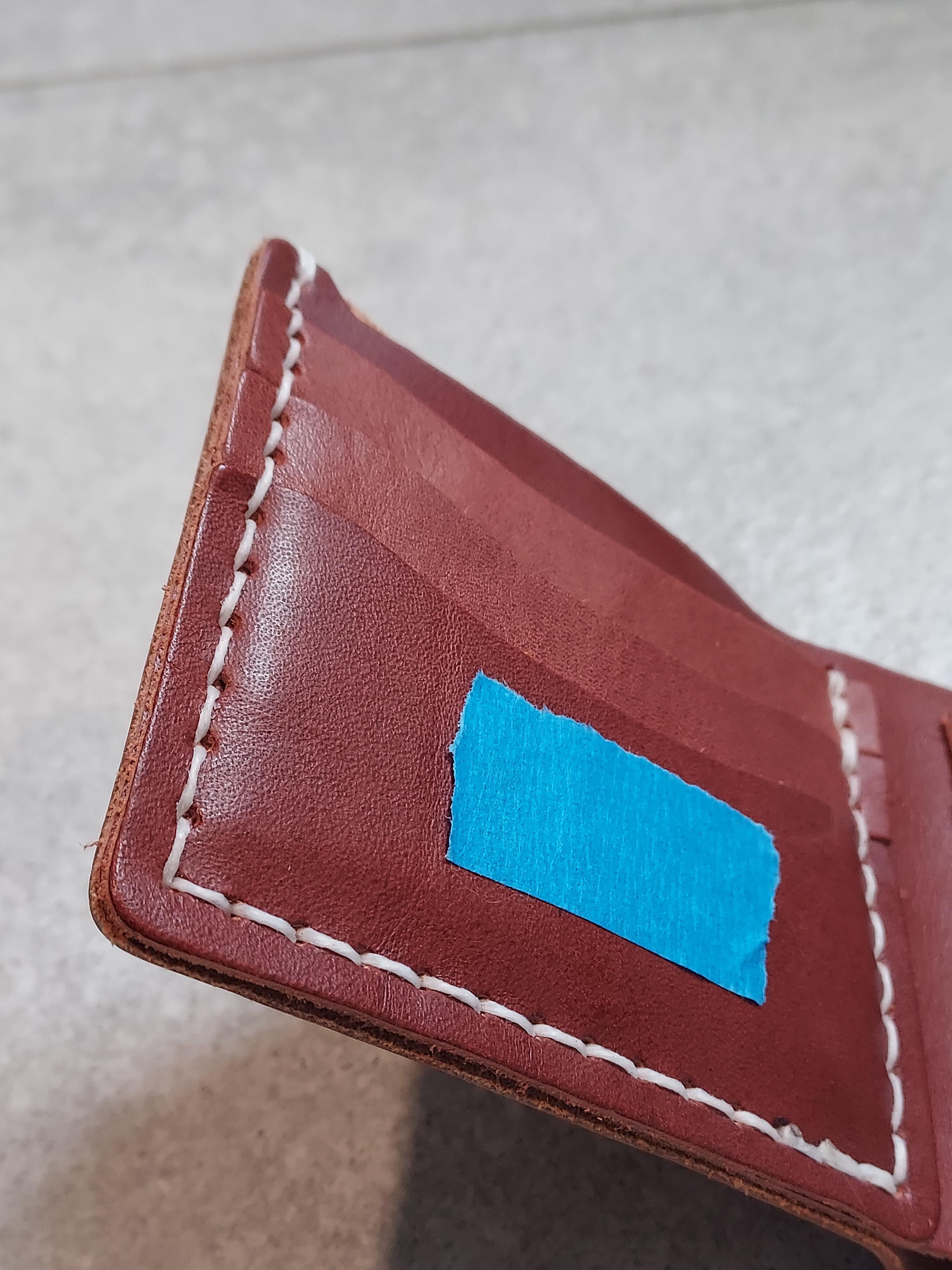
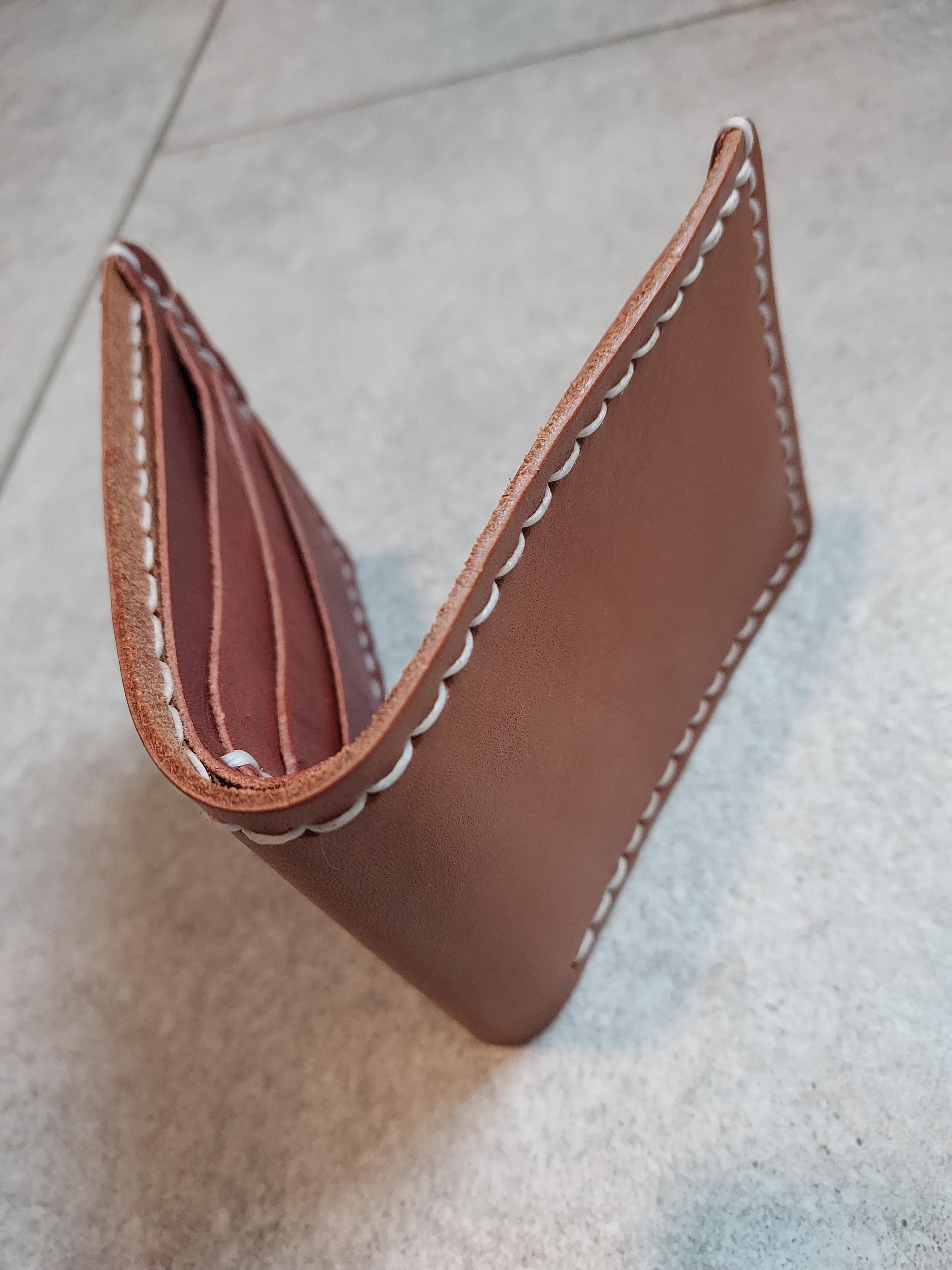
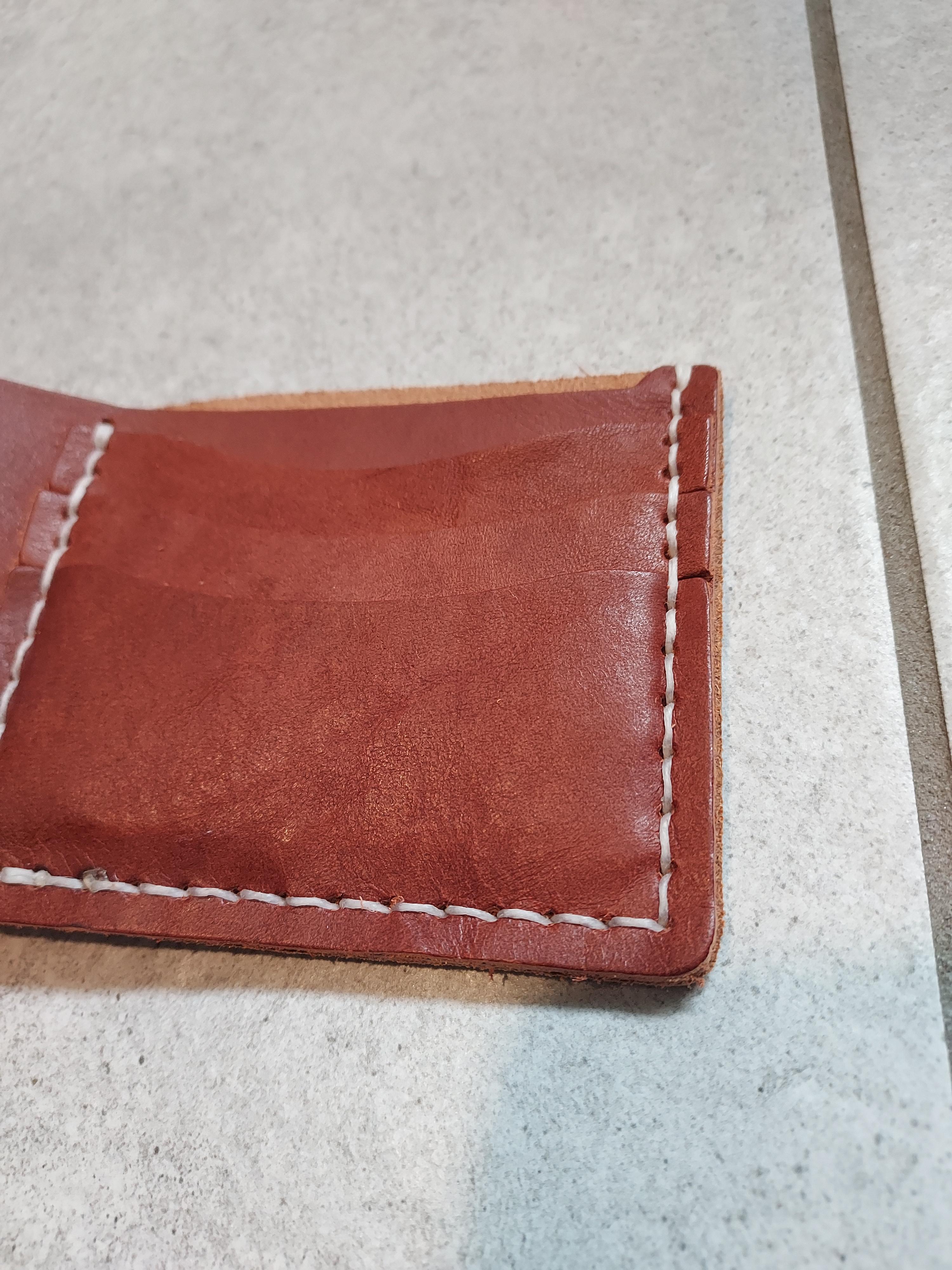
Along with what Fred said it also looks like they didnt skive the lower parts of the inner pockets making it bulge out. They didnt glue the layers down so it lools like it's separating along the bottom. Some of the stitch holes arent evenly spaced. Personally, I wouldn't have put stitching along the top unless there was a liner.
- Yesterday
-
spring flowers and good food
Darren8306 replied to chuck123wapati's topic in All About Us and Off Topic
I purchased the electronic thermostat we currently use, and set it to a schedule, then forgot how it worked completely. Rarely, I'll go override it for some reason. It seems to go right back to it's program. We have pretty predictable temperatures here though. Maybe it makes it easy. -
https://tandyleather.com/collections/wallet-kits/products/classic-bi-fold-wallet-kit
-
 metus joined the community
 -
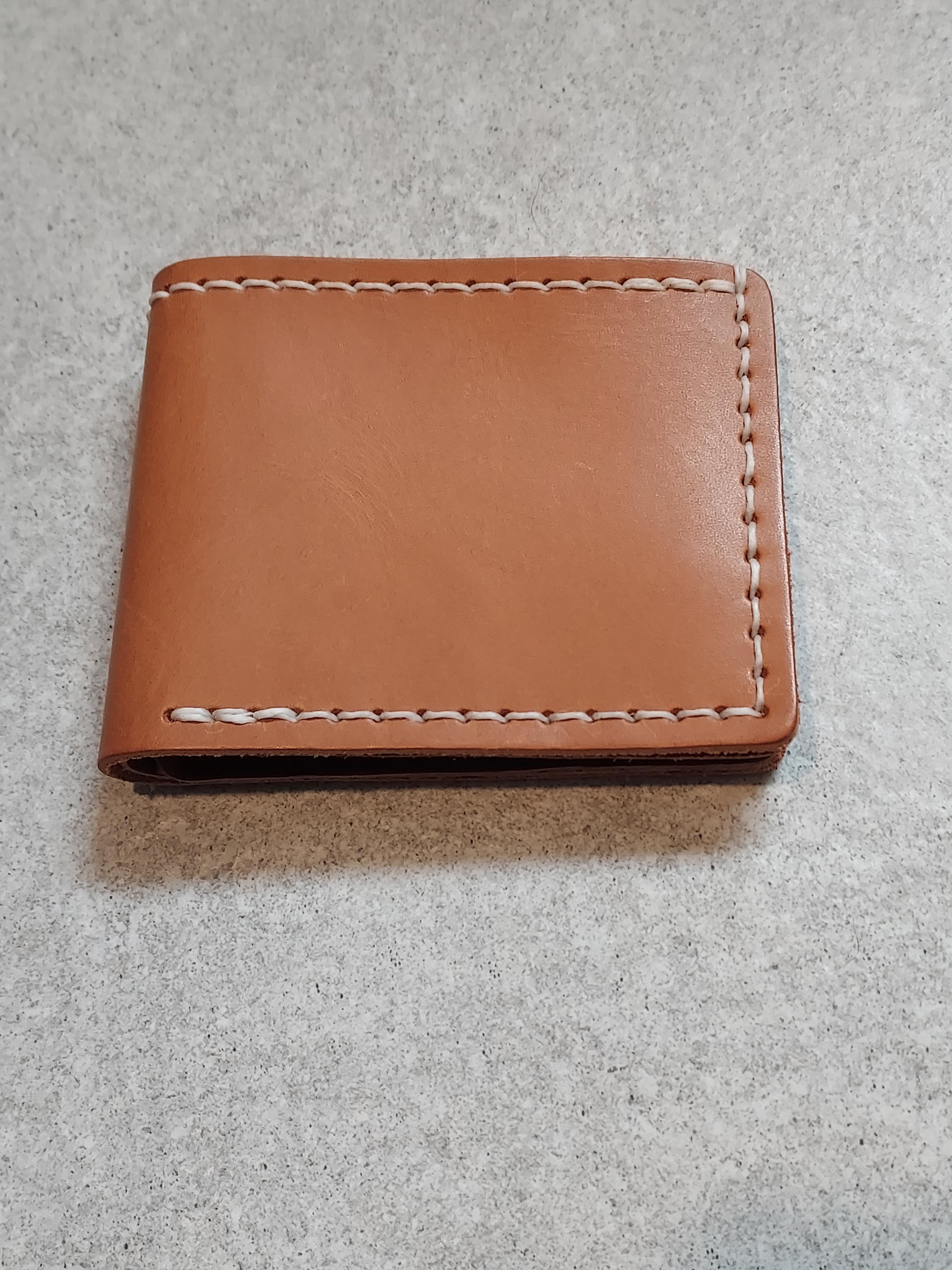
Well, things I would do differently; 1. looks like the sewing was through punched out round holes; I would use a diamond hole, punched thru but not out 2. Stitching is heavier than need to be; I'd use a much lighter/thinner thread 3. the stitches lay on top of the leather; I'd have a groove cut or run for the stitches to lay into 4. I don't like the way the stitching goes over the edge at the top 5. I'd prefer a brown thread rather than a stark white 6. no edge finish at all. I'd slick and burnish that edge
-
Full disclosure: I have not sewn a stitch or cut a single piece of leather. But I'm definitely curious and looking to find a way in to the craft. I recently bought this wallet from a well known crafter. I hid the mark, I don't want to malign or criticize or disparage anyone in any way. But I was a little disappointed. I did not pay the full ~$100 retail price which is common. If I had I would have been very disappointed. To be fair, I bought it as a grab bag/mystery sale item. I don't see any obvious flaws, so I don't know why it got sent from the retail shelf to the grab bag bin. But since it does have the maker's mark on it I take it to mean it was approved to be sent out into the world. Questions: 1) Is the level of finish typical of a $100 product? 2) Or should I assume, since it was a grab bag item, that there is some flaw I am not trained to see? 3) I was thinking of using it as a practice piece. Can I skive it? Sand and burnish it to look pro? Thanks!
-
 Aurelius_05 joined the community
 -

New to the forum and wanted to introduce myself
FrankHester replied to Second_Chance_Leather's topic in Member Gallery
🤣 -

New to the forum and wanted to introduce myself
MikeG replied to Second_Chance_Leather's topic in Member Gallery
When I first retired and had nothing to do, it was sort of overwhelming. Then I hit upon the solution -- First thing in the morning, I would call up a random business and say "This is Mike. I won't be coming in today." Then I would hang up. After that, the rest of the day I was free to do whatever I pleased! -
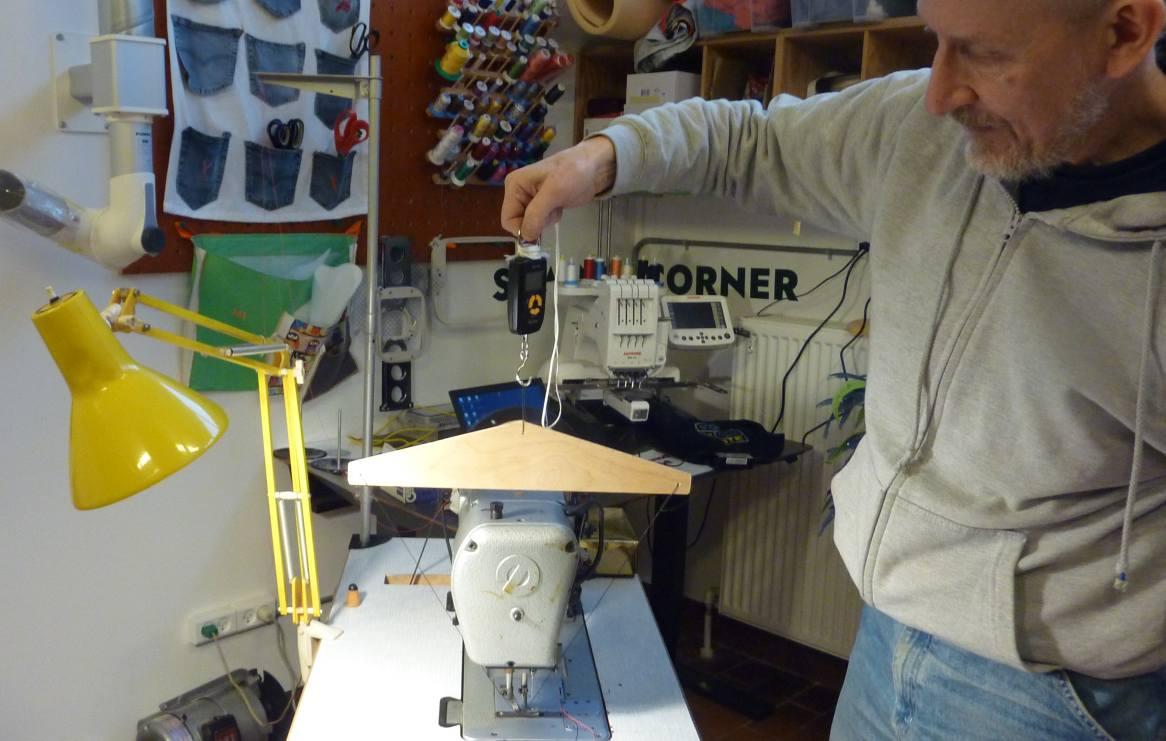
Well, already my post from above is 4 years old. At the moment I do some test on a Dürkopp 291 industrial combined feet sewing machine. I have tried to measure the presser foot pressure and on its minimum setting, it provides a pressure of 87 N (8,9 kg or 20 lb). Maximum is 220 N. To me this pressure seems very (and too) high. But the machine works fine on tarpauline. The picture below show how it is measured. I have tried to look up in specifications and service manuals regarding this and other similar sewing machines and have not been able to find data. So I hope, that you perhaps have seen that. AI answer that this pressure is 5 to 30+ Newton on industrial sewing machines. I found one newer Janome HD9 household sewing machine, with a specification up to 11 lb (5 kg or 50 N): https://www.janome.com/product/hd9-professional/#machinespecifications I hope that someone else might have seen this pressure specified on another sewing machine or perhaps have measured it.