All Activity
- Past hour
-
 Hello, I'm a hobbyist looking for insight from those of you who have used tubular rivets in your leatherwork. My work is focused on attaching veg tan leather straps to canvas bags. I am not currently in a high volume production environment. Double cap rivets (set with hand tools) have proved to be unreliable (I accept that the issue is my skill in setting the rivets). 11mm tubular rivets, with caps, is what I have in mind. Who offers the best setter, tubular rivets, and caps for a hobbyist in a low volume production environment? Thank you for sharing your recommendations, insight and experience. JackLeather
 -
An image I found does show a possible stirrup. It's pretty basic, made out of wood and covered with leather, much like the saddle.
- Today
-
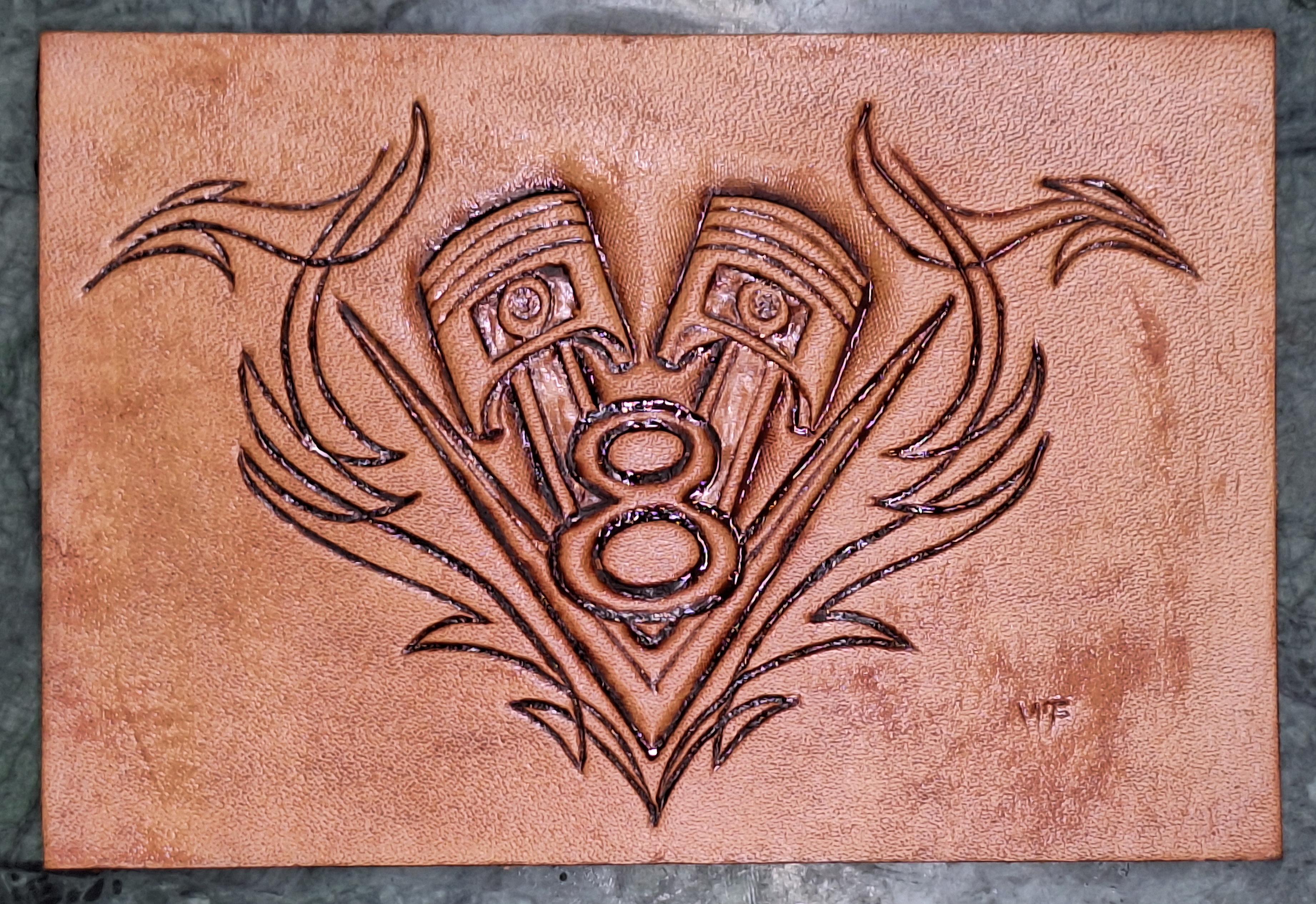
Another trading card V8 theme and old school pinstriping. Pretty happy how it does on leather. Still drying down.
-
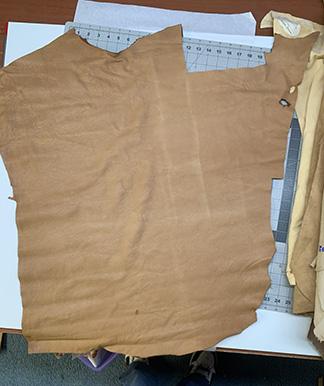
Nice soft pig skin. 5 sq.ft. $20.00 plus shipping
-
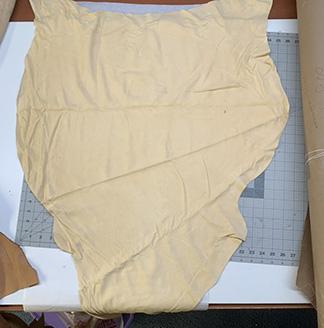
Approximately 4 sq.ft. Great for gloves and small clothing accessories etc. Approximately 4.5 sq.ft. Great for gloves and small clothing accessories etc. Almost 5 sq.ft. GARMENT CHAMOIS LEATHER. Great for gloves and other small clothing accessories.etc $20 each or all three for $55 plus shipping. These are good grade chamois. Wrinkles can be pressed out easily. These are not intended for polishing your car but could be used for that.
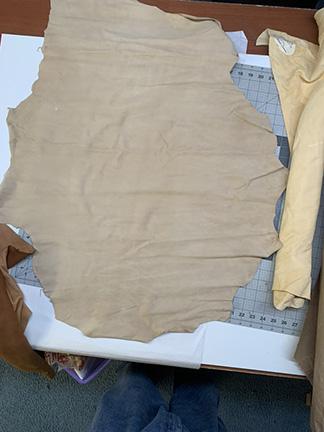
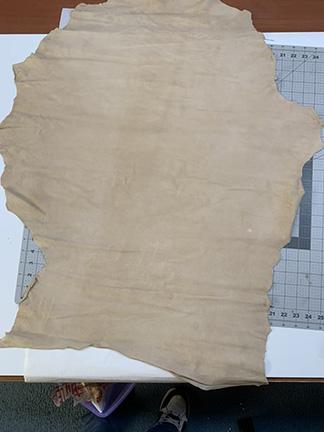
-
 @DieselTechI was using a light maul and using just enough force to make a reasonable impression. I was getting the edge impressions no matter how I used it, light or harder. @JDFredI was thinking about that, but I'm glad you did something to improve it. I will certainly try it, although I'm surprised I have not heard anyone else complaining about it. The tool, as it comes, has sharp corners. I will also see what other tool makers are producing as an equivalent. Thanks for your replies.
 -
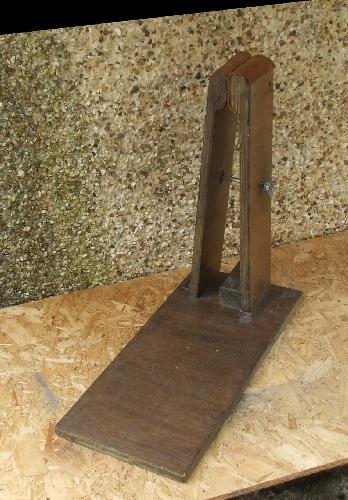
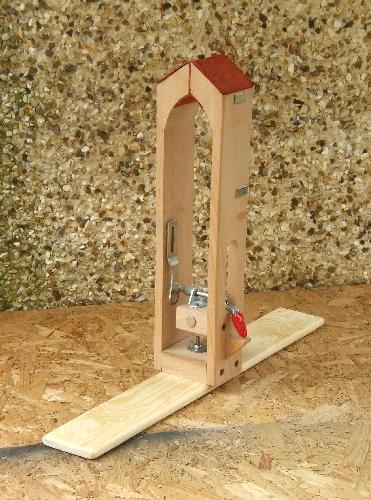
@revilop I would advise you to get a stitching clamp. It'll make things easier, your sewing will improve greatly being able to have something to hold your work in. A clamp can cost as little as $10, but is worth its weight in uranium Or you can make your own from scraps of wood. When I started in this lark 25 years ago I made my own clamp, and still use it My ancient home-made one; My bought in one, more transportable cos it comes apart easily & is smaller;
-
Thanks for your feedback! 🙂 Just to clarify, the seam on a rolled collar is intentionally smoothed rather than seamless, and the stitches can sometimes be slightly hidden or recessed. This is a traditional English saddlery technique — skiving down close to the stitching and smoothing the edges ensures comfort, even on the inside seam. With a dog’s fur and proper finishing, it shouldn’t cause any irritation. Skiving takes a lot of patience, as you have to get as close as possible to the stitch line without cutting into it, while maintaining a clear and even edge.
-
Thanks for the insight. Yep that's about what I found when looking for other examples of squaw saddles. Same concept, only this one appears to be more geometrically square and the cantle and swells seem to be slightly more "western" in nature. The brass tacks seem to be unusual, but it would make sense that they were traded for. I wonder what the stirrups would have looked like? I imagine they would be similar concept to western saddle stirrups with the straps wrapping around the sides of the tree, only being exposed instead of under a leather seat (I imagine some kind of loose blanket padding was used between the saddle and the rider?).
-

Want to get started on this craft
wizard of tragacanth replied to revilop's topic in Getting Started
Is your thread waxed or un-waxed? Is it Linen or Nylon? Linen is more difficult because it can bunch up behind the leather when pulled through a hole. I recommend Nylon/Poly. I'm wondering if your thread has enough wax on it, or if you are un-twisting the thread as you are stitching in the air while turning your work around. Stitching in the air is not a problem if you maintain the twist in your thread. Can you see the cords separating just as you are about to complete the stitch? To prepare the thread for use, use the same motion that you would if you were waxing it. Grasp one end of the thread with one hand and draw the thread between two fingers of the other hand. The tension and pressure on the thread consolidates the cords. Nick -
I put the saddle into Grok. The information from AI can be suspect but you'll have to do more research to determine if what Grok put out is reliable. This is Grok's result; Based on the photos you shared, this appears to be a Plains Indian woman's saddle from the 19th century, commonly referred to historically as a "squaw saddle" (though that term is now considered outdated and derogatory toward Native American women). A more accurate and respectful name is "prairie chicken snare saddle," named after the shape of the high pommel, which resembles snares used for catching prairie chickens. These saddles were used by tribes like the Blackfoot, Sioux (Lakota), Piegan, Nez Perce, and Crow in the Great Plains and Rocky Mountain regions. ### Key Features Matching Your Item - **Structure**: It's a frame saddle with wooden sidebars (bars) covered in rawhide or leather. The high pommel (front) and cantle (back) are typically made from bent elk or deer antler (softened in water and shaped), forming an arched, U-shaped loop with an open hole at the top. This design provided stability for riders and allowed for securing loads when used as a packsaddle. - **Decorations**: Yours has brass tacks or studs along the edges, which were a common embellishment on Native American gear from the period, often traded from Europeans. While basic versions were undecorated, variations included tacks, beads, or quillwork for aesthetic or status purposes. - **Stirrups and Straps**: The attached leather-covered wooden stirrups and rigging straps (for cinching to the horse) are typical. The overall worn, aged leather suggests heavy use and antiquity. - **Size and Use**: These were lightweight (around 20-25 inches long), all-purpose saddles for women, children, or older men. They doubled as riding saddles for long journeys and packsaddles for hauling buffalo meat, camp gear, or attaching to a travois (a drag sled). They were quick and inexpensive to make compared to pad or full wood saddles. These saddles became widespread in the mid- to late 1800s during the buffalo hunting era but fell out of common use after 1850-1870 as tribes adopted more Western-style saddles. Women in these cultures were often the saddle makers, using local materials like antler, cottonwood, and buffalo rawhide stuffed with grass or hair for padding. If this is authentic (which it looks to be from the craftsmanship and patina), it could have collectible value—similar examples from Crow or Blackfoot origins have sold at auction for $1,000-$5,000 or more, depending on condition and provenance. I'd recommend consulting a Native American artifacts expert or museum (like the Museum of the Plains Indian) for authentication, as reproductions exist. For visual comparison, here are some examples of similar saddles:
-
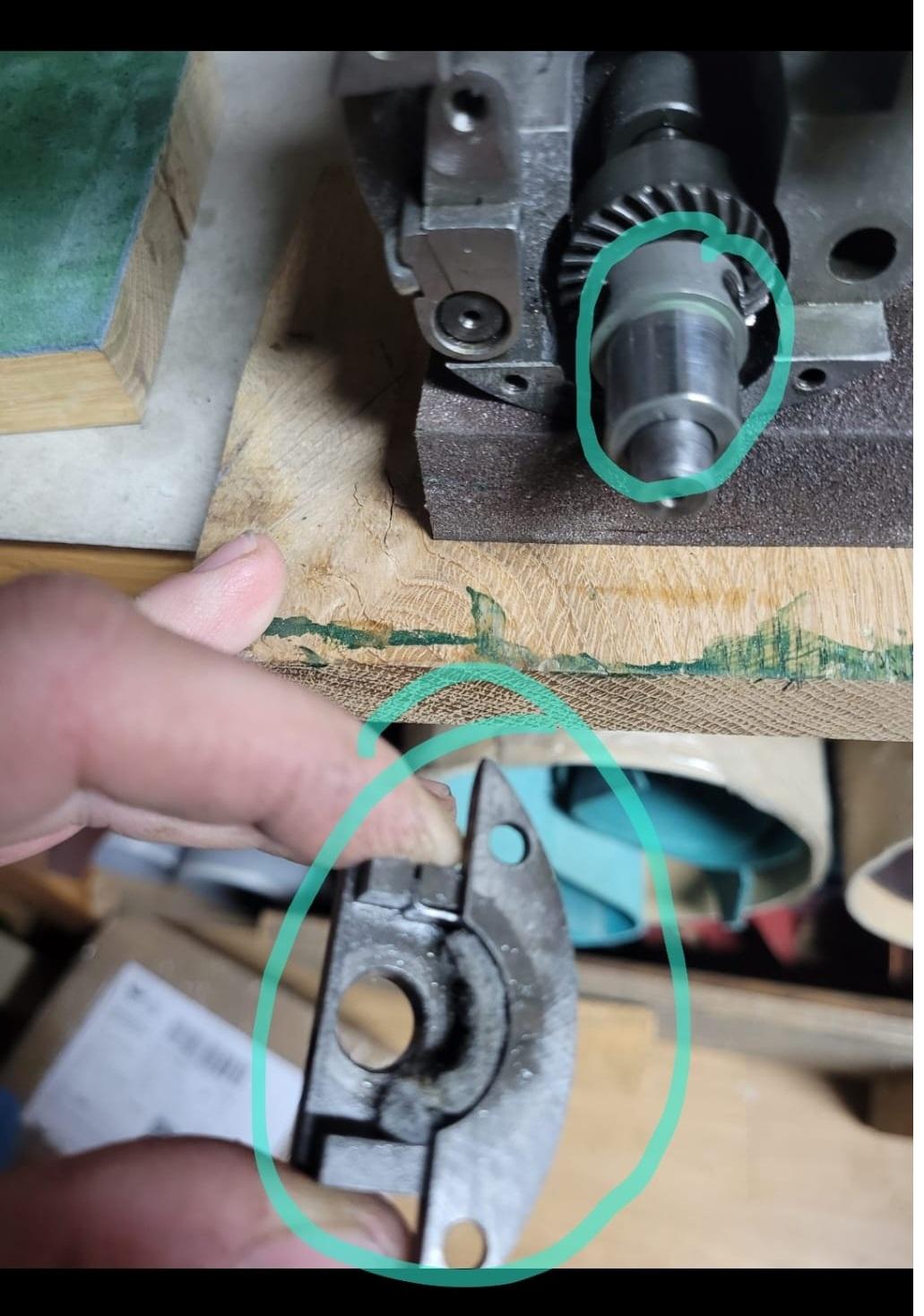
Hello everybody, I am looking for the feed dog eccentric and the end support for the hook shaft. For an Adler 169. I am guessing that the parts are similar for Adler 269. Attached photo. On this second 169 I have, the machine was initially equipped for binding so it lacked the eccentric. So the end support of the hook shaft is thicker compared to the one for up and down movement. I can let this part go if somebody is interested. I can buy the parts from DA, new. But they cost a small fortune. So I thought asking around here, maybe somebody has them and can sell them cheaper...maybe. Thank you!!! M.
-
Awesome
-
I can see how the front arch of the saddle might be used as a handhold by a passenger, while the horse is being led by someone else, a workaround for someone that doesnt know how to ride a horse.
-
 Ballistol is my go-to CLP for all my guns. Its relatively high pH counters the acidity of rust quite well. I see no need to use NFO on the inside of my holsters aside from the initial conditioning in construction. Yes, I use a light application of NFO before assembly to condition the leather, but that's all. I have never encountered any issues of corrosion or rust, nor dry leather inside the holster. Incidentally, I grit my teeth any time someone recommends using suede to line holsters. I don't want the fuzzies getting into the works of my handguns. Some claim the suede helps in retention. I disagree. The fuzzies soon wear away, some of it into your gun. Chrome tanned suede is corrosive. Best to line the holster with veg tan and use wet molding and/or physical retainers like a strap, flap or chicago screws to secure the gun.
 -
 I ended up grinding the edges round on mine to get it to not be as bad about that.
 -

Flatbed Table Attachment For Adler 69 Machines
Uwe replied to Uwe's topic in Leather Sewing Machines
Yes, it is :-) -

spring flowers and good food
Darren8306 replied to chuck123wapati's topic in All About Us and Off Topic
When I was a kid, we had a family celebration for my first communion. Mom served rappie pie to everyone, which is a traditional Acadian dish requiring a huge prep and beloved by all the attending family. I was upset, and remember insisting that it was MY first communion, and we should be able to have hot dogs instead! -

spring flowers and good food
chuck123wapati replied to chuck123wapati's topic in All About Us and Off Topic
The first thing I learned to cook besides a marshmallow, lol. Cooking the lowly hot dog on a willow stick was the greatest achievement in my child's mind at the time. Gently simmering, sizzling, and turning brown over a smoky fire, man, i couldnt wait to get a bite of that meaty goodness wrapped in a bun and smothered with ketchup, mustard, and that sweet pickle relish!!, Sitting by the campfire in the brisk mountain air, smell of the pines and the quiet little stream we camped at every 4th of July. Hot dogs have a special place in everyone's memory lol. -
So pure water is good for your guns? Its pH is 7. See what I'm sayin, PH is only part of the equation. your trying to protect your weapon from ????? oxidation/rust and abrasive action/wear more so than ph. A razor strop, for example, is oiled leather just like your holster, and the oil can be ph 7, it will still polish a blade or wear the finish on your fine firearm if done enough times. But someone had to try it to see if it worked, so we don't have to now !! Lol, Guns and leather, and oils of every kind have shared the world far longer than either of us, and those who shared the world with them through the ages have found the answers long before we ever drew a breath; that's why you know about the problems with chrome tan, it isn't a new discovery either. To answer your question. I use balistol on my guns, really good stuff and highly recommended by Hickok 45 lol, I'm sure I'm as picky about my firearms as you or anyone else is. I don't use it on leather because it's not a gun and its to expensive. You can if you want to its just an oil. so might make your holster soft if you use too much because that what oils do to leather, no matter what type of oil it is. Life is good!!
-
 Use that tool with a very small/light maul. It sounds like you are using too much force or too heavy a maul when you strike the tool.
 -
Some leather just doesn't sand well. Also, that's fairly thin leather, which I've had trouble with, too.
-
 Yes, I know most people would classify this as overthinking, but I try to keep the exposure of my guns to acids and salts as low as reasonably achievable, to borrow an existing acronym. Also, in my way of thinking, just because people have used something for a long time, that doesn't necessarily mean that it won't cause problems. Case in point is the fact that holsters with chrome-tan suede linings have been used extensively with blued and nickel guns for decades by people thinking that the suede is protecting their fine gun finishes, when it is in fact abrading their finishes and exposing their guns to chromium salts. I do of course use oil on my guns, namely Ballistol, which has a PH of 8-8.5, making it entirely alkaline. For an unlined holster, I wouldn't apply Neatsfoot oil to the interior of the holster, only to the hair side, as the oil will level out through the entire thickness of the leather. But for a lined holster comprised of two layers of veg-tan, SOP is an extra light application on both the inside and outside, since the holster is made of two layers of leather separated by contact cement. I also meant to ask if any of you have used Ballistol to condition a holster before finishing, as the cans of Ballistol list leather conditioning as one of it's uses. I know a lot of people say not to use petroleum products like mineral oil, which is Ballistol's primary ingredient, as a leather conditioner, but I figured someone here has probably used Ballistol to condition a holster.
 -
I have been trying to use the Craftool B997 double bevelling tool as shown in the book Pictorial Carving Finesse, page 8, 12 and 13, but no matter how I use it I get the edge or corner impressions from the tool. This makes the stamping look very choppy. I tried to "walk" the tool and tilt it, have it upright, but no matter what I do I can't seem to get a smooth effect as shown in the book. Is this tool flawed or am I? I'd appreciate any advice on how to use it. Thank you. Paul
-

Flatbed Table Attachment For Adler 69 Machines
Tastech replied to Uwe's topic in Leather Sewing Machines
Is the Bamboo top a repurposed cutting board from IKEA ?




.thumb.jpg.be873fe3cafed424774b187cfb1a470f.jpg)