All Activity
- Past hour
-
Holy crap!!! ( pardon the pun)
-
Hi everyone, glad to be here! I've done a small amount of hand stitching leather- some watch straps, case for a hand axe, nothing too impressive. I joined here because I was looking for a walking foot machine and this forum seems to have the most knowledgeable people I could find on industrial sewing machines. I've learned a lot here already, so thanks to all of you. Recently picked up a Singer 211w155 that I'm tuning up and getting it setup the way I'd like. I have some questions that I'll post in the appropriate section. I mainly want to work on auto upholstery, motorcycle seats and similar projects, but who knows what I'll get into. I like to learn new skills and fix up machines of all kinds. I'm pretty decent at manual machining, welding, fabrication, painting, wrenching on cars and motorcycles, restoring late 60's/early 70s Seiko mechanical watches. Been working in auto racing industry for 25+ years. Steve
-
Just as AlZilla said, I use what ever the hardware has, a good quality contact adhesive. Making sure all surfaces are clean and free of any oil, a quick wipe over with some acetone .Using contact is like having an extra pair of hands . HS
-
Moderators if this is not a good forum for the above machine perhaps you could direct me to a better site. I've found operator and parts manuals that are similar but don't have much information on oil levels. There is a site glass but it is not possible to fill to that level as there is a screened opening on the bottom sump and oil pours out. There is no other method such as a port or dipstick to determine the oil level. If anyone should have information relating to this machine would be much appreciated. TIA
-
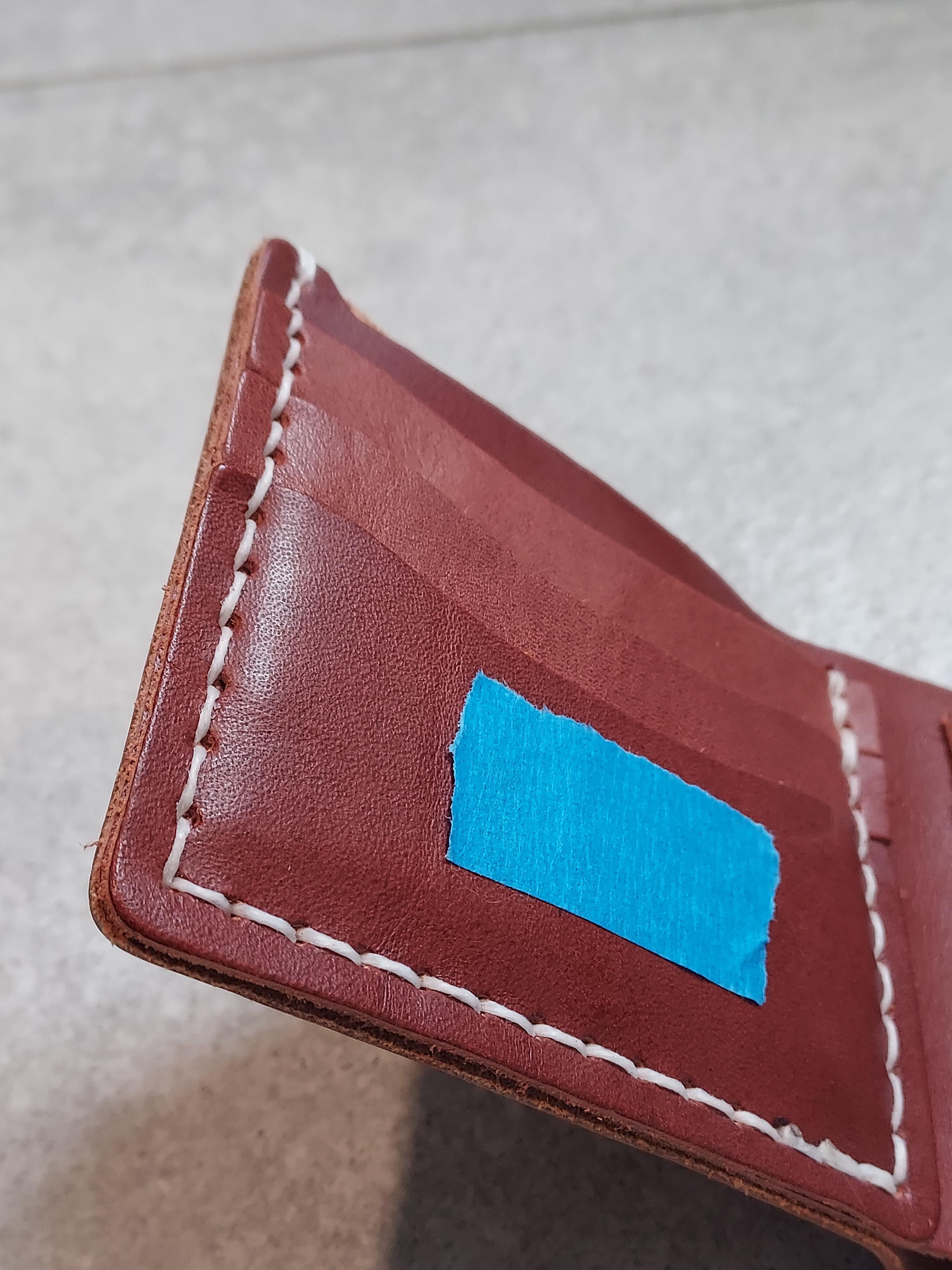
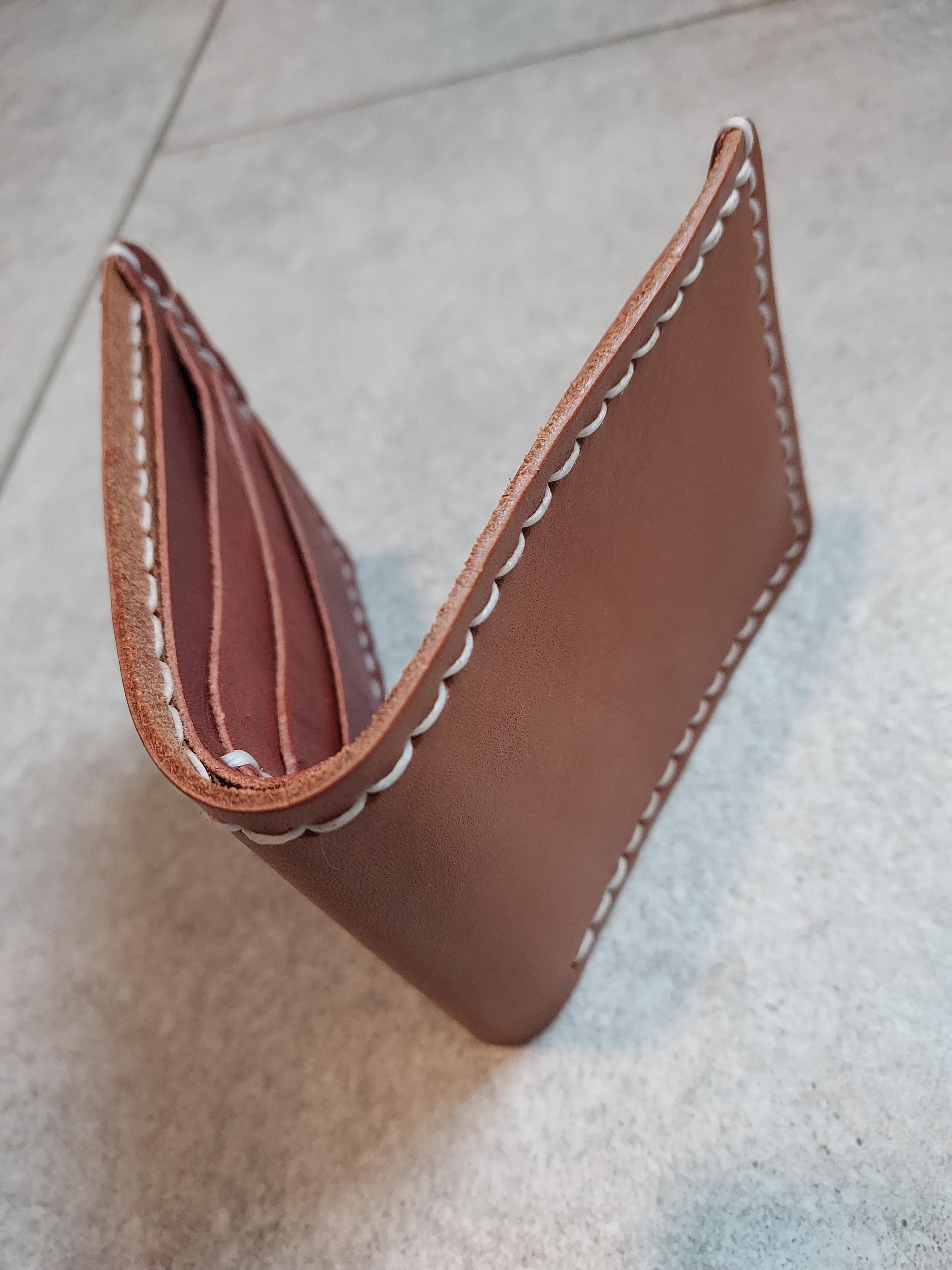
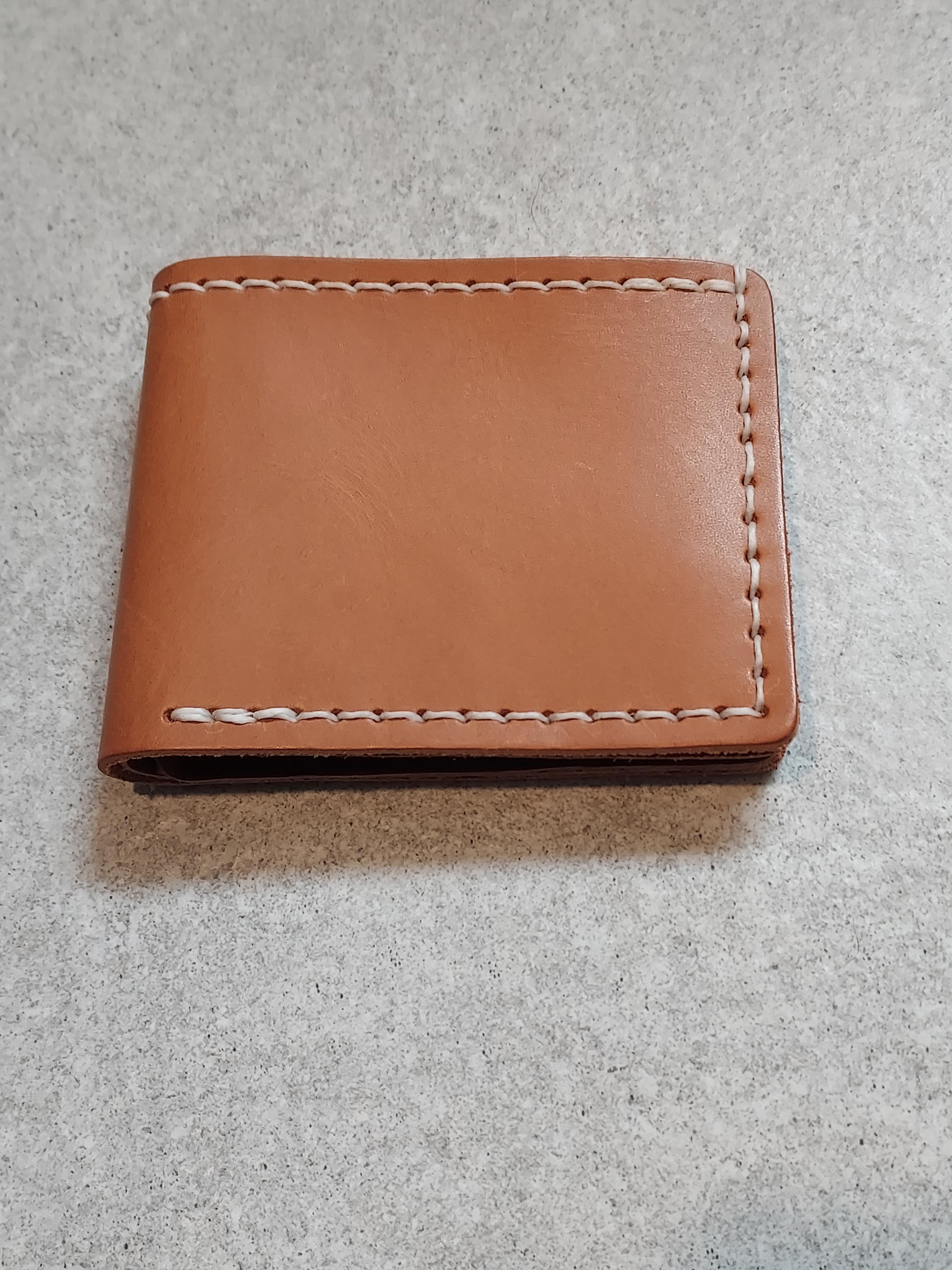
Along with what Fred said it also looks like they didnt skive the lower parts of the inner pockets making it bulge out. They didnt glue the layers down so it lools like it's separating along the bottom. Some of the stitch holes arent evenly spaced. Personally, I wouldn't have put stitching along the top unless there was a liner.
- Yesterday
-

spring flowers and good food
Darren8306 replied to chuck123wapati's topic in All About Us and Off Topic
I purchased the electronic thermostat we currently use, and set it to a schedule, then forgot how it worked completely. Rarely, I'll go override it for some reason. It seems to go right back to it's program. We have pretty predictable temperatures here though. Maybe it makes it easy. -
https://tandyleather.com/collections/wallet-kits/products/classic-bi-fold-wallet-kit
-
 metus joined the community
 -
Well, things I would do differently; 1. looks like the sewing was through punched out round holes; I would use a diamond hole, punched thru but not out 2. Stitching is heavier than need to be; I'd use a much lighter/thinner thread 3. the stitches lay on top of the leather; I'd have a groove cut or run for the stitches to lay into 4. I don't like the way the stitching goes over the edge at the top 5. I'd prefer a brown thread rather than a stark white 6. no edge finish at all. I'd slick and burnish that edge
-
Full disclosure: I have not sewn a stitch or cut a single piece of leather. But I'm definitely curious and looking to find a way in to the craft. I recently bought this wallet from a well known crafter. I hid the mark, I don't want to malign or criticize or disparage anyone in any way. But I was a little disappointed. I did not pay the full ~$100 retail price which is common. If I had I would have been very disappointed. To be fair, I bought it as a grab bag/mystery sale item. I don't see any obvious flaws, so I don't know why it got sent from the retail shelf to the grab bag bin. But since it does have the maker's mark on it I take it to mean it was approved to be sent out into the world. Questions: 1) Is the level of finish typical of a $100 product? 2) Or should I assume, since it was a grab bag item, that there is some flaw I am not trained to see? 3) I was thinking of using it as a practice piece. Can I skive it? Sand and burnish it to look pro? Thanks!
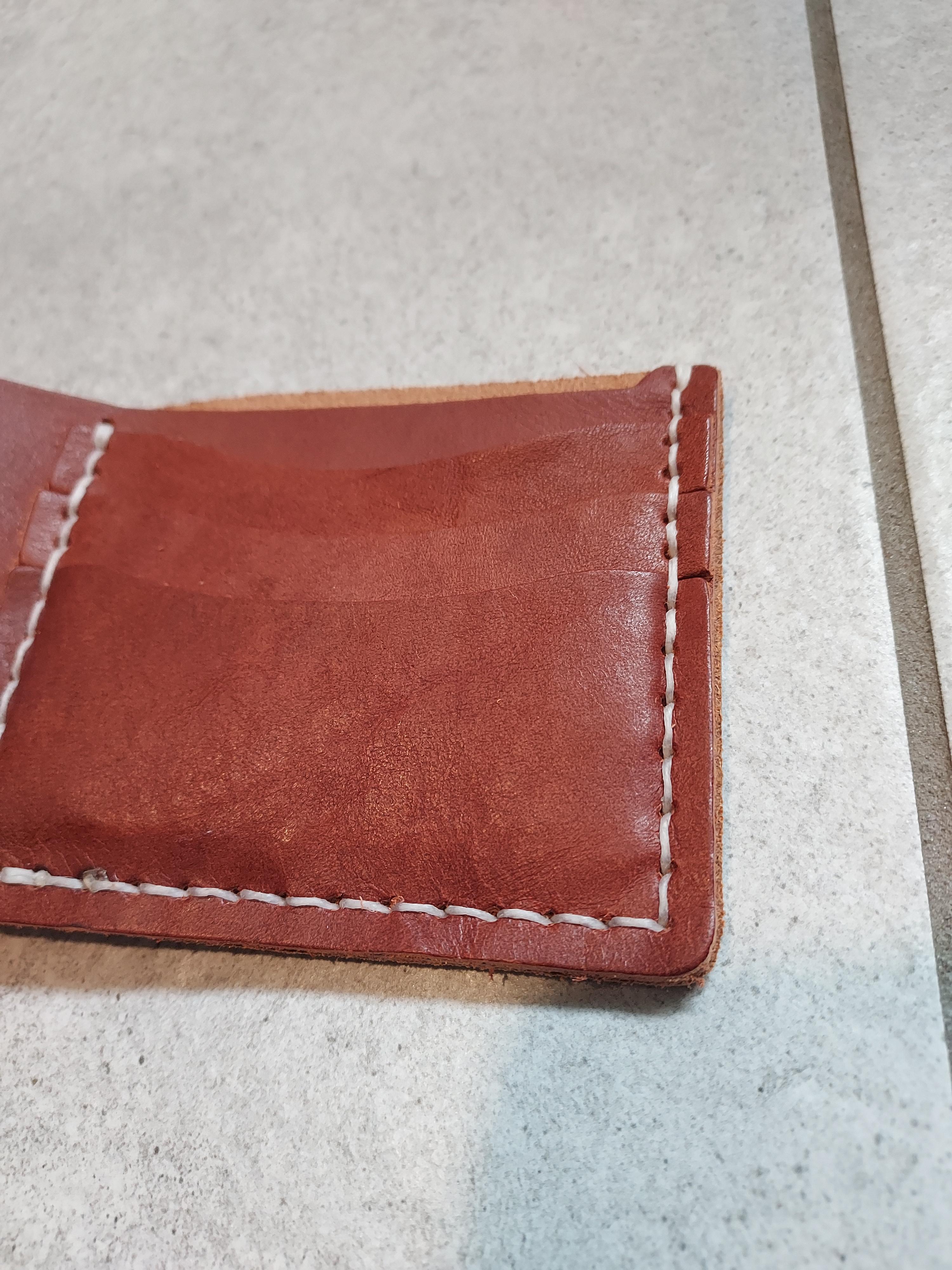
-
 Aurelius_05 joined the community
 -

New to the forum and wanted to introduce myself
FrankHester replied to Second_Chance_Leather's topic in Member Gallery
🤣 -

New to the forum and wanted to introduce myself
MikeG replied to Second_Chance_Leather's topic in Member Gallery
When I first retired and had nothing to do, it was sort of overwhelming. Then I hit upon the solution -- First thing in the morning, I would call up a random business and say "This is Mike. I won't be coming in today." Then I would hang up. After that, the rest of the day I was free to do whatever I pleased! -
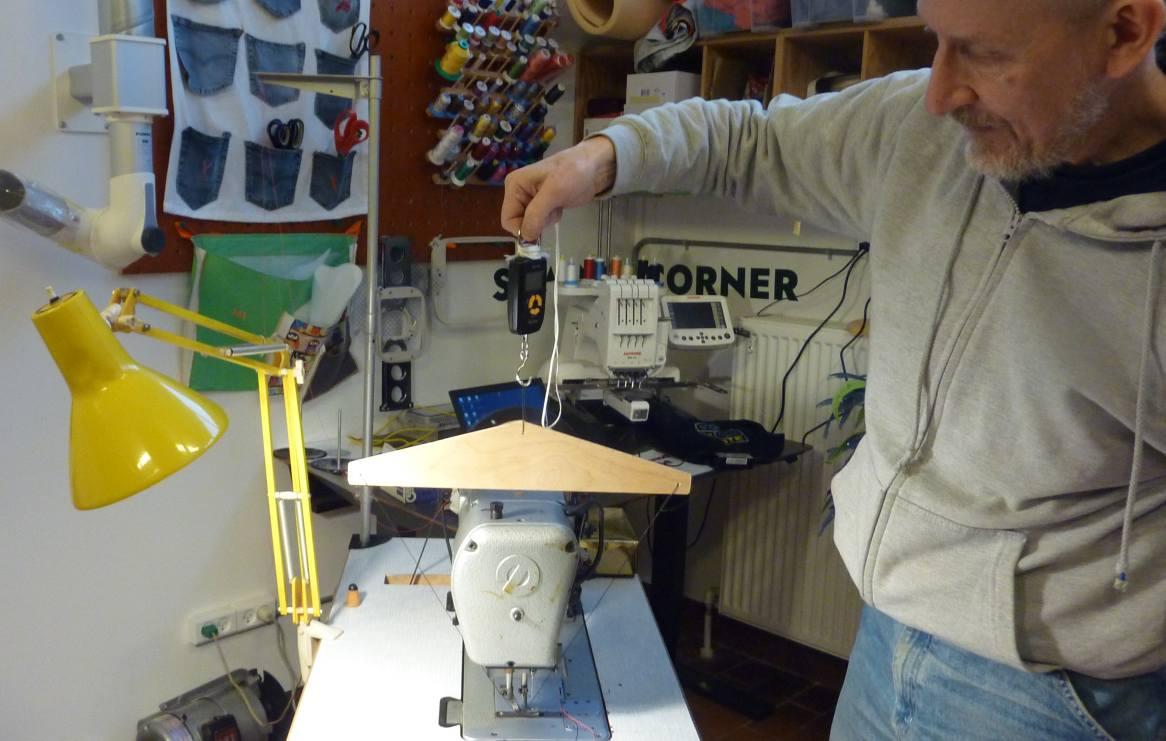
Well, already my post from above is 4 years old. At the moment I do some test on a Dürkopp 291 industrial combined feet sewing machine. I have tried to measure the presser foot pressure and on its minimum setting, it provides a pressure of 87 N (8,9 kg or 20 lb). Maximum is 220 N. To me this pressure seems very (and too) high. But the machine works fine on tarpauline. The picture below show how it is measured. I have tried to look up in specifications and service manuals regarding this and other similar sewing machines and have not been able to find data. So I hope, that you perhaps have seen that. AI answer that this pressure is 5 to 30+ Newton on industrial sewing machines. I found one newer Janome HD9 household sewing machine, with a specification up to 11 lb (5 kg or 50 N): https://www.janome.com/product/hd9-professional/#machinespecifications I hope that someone else might have seen this pressure specified on another sewing machine or perhaps have measured it.
-
Beautiful job.
-

Recommended Source for Hermann Oak Tooling.
JLSleather replied to Latigo Smith's topic in All About Leather
Order your leather FROM HERMANN OAK. IF you don't need or don't want 10 sides, see if somebody in your area wants to split an order with you. THE ONLY exception I've seen Hermann Oak leather appropriately graded was AT GOLIGER LEATHER. SO MANY suppliers are passing off the bottom of the barrel as "A" or "B". Springfield actually had a video a couple years ago claiming that because "SPOTS" of a hide were free of blemishes, then it was 'B" in THAT SPOT (though the rest of the hide clearly was not). I did get a couple sides from them I didn't return, but that was the exception with them. I used to order a side from them here and there when I needed a weight I don't usually carry. One side of 5/6 was so stretchy I could pull a 1 1/2" wide strap about 2" longer without wetting it. Over and over, I'd call and order. Then I'd get the leather, look at it, and call to complain about it. HOW MANY times did I tell them I don't mind paying top dollar as long as I'm getting top leather. But no avail - I returned more sides than I kept. Only thing I can give them is they DID accept the returns, but it just became too much of a time suck sending packages back and forth. Maybe if you're close enough to them to go there and PICK IT? I ordered leather from Weaver ONCE. Never again. Either those folks DONT KNOW leather, or they knew they were sending me garbage and didn't care. Me and another guy who used to come on here also tried American Leather Direct - another BUST. Tandy Leather Factory (used to be the Leather Factory) sometimes has decent tooling leather, but I absolutely recommend picking out the hides yourself if you're in Des Moines Iowa or MInneapolis/Bloomington MN. I see the Des Moines store has a new manager since I was down there. Good call - that previous guy was... well, nevermind. Or if you have somebody you can trust in another store. -

spring flowers and good food
Sheilajeanne replied to chuck123wapati's topic in All About Us and Off Topic
Darren, I've seen a few episodes of Star Trek where they resorted to using Morse when other methods of communication were down or being blocked by an enemy! Chuck, are you talking about gas furnaces in general? Or just the newer ones? This is the first time I've had a problem with them, and I've lived in quite a few houses that had gas furnaces. One thing I do hate are those modern thermostats, you know, the energy efficient ones where you can program them to set the temperature back at night? The one I had in my previous house was run by a battery. When the battery dies, guess what? The furnace shuts off! I do like to set the thermostat back at night, but with this particular piece of junk, you had to press a button numerous times to get it to the number of degrees you wanted. And pressing the button didn't always work - sometimes the temperature would change, sometimes it wouldn't. Plus, I had to be wearing my glasses in order to read it. As I kept irregular hours, I didn't WANT the thermostat to set the temperature back automatically - I much preferred to do it myself, so resetting it was a nightly thing. That house had a leaky basement in the spring, and the sump pump didn't always kick in when it flooded. It was a very old house, well over 100 years old. You had to access the basement by a trap door and a very uneven set of steps. You also had to remember to duck your head to avoid the support beams as you descended. Needless to say, I didn't visit the basement very often, which is why the fan got wet and died. Anyway, when the furnace fan had to be replaced, I asked the repair man to replace the thermostat with an old analog model, where it took just a nudge on the temperature setting lever to move the needle to the desired spot. And I was able to read the damn dial WITHOUT my glasses!! This is what the access to the basement stairs looked like. There were actually two trap doors, a big one and a small one. To the left of the stairs is a shelf which was used for storing all sorts stuff (glue bottle, box of floor tiles, kitchen pots and pans that were rarely used, etc.) And this is what the outside of the house looked like. They called it 'the Owl House, due to the round windows! I really hate what the new owner has done. He removed the lovely antique stained glass transoms that were above the front door and the front window and replaced them with plain glass. He also removed the 'widow's walk' (mini balcony) that many of these old houses have. The house didn't have AC, so I would leave that door open in the summer to get better air circulation. (Yes, it had a screen door to keep the bugs out.) He also wanted to cut down the beautiful maple tree that was on the front lawn! Fortunately, the tree is on township property, so he couldn't touch it! In addition to turning a beautiful colour in the fall, it also helped to keep the house cool in the summer!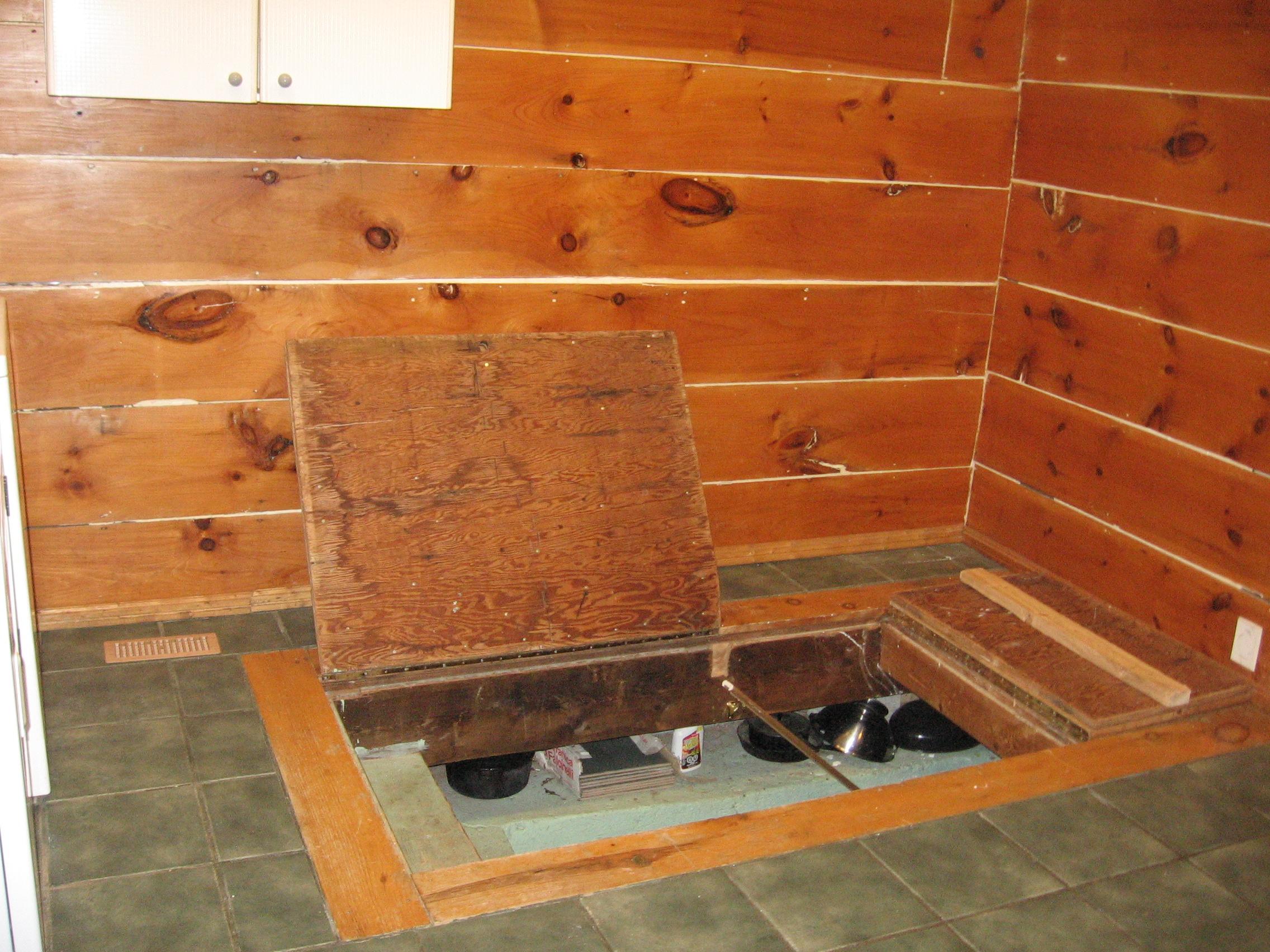

-
That’s a great idea, hadn’t thought of that!
-
Also thank you for the needle/thread link
-
@Jen the Canuck Another option is to attache the D-ring with an extra strap the will sandwich the breastplate itself. Kind of like a ranger belt. You could make that strap out of some dark brown leather, to make it pop out a bit. Brgds Jonas
-
This is now sold! Thank you for looking.
-
This is 8/9 oz leather, 1 inch D ring, lined with 8/9 latigo. The w shape is a good idea. I might just start over and call it a paid lesson for loss of leather. Thanks for the advice!
-
 alakala joined the community
 -
 @keenbean To add to my previous comments, even if you are able to source thinner needles in system 7x3 - for a Juki 441 class machine - know that they are very long and easily deflected. With a lot of layers taped, glued, or stapled together there's a good likelihood that some deflection will occur. You can reduce the deflection by limiting the smallest needle to a size 20. This will poke a slightly wider than usual hole for #92 bonded thread, but it's still much smaller than a #23 needle. Since the 7x3 is a round point, the ends will still be on the surface, as opposed to leather point system 794 S point that submerges the ends. If you can live with a thread range of #92 through 207, a Cowboy CB3200 will handle everything you can throw at it. It sews 1/2 inch, but the feet lift 5/8 inch. I have seen folders on the Cowboy/Hightex website, which would be a special order. You can ask Bob Kovar, the owner of Toledo Industrial Sewing Machines, about folders and other attachments for that model. If anybody could fit one onto that machine, it's Bob. Addendum: I wrote a blog article about dumbing down a Cowboy CB4500 or similar class 441 machine for use with thin needles and thread. You might find it useful if you want to consider a CB3200, 4500, or similar machine. Note, most of the machines you're looking at are manually oiled. It's no big deal. It's a routine you develop.
 -

Recommended Source for Hermann Oak Tooling.
bruce johnson replied to Latigo Smith's topic in All About Leather
Have you looked at Panhandle Leather? That's another source and good feedback. Personally I have been dealing with Matt at Maverick for at least 25 years (before it was Maverick). They knew what I liked and I never had an issue with any side being misrepresented that I bought from them. If I said "I need clean" it was clean. If it was going to be fully stamped I told them and got a probably B. If I said I need the crappiest side of 8/9 you have to test splitter blades and tools - it was crappy or had some test pieces cut out of prime areas. There is something to be said for that kind of a relationship. Since I transitioned to leather tools, my wife started doing leather work. Her source? Maverick. Good people, fast shipping, and no surprises for her either. -
Thanks for the advice, I will be giving what you suggested a go. The coats thread is Terko Satin is a cotton wrapped polyester core spun thread with a satin finish
-
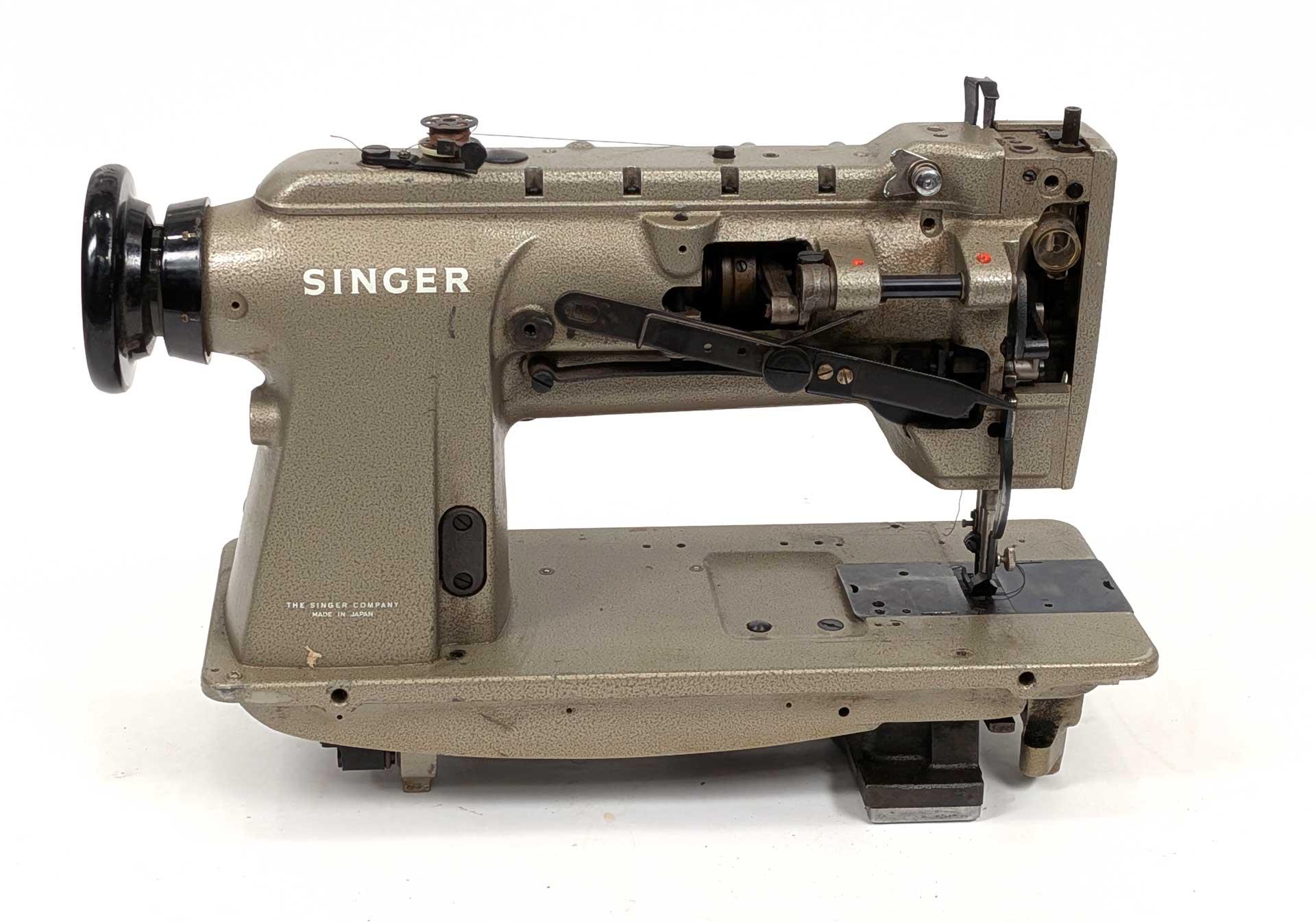
 Nicest condition 211 I have ever seen. Professional walking foot Singer excellent for thick leather, webbing, upholstery. 1/2" foot lift. Lightly used: Movements and stitches are smooth and beautiful. A few light paint scratches but none of the paint is worn off from the heavy use that most of these units have seen by now. Asking $1000 Can be crated and shipped or personally delivered depending on your location. pm me here or email solowiejs@gmail.com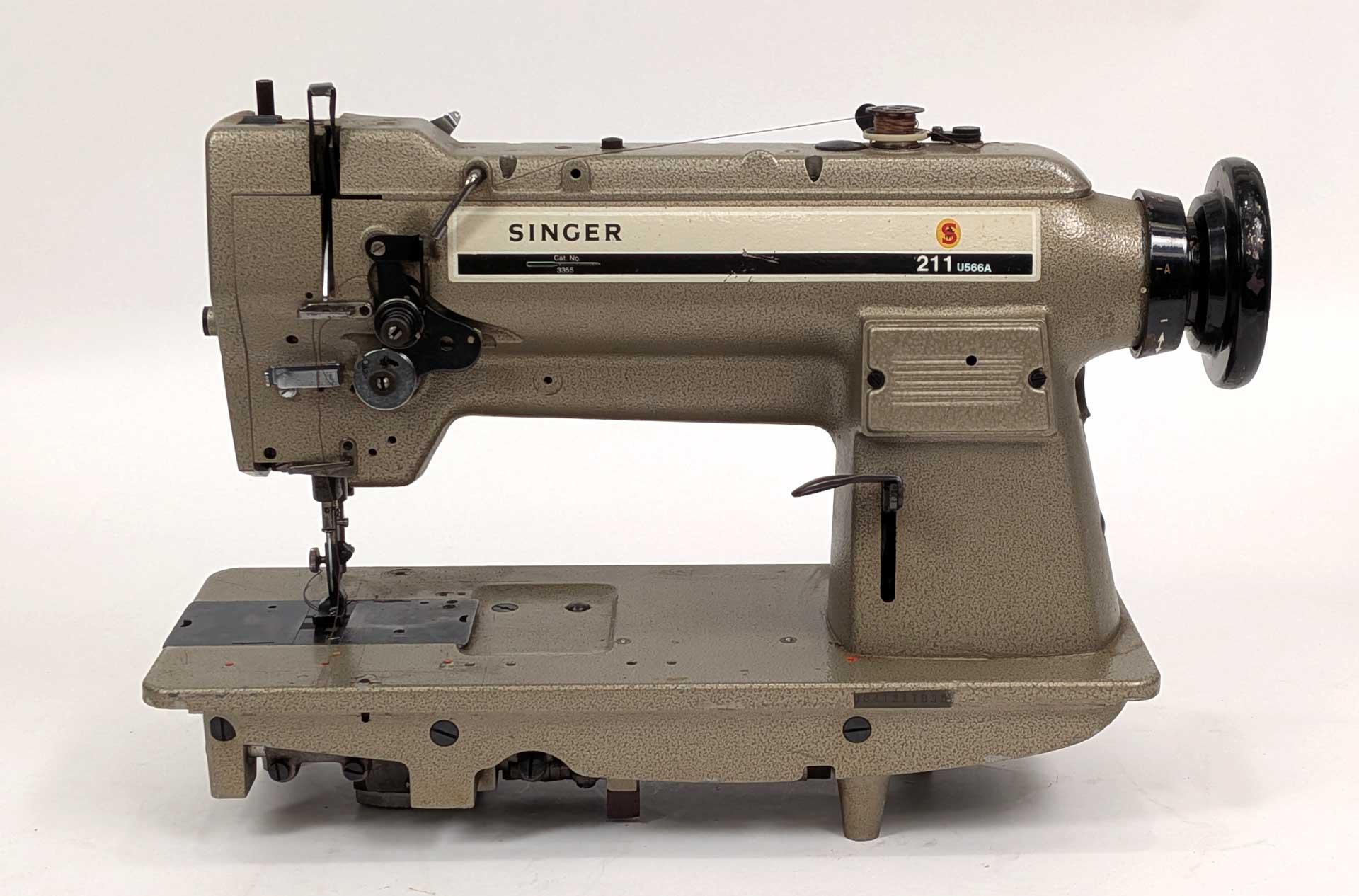
-
I think the problem is related to the thread and needle configuration you have selected. A good reference chart for needle to thread size is located here ( https://www.tolindsewmach.com/thread-chart.html ) The #19/120 is too large for thin acrylic, causing inconsistent penetration and hook timing issues Inconsistent top stitches like loose loops every few stitches on thin acrylic canvas probably the result of an oversized needle creating slack in the coated acrylic canvas holes, mismatched tensions, or threading issues in this industrial walking foot machine. My understanding is the Coats Tkt 036 thread is a all purpose core-spun polyester probably Coats Epic and more linty / woolly then the bonded polyester like Coats Dabond. If the item is being sewn for an outdoor item or upholstery maybe change to Coats Dabond. I would suggest: i) Change needle first: Drop to #14/90 or #16/100 sharp/microtex (not leather point). The #19/120 is made for V92 and properly leaving a small gap where top thread doesn't catch consistently on the thin acrylic canvas. ii) Top thread tension. If the the top and bobbin tension isn't balanced properly where the top thread tension is to great it will cause top-side loops. iii) Stitch length properly should be about 4mm and sewn slowly so to help reduce hook timing issues. kgg