



Cumberland Highpower
-
Posts
600 -
Joined
-
Last visited
Content Type
Profiles
Forums
Events
Blogs
Gallery
Store
Everything posted by Cumberland Highpower
-
Leather dye just seems to have a mind of it's own. Being thinner that water it has slightly different properties and seems to run and spatter places you wouldn't expect it to!
-
Well when you say "design" a new holster I'll answer from my experience. What I generally do, is make a couple samples without the stitching. Glued, dampened and worked/boned/formed etc. When it dries, I draw on the formed holster the stitch lines and make patterns to match the stitching. Either by working it out directly from the unstitched molded holster, or by cutting it apart on the stitch lines and making stitching templates/patterns from the pieces. After I have my patterns I work up a couple extra holsters and mark stitch lines from these patterns and give it a test as a prototype. If you plan to make multiples or big runs of holsters it's not much of an investment and you can place your stitching very elegantly on the finished products. Leather can stretch in odd ways when you bone it over a mold/gun. Sometimes it's hard to work out where the stitching would actually go, without actually molding it first.
-
I've had the 205-25 machines. They're for sewing moccasins like mentioned. They were unique in that the upper foot feed and the feed dog can be adjusted independently-and very easily, one having more or less than the other. Downside is that while you can do some leatherwork with it, they kinda suck. You need to hold the work just right to keep stitching consistent. There might be some feet to be had for it, but probably not the types you'd like to see. Maybe you can find something on Aliexpress or Ebay?
-
Need a part for Singer 17-30
Cumberland Highpower replied to docpugh's topic in Leather Sewing Machines
That's pretty tough. You're essentially going to have to find someone with a junk 17-30 that can supply you with parts. How handy are you with tools? If you have a drill press and belt sander/grinder you can made an adapter for it, something that can screw down with the large screws and then fit a needle plate from a different variant on top of it. For example, a needle plate from a Seiko TE series machine. (Chinese needle plates for the TE can be found fairly easily and not expensive). I've made/fit needle plates a few times over the years, it's not as hard as it sounds. You might also be able to change the shuttle race plate with one for a TE Series machine and then use a TE needle plate. But I don't know if they're fully interchangeable between a Singer and a Seiko? Of course that may not be something you may not be interested in, or maybe, I don't know. Then again, it may not be really worth any serious investment? I don't know what your machine is worth to you. I could see $200 worth of parts/labor on a $30 machine being a deal breaker. -
Measuring Screws for Replacement
Cumberland Highpower replied to friquant's topic in Leather Sewing Machines
Those are handy little books. I still have the one my Grandfather bought in San Diego, before shipping out to fight the Japanese. Used it many a times before I had internet. -
Thanks Ryano for the suggestion. The spring number you referenced comes up for other Singer Models, such as the 111w. Do you think it's the same spring?
-
Maybe I read your post wrong, but just in case you were commenting on the belts in the photos, they're not my work. Just some random quick pictures cut/paste.
-
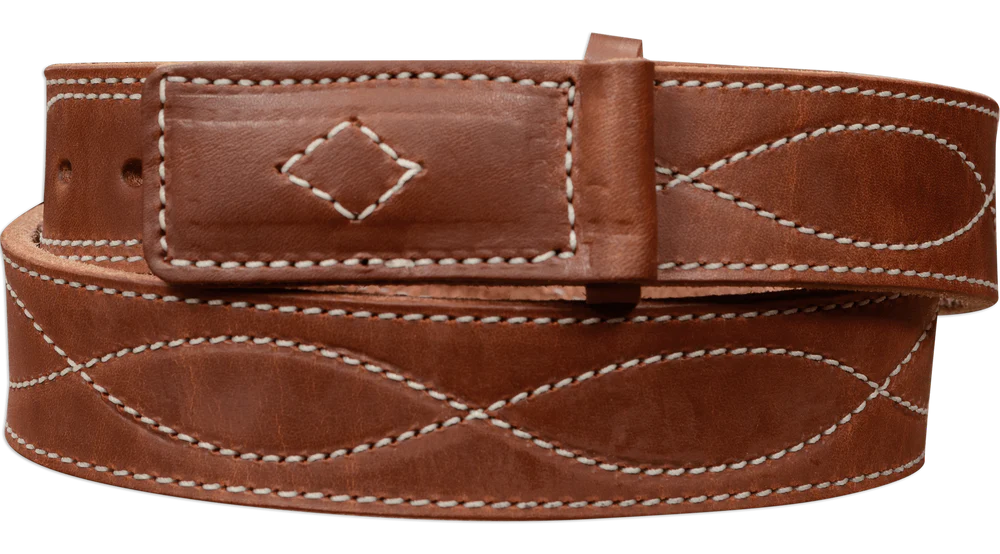
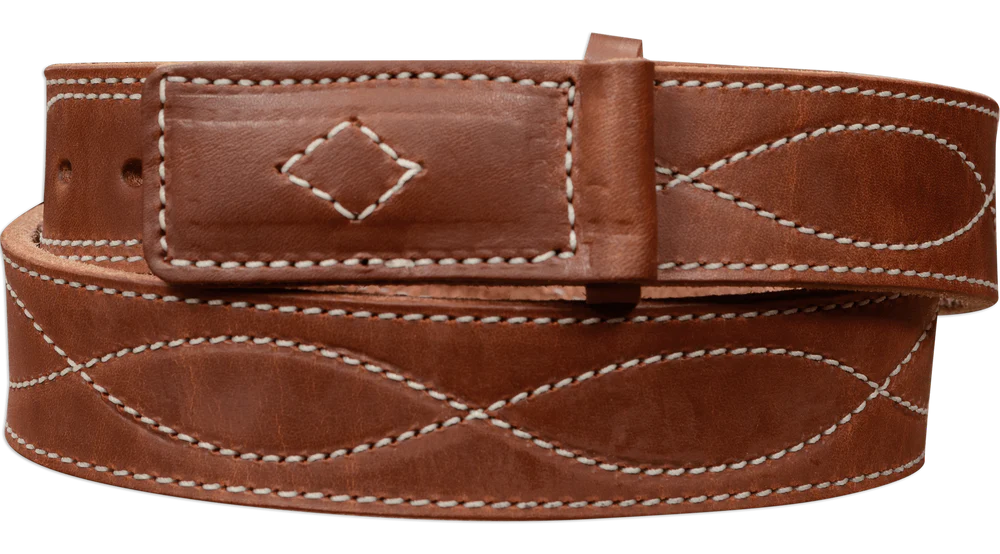
You could make the other type of mechanics belt for her. There's a type that has no buckle, but rather a metal hook hidden on the underside of where the buckle would normally be. It's all "leather" on the exterior. Allot of those qualify as a "2 prong" buckle as well, since many were made with 2 "prongs" on the backside.
-
Looking for Leatherworkers’ Insights on Cutting Dies
Cumberland Highpower replied to Leo1995's topic in Suppliers
Practically everyone I know has custom made dies. Some hobbyists do prefer pre made dies for simple projects. I'd say that split is like 30/70. (Hobbyist/more pro). Serves to reason really. If someone wants to make a wallet or 2 or a few keychains, etc. It's easier to just buy a premade die set on Etsy or whatnot. I've commissioned a couple hundred dies and maybe bought 5 or 6 premade. (I was lazy to draw up dies). If you're going to make custom/production dies for thicker leather you need to use real 1.25" die stock. The smaller 3/4" thin stock that's backed by plywood or plexiglass is ok for thin or soft leather, but not for the types most here like to use. The "precision" of the die is kind of a relative thing. More precision is usually desired on thin leathers for watch bands/wallets etc and you get that with 3/4 stock. (Especially if CNC bent). Heavier 1.25" steel stock is usually worked by hand and fit/welded up etc. If you're keeping 1/16" tolerance to pattern with it you've got a good die maker. On thick leathers you really DONT notice a lack of precision unless it's really bad. -
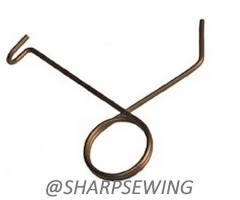
I'm needing a lift lever spring for a Seiko TE-5. It's more or less a clone of the Old Singer 17. I can't seem to find one for a Seiko or Singer (in stock anyway). Curious if any other machines used the same spring? I'd like to find one on eBay/etc for a few bucks rather than full fledged Seiko pricing. Looks like such:
-
I like Hillside Harness Hardware in Millersburg. The owner is a great guy. There is (or was) An Amish Leather/hardware casting and supply house in Ontario. I think it was maybe Harness Hardware LTD? Try Googling.
-
That's a hard thing to ask, so generally. I used to have a Fenda splitter like yours that was factory setup with a motor. Really the best advice is to make sure your blade is razor sharp. Your blade is probably dull. After you sharpen it you'll just need to play with the setting of it (in and out). On a Fenda if the blade has been sharpened too many times you'll not be able to get the blade positioned correctly. (Wont adjust forward enough).
-
I think the standard method is just to bolt it to a piece of plywood and "suspend" it under a table on pieces of allthread. You'd need to make a cutout in the actual table that is compatible with the contours of the machine.
-
Amish do tend to migrate. I used to shoot allot. Not so much anymore though (Age/money). Younger brother made a living for 15 years shooting Service Rifle but even he's retired now. LOL
-
I'd say so. Years ago I read John Bianchi's book on holsters (1980's). In it he detailed a bit that they would treat molded and dried holsters with neatsfoot oil, then place in the California sun for that rich golden glow and then treat with hard wax. Resolene would have pretty much the same effect as using hard wax/mop and glo, etc. Bianchi was without doubt the expert on the subject. If such a thing worked for him, it will work for you. Just don't saturate the leather with Neatsfoot. I personally don't like Resolene. Your results may vary, so if it works for you, use it. I'd suggest Weaver tough Kote (or Tough Kote in BLACK) over resolene. It's similar, but slightly more matte than bright glossy. (Ok, may or may not be available in the EU?) I've used lots of Feibings Pro Dye (Oil Dye) and I never really had any stiffening or drying out to speak of. The cheaper Feibings dye is far worse for drying out your leather though. Are you sure you're not using it instead?
-
I think he moved? Two years ago I sent him a list of parts I wanted in writing to his long published Arthur IL address and I didnt hear back. A year ago I call his answering service and he called me back. Said he never received my order so I gave it to him then. When the parts came his invoice was overstamped McLeansboro. 6373 County Rd 400 N, McLeansboro, IL 62859.
-
Sounds like allot of the neatsfoot oil I've used. I remember everyone swearing by "Sheps" here in the USA. It was identical to what you describe, stench and all. I used a fair amount over some years. If you heat it up it will loose the cloudiness. Don't use it to lube machinery, it's not suitable for such use unless you're in a Post Apocalypse Zombie-Walking World. (I guess would be ok at that point).
-
I don't have a Landis 3 to compare to....Although I'd gamble they might be similar to what's in a Landis 16? The Landis Amishman in McCleansboro IL has strippers for the 16. I think the're kinda pricey for what they are. Long ago I was cheap and just made my own from blocks of rubber. I got the best results from just taking a block of 1/2" 40 durometer rubber and greasing it up real good and using a punch of the right diameter. one good whack and a cylinder shaped piece pops right out. Put in the wax pot and just lightly tighten it down. Use a small awl or really thin/fine nail sharpened real sharp to poke a hole while it's in the guide.
-
I've done that a time or 2 in the past. More often than not if it's a die or a punch in a cartridge that might stick I use a tiny bit of ballistol. It absorbs into most leathers without a residue or whatnot.
-
Post a photo. From what you describe, maybe a "strap wrench" of some sort?
-
Practically everything is. Real EU made parts are EXPENSIVE. Chinese made parts are priced better. You get what you pay for though. Used price? 3500 and up.
-
CDK I have one of those. The burnisher on the front of it is what I was referencing. It's a DC motor with an on and off switch. Not variable like the rest of the machine is. I bought mine used and I think I paid $6500 for it with a new painting attachment (yeah I really needed it at the time!). New I think they're like 15k or more? I don't know....Anyway.... I use it sometimes. What I did find useful on the Galli and the Randall Burnisher (made from sewing machine motor) was the slick plastic they faced the little table/shelf with. It might be Teflon, I don't know. Low friction to be sure and seems to aid the fluid movement of the burnish process.
-
ammo holder
Cumberland Highpower replied to Thadrick's topic in Gun Holsters, Rifle Slings and Knife Sheathes
Long ago I used to make Shotgun shell belts (20ga only) and I did a similar thing. On mine the loop was essentially "closed" and the shell had a stop of sorts that way. The bottom looks pretty similar, although with 2 slits showing per shell rather than your 1. What I used was a die that cut a piece for 5 shells at a time and stitched them to the belts. Usually a total of 4-6 and then I would stitch a flap that would cover the 6 and secure with a stud when folded down over. Basically fully enclosed from the elements. I got the pattern idea from a Russian shell belt 20 or 30 years ago. If I stop at my old shop sometime soon I'll take a photo. There's a 30 year old prototype still hanging on the wall....!!! EDIT: I guess I have the die that I used here at the new place: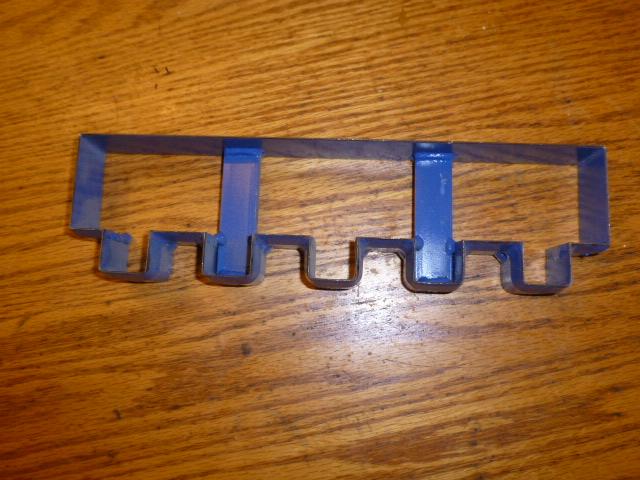
-
Best source for clicker dies?
Cumberland Highpower replied to wizard of tragacanth's topic in Leather Tools
I don't know what you're planning to make or what leathers you'll be working with.... If it' something like soft leathers or thin stock for wallets, etc. Maybe a small die, a 4 ton is probably ok. I had a 10 ton and a 15 ton clicker and found them coming up short on cutting force. I have 25 metric ton machines nowadays and they'll cut most anything. Even now though, I come up a little short of power if it's a really large die with lots of cutting surface and the stock is hard/stiff. -
Best source for clicker dies?
Cumberland Highpower replied to wizard of tragacanth's topic in Leather Tools
Most of mine are from International in GA. I always got the best prices and good quality from them. I've heard some say they had problems with International. For myself, I've never had any issue. BUT I'm always very meticulous with the patterns and made notes for the die maker, that could be why? They'd be good for low cost simpler dies. Weaver makes excellent dies. If you're looking for the best workmanship on a steel rule die, they're where you want to go. Downside with Weaver is that they're x2 the price of everyone else. Did I say x2? Maybe I meant x3!