fredk
-
Posts
5,960 -
Joined
Content Type
Profiles
Forums
Events
Blogs
Gallery
Everything posted by fredk
-
I don't know the whys and wherefores but I've found the harder the blade it sharpens well on a plain steel. My local butcher uses a plain steel rod for sharpening his knives and they are razor sharp. I used to have a proper professional butchers knife. The only way I could sharpen it was along the stainless steel shaft of my spud masher. No stone would sharpen it.
-
For just a few ££ I bought a knife & scissors sharpening unit from a local supermarket household items section. It has steels in one slot for knife and another slot for scissor blades. The handle/holder part is design so that you sharpen at the correct angle.
-
tbh, no matter how sharp the punch or hard the surface I never get a fully clean cut hole. There are always fuzzy hairs which need burnt away
-
Try delrin or acetal as a block. I use both these as pressure bearers when stamping using my bench press. They are harder than HDPE or nylon plastics, but soft enough not to damage a hole punch edge
-

Leather Clamps Denting my Leather
fredk replied to NewfoundlandLaw's topic in Leatherwork Conversation
I use lengths of lolly sticks, cut to length and split if necessary. One piece on each side. The lolly stick lengths go the whole way around. For clamps I usually use 'bulldog' paper clamps. I prefer this style; The length helps spread the clamping pressure along the lolly stick -
I've only had to cover a base a few times. Each time I just superglued the head of a ready-rivet on. I matched the colour of the head of the snap with the same in the rivet.
-
Techniques for finishing edges quickly
fredk replied to Jason046's topic in Leatherwork Conversation
I make it myself. No percentages or proper mixing. I just heat some beeswax until its liquid then add some nfo, let that cool and see what its like. Then either more wax of nfo until the mix is a soft paste, like a firm butter, then I add in about a teaspoon worth of carnauba wax. The mix is then warmed to liquid and poured into large enamelled tins which have lids. In use, I get some mix on a cloth and wipe it on across the edge of the leather, at intervals, then burnish each blob into the edge and meeting all the blobs up.Some paste mix gets on the front and back of the piece and I just rub this in and buff it off. I've only ever done edges this way and its pretty quick. -
Glued and buckstitched with lace is plenty strong for normal use things
-
Techniques for finishing edges quickly
fredk replied to Jason046's topic in Leatherwork Conversation
I only use a beeswax/nfo/carnauba wax mix for my edges. Edge is dyed and then the mix is applied with a cloth and burnished using either a wood slicker or just a piece of linen. -
What I would do is; use a fine nib paint pen to out-line the letters and dragon head - some workers on here use a small bottle of paint with a very fine applicator needle to do the same job. On the scales I would paint over them all and the surrounding area with a couple of coats of a resist such as 'Pledge' floor polish - which is actually a thin acrylic varnish. When that is dried I'd paint over the scales with my colour and before it had fully dried wipe it off the top areas using a solid block covered in cloth or kitchen roll paper. The block will keep the cloth just wiping the top and not allow the cloth to clean out the groovey bits
-
Not quite a saddle, but you do sit on it!
fredk replied to kevinkay's topic in Saddle Identification, Restoration & Repair
There is available an acrylic vinyl paste designed for this sort of job. Its used by car restorers mostly. It is usually a set of about 6 or 7 base colours which you mix to match your leather then apply with a spatula to the scratch area. The kit also includes some imprinted sheets with different grain patterns on which you press into the applied paste before it hardens. The kit costs from $3 to $25 depending where you buy it from example on ebay; https://www.ebay.co.uk/itm/Sofa-Car-Seat-Leather-Hole-Burns-No-Heat-Liquid-Vinyl-Fix-Rips-Repair-Tool-Kit-o-/352706937011?hash=item521ef8c0b3 Note; apply after re-dyeing as you cannot dye this repair paste -
Customer doesn’t want a maker’s mark
fredk replied to Cleatherdesigns's topic in Leatherwork Conversation
I'll throw in my $2 worth (inflation) For over 20 years I made custom medieval style items with no maker's mark. Only year before last I got one made. Sometimes I use it sometimes I don't But - see below, Some customers do care plus its handy to see who made it in cases of returned work. I've had several items come to me, supposedly my work returned cos it was shoddy or falling apart. The customer swearing blind they bought it from me at a such'n'such craft fair. On two occasions there was a maker's mark which I showed the punter ~~ 'Not mine - his', on other occasions I had to argue that I never attended any such craft fairs - I never did attend them, punters found me, usually down in t'pub. I got the maker's mark stamp made cos customers wanted my stamp on it, so they could show others they got it from me. Its embarrassing really but its like an artist signing one of their paintings. If the customer doesn't want your stamp on it then don't put it on. I have a simple rule which has solved arguments in designs, patterns et cetera - who is paying the bill? they get what they want -
No one has mentioned two things 1. gravity feed versus suction feed airbrushes. I use gravity feed, it needs less air pressure and a less powerful compressor 2. the capacity of the compressor - its rated free air delivery, it FAD rating. The greater the FAD the longer you can work at any air pressure
-
'ere, anyone remember 'Blue Nun' wine? was she a Smurfette?
-
Basically, no discount, but I may drop the price a tiny wee bit if I like the customer, or put it up if I don't,
-
I sort-of have, by accident sort-of, having to add something I forgot or customer wanted added in a. not tooling but just stamping b. dye not sealed, but dry c. if excess dye is not buffed off it gets on you, your clothes, your work surface ~ just as YinTx says d. I've stamped after a first light coat of resolene as a sealer, helped limit the rub off but still allowed the leather to get wet enough for the stamping e. you can buy pre-dyed veg tan leather which is toolable so you pre-dyeing will work too
-
In the UK toy guns are deliberately not the same size at all. Here a toy gun is only of use to make a holster for itself Although I don't make holsters I reckon the price of a template or stamp into how many times I'm gonna use it pro rata, eg a stamp cost me £25. I expected to use it 12 times, thats £2.08 per item. But I've now used it about 36 times = £0.70 each item and I'll be using it another 8 to 10 times soon. In your case; make more holsters and sell them. Say you make 10, thats only 5 bucks per on each one. By using a proper blue gun mold then you can be shure of the fit.
-
It does matter ~ a bit Acrylic is just the paint pigment. There are three carriers used; water, alcohol and lacquer. Depending on what dye you are using the paint will or will not react with it. Say you use standard Feibings Acrylic dye; this can be diluted with alcohol thus an alcohol based paint will mix with the dye even though it may have dried. So you need to put a non-alcohol based barrier on before the paint or accept this and just build up the colour with multiple thin coats of paint. A lacquer acrylic paint will not react with an alcohol based dye - if put on in thin coats, heavy coats will react badly Check any water based acrylic paints carefully as I've come across many that are actually not. When dry acrylic paints should be water resistant, only soluble in their original carrier in the case of alcohol and lacquer paints and alcohol in the case of water based paints. Poster paints are not an acrylic even tho I've seen some advertised as such. They always remain water soluble. But there is a trick to change that. Super Sheene is alcohol based and will soften and mix with applied paint. It is best sprayed on in light coats I use acrylic paints meant for plastic modellers, eg Humbrol, Revell, Vallejo, Games Workshop, Tamiya and many others.
-
As you are fairly new to this photography lark I recommend you buy John Hedgecoe's 'The Photographer's Handbook' This one: https://www.amazon.com/photographers-handbook-Hedgecoe-photography-Leonard/dp/B00BO7WGNW/ref=sr_1_15?keywords=john+hedgecoe+the+photography+handbook&qid=1573102549&sr=8-15 It was written in the olden days when we used stuff called 'film' in our magic boxes but all the techniques are still very relevant. I had a copy, now no.3 son has it and uses it. I reckon it is one of the very best reference books on photography ever written. It can be picked up for just a few $$ but its worth its weight in platinum
-
If its for comfort and not protection; There is a cowhide produced as 'clothing'. It ranges from 0.6mm to about 1.8mm. Around 1 - 1.2 mm should do a light vest, 1.6 -1.8mm for heavier
-
Unless you are gonna make a really special shape or size, its not worth it. A while back I priced up doing pvc pipes and cloth, it worked out well over 3x more expensive than a spring-frame pop-up 1m square. The cost of the cloth alone was 2 x the cost of the pop-up. Currently my 1m pop-up is in the back of my clothes wardrobe. Its 1m sq by about 5 cm thick (roughly 3 feet sq x 2 inches). No set of pipes will pack down that small. Also; the cloth on the pop-up is designed for photo use, other cloth is not and can cut the amount of light and can add a colour cast
-
The Macro is well suited to photos of small wallets and things, but you are doing holsters, the 50mm should work out ok. I use +1, +2, +4 close-up lenses on my S5000. My photo above was taken with the +1 on. These lenses are a cheap way to get close-up. They are not so good as a prime macro lens but they are handy, especially as I can't change the lens on the S5000 If you do go for a macro go for one around 105mm and not the 50mm Nikon makes A real cheap way of making a 'light tent' is to get a real big card box. Paint it white inside. Cut holes in three sides and cover the holes with grease-proof/baking paper. Aim your lights through the covered holes, shoot thru the normal flaps side of the box. Prop a bit of light/pale coloured card in for base & curved up back ground
-
Weight Lifting Belt Seeking advice on thickness
fredk replied to Firewalker's topic in How Do I Do That?
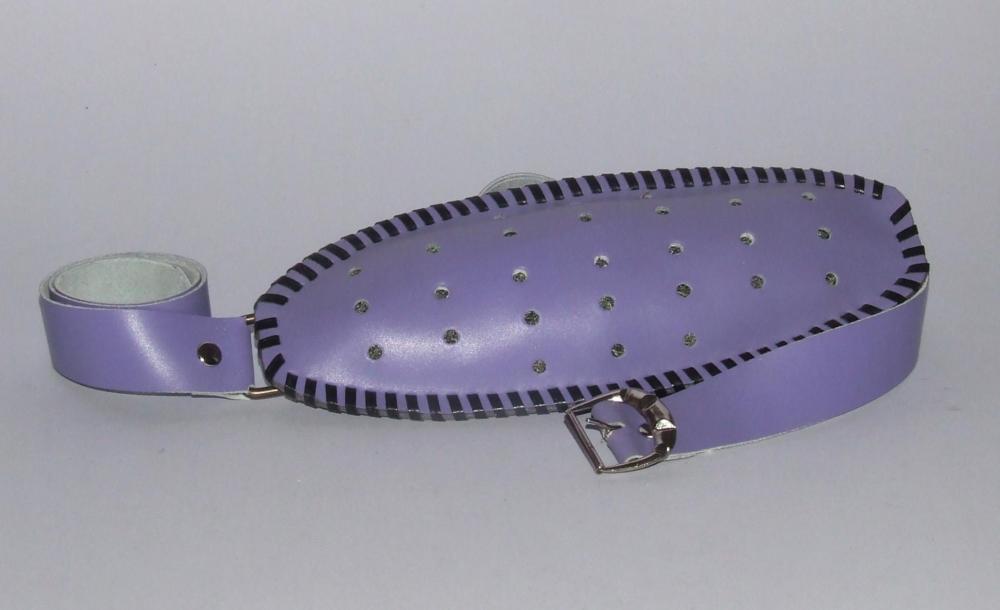
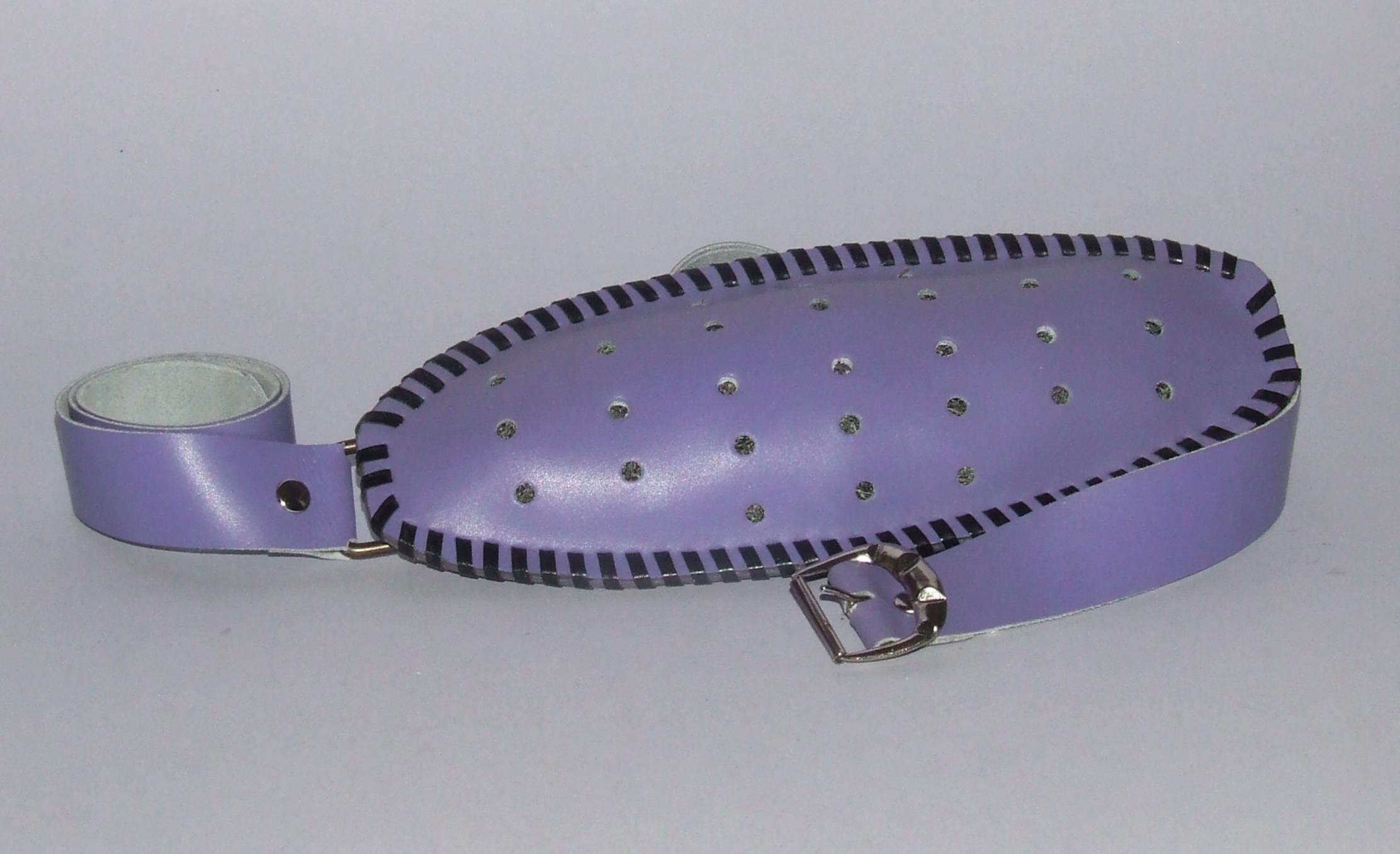
The thickness of the leather helps prevent hernia during the weight lifting. -
Remember; with your DSLR you can set very slow shutter speeds. Use that tripod, it'll be one of the bestest investments Exposure is a balance of the aperture (the hole in the lens wot lets in the light) and shutter time (how long the light is allowed in). The exposure is determined by the amount of light and the ISO/ASA. With low light and a low ISO you just set a long exposure time. Use the tripod to keep the camera steady. On my sample photo; The ISO was 100, the aperture f/8 and exposure time was 1/3 of a second - because the light was very low, ie not a lot of it coming in thru the window f/8 gives 'depth of field' = how much front to back is in focus, and is the maximum on my S5000. Smaller number, eg f/4 = less in focus, bigger number, eg f/16 = more in focus ISO, 200 is usual average, 100 or lower gives better quality, 400 and above gives digital break-up, a fuzziness. When doing a product photo use the lowest ISO you can, a medium f/number, like 8 or 11 or even 16, and then set a slooooooooow shutter speed, like 1 second, or 2 seconds. That tripod will hold the camera steady. ~~ one other tip, if your camera takes one, use a remote release, if it doesn't take one, use the self-timer on it. either of these will keep your hand off the camera and prevent any little shakiness due to your finger pressing the shutter release. I always use the self-timer on the S5000 as it doesn't take a remote release. The grey card suits me. but you get a selection of three or four and rotate thru them. They'll only cost a dollar or so each. You can even mess around by using spray paints on the cards and doing wide fuzzy patterns, or a lightish centre and darker edges. . . . . more on that later maybe? PS. My light boxes and lights are stashed away right now as I was . . . . um. . . 'reorganising' my flat ------- apartment to you
-
Buy three or four 'angle poise' light units. Buy a 'day light' colour LED bulb for each of them. Each bulb about 20w LED (not 20w normal!) Buy a pop -up light tent, box shaped, about 50 cm cube, or if you do really big stuff, 1m cube. Buy one good tripod Light units, about £10 each. Bulbs about £3 each, Light tent about £25, tripod about £25 Set up; One light shining down thru top, one on each side shining thru the sides, the fourth set up next to the camera which is on the tripod. The first three lights will give a soft diffused light, the fourth you can move around for hi-lights and shadows For back ground; the light tent will come with some cloths. useful, maybe. I use a piece of art card, pale grey, big enuf to go across the bottom and curve at the back up to the top. of the light box. The curve makes an 'infinity' back ground of the card ie there is no join between the floor and the wall also, devote a space for this set up and use it a lot until you get used to it all At the mo, my set up is an occasional table with the grey card clamped to it and curved up and jammed under part of the mantel shelf. Main light is day light thru a big window, using the curtain to control it, and using the camera flash to fill in. Camera for this is an old Fujipix S5000. My DSLR is packed away. Taken with my current set up: