


.jpg.e13e7809a690335a89b8a4ed2e876db1.jpg)
Northmount
-
Posts
6,553 -
Joined
-
Last visited
Content Type
Profiles
Forums
Events
Blogs
Gallery
Store
Everything posted by Northmount
-
This is a very old thread with last post in 2013. Mike hasn't visited this site since May 2013. I'm sure you won't get any response from him at this late date. Tom
-
.thumb.jpg.6e903dd66163ad5672f00f144058c571.jpg) There are several posts about changing the stock pulley/hand wheel on sewing machines here. Not all of them are replacing the pulley with a pulley from a sewing machine supplier. Some even bolt a pulley onto the side of the stock pulley. you cn search for them here. As for your 2nd last paragraph, how would changing a pulley on the outside of the machine change the timing of something on the inside of the machine. As long as you don't loosen any set screws, etc. inside, or over stress anything, timing won't change due to changing an external pulley. Tom
There are several posts about changing the stock pulley/hand wheel on sewing machines here. Not all of them are replacing the pulley with a pulley from a sewing machine supplier. Some even bolt a pulley onto the side of the stock pulley. you cn search for them here. As for your 2nd last paragraph, how would changing a pulley on the outside of the machine change the timing of something on the inside of the machine. As long as you don't loosen any set screws, etc. inside, or over stress anything, timing won't change due to changing an external pulley. Tom -
Selling Barry King, Gore Tool, Robert Beard, Chas Smith, Bill Woodruff
Northmount replied to dprezgay's topic in Old/Sold
@dprezgay You have people interested in tools you listed. Should I close this thread and move it to old/sold? Tom -
Market place rules require photos, manufacturer, model etc. Thanks for giving back to the community! Tom
-
What happened to November? I didn't sleep through the DST change did I? Tom
-
@Barnettworks moved your post to Leather Sewing Machines. You may get more answers/responses here. Tom
-
I have to disagree with this statement. I worked in a company for the past 20 years that employed people from all over the world. Often friends called it a little "United Nations" as many nations were represented. A number of my co-workers were vegetarian and it really does come down to their culture and nationality as to what they define as allowable or not. Chicken and fish were definitely allowable for some. Tom
-
Just a little note: Vegetarians and Vegans are not necessarily the same thing. Vegans won't touch anything that is assumed to harm an animal during its production. For example, they wont use wool because some sheep have such heavy 'coats' that maggots will grow in the folds around the sheep's neck. They wont eat eggs or chickens because the chickens are cooped up in such small places and not allowed to range free. I'm more in favor of the older farms and ranches where animals have space to live. I don't really agree with warehousing animals. I guess a lot of it is what you have grown up with. Vegetarians just don't eat meat. Depending on their culture, that may or may not include chickens, fish, eggs, milk, cream, etc. Now obviously you will find vegetarians that have developed into full blown vegans. It can happen in any family! Just less likely for either if they were raised on a farm or ranch. I know of others that are allergic or have health issues that have forced them into being vegetarian, and most are not happy with the change in their life. Tom
-
Poster is from Vienna, Austria
-
Belt is at the correct depth on the top pulley. Bottom pulley belt should not ride in the bottom of the groove. Is that bracket or guard just to the right of the belt rubbing on the belt? Tom
-
Looking for friction? tongueless? slider? buckle
Northmount replied to blackmad's topic in Hardware and Accessories
That looks better than my post. I missed the double bar! Tom -
Item 1 You should reverse after the needle has risen about 1/4" from bottom of its stroke. Stop before you reverse so you have control. If you reverse too early, the hook won't have caught the loop and you have a missed stitch. When starting a line of stitching, you can start in reverse about 3 stitches before the beginning end of the stitch line, then switch to forward. Same rule as above applies. Item 2 By hand-wheeling and adjusting the reverse leaver/stitch length to hit the target. Item 3 When starting a stitch line, hold both tails to keep tension on them for the first few stitches. When doing your top stitching, don't pull the seam too tight. When reversing, don't lift the presser foot. You might need more top and bottom tension. Item 4 - belt dust Could be rough spot on a pulley, or misaligned. Possibly over tightened might do it too. Should be able to depress the belt about an inch by pressing with your thumb midway between pulleys without having to exert a lot of pressure. There is not a heavy load on these belts, so doesn't need to be really tight. Do you have a belt riding high above the rim of one of the pulleys? Tom
-
The clacking noise in the first part of the video is not bearing noise. It appears to be in time with the needle. It sounds like the needle is clashing/striking the hook or something in the hook area. It could be a bit of looseness and a bent needle. i would check for excessive clearance (looseness) from the needle bar through to the hook and bobbin including gear mesh. @Wizcrafts Have you any comments to help out here? Tom
-
The photos you have attached are specific to the author's patterns. Many tooling patterns identify stamps by the number on the author's tools. There are so many patterns that no one is going to try to publish them all in one reference, plus it would require copyright approvals from many people. Many stamps can be used for multiple purposes and interchanged with others for slightly different effects. Often users will look at other similar stamps to what is shown in a pattern so they can find one close enough to avoid having to search for and purchase another stamp. (There are always more stamps we would like to collect, but there is a practical limit to that, especially if you think you have to have the identical stamp someone else uses or prescribes. There are many stamp makers, each with their own numbering system and patterns. You will not find a guide that lists all stamps and how to use them. Many artists pick the styles they like and how they adapt them to their carvings. An example is a camouflage tool. It may be used on the stems and scrolls in Sheridan type carvings, or as a boarder stamp. To each his own. There are generic instructions for various types of tools in some booklets from Tandy. The Leather Craft Handbook by Tony and Kay Laier Basic Leatherwork by Paul Burnett Lucky Seven Foto Carve Patterns and Instructions for Carving Leather These are useful for beginners. Tom
-
Looking for friction? tongueless? slider? buckle
Northmount replied to blackmad's topic in Hardware and Accessories
Try a Conway buckle (punch a hole and adapt the straps), or grind the post off and see if it works. Tom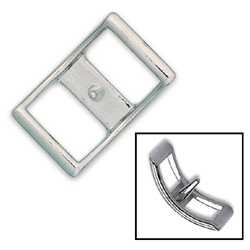
-
Has anyone done Harley king & gueen seat
Northmount replied to Bawarrior's topic in Motorcycles and Biker Gear
@Bawarrior And the picture is ... Tom -
Feed dog making dimple marks on leather
Northmount replied to thatgriffguy's topic in Sewing Leather
Use leather point needles 135x16. They slice through instead of punching through like the textile conical point. You could moisten the leather a little and try that. Tap with a hammer or rub with a spoon or bone folder to help smooth out the blowout on the back side. Tom -
Looking for friction? tongueless? slider? buckle
Northmount replied to blackmad's topic in Hardware and Accessories
Have you tried Ohio Travel Bag, or the buckle guy? Tom -
@imastevenotanumber moved this thread to leather sewing machines. Tom
-
Make sure it is white glue, not yellow. White stays flexible. Yellow doesn't so cracks some each time it is bent. Tom
-
@DonInReno It helps if you can maintain the same amount of heat on both sides during the welding or brazing process. Sometimes quite difficult to do. Slow cooling might help too. Over 50 years since I did some brazing of cast iron! Tom
-
Any glue/cement that is visible won't dye. So I would dye whatever is visible first. Tom
-
Le Cuir. Compositions Decoratives Pattern book
Northmount replied to DebHop's topic in Patterns and Templates
Here is a link to other old designs. Lots of topics, lots of artists. https://www.oldbookillustrations.com/ Tom -
The OP has another thread here too Tom
-
@fredk I like your idea of gluing the leather to the board before doing any work on it. Good solid base. Tom