

Goldshot Ron
-
Posts
405 -
Joined
-
Last visited
Content Type
Profiles
Forums
Events
Blogs
Gallery
Store
Everything posted by Goldshot Ron
-
securing in-skirt rigging without rear jockeys
Goldshot Ron replied to Squilchuck's topic in Saddle Construction
Well hell Randy, you should have posted your photo first. Disregard my comments John. I can't remember who or where I just heard this, but we tend to lay out our leather on a flat table, cut and prepare it to go on a round and odd shaped object. John, when laying out your skirts, shape them (damp) on and around your tree. Then when everything looks good, cut and finish. Ron -
securing in-skirt rigging without rear jockeys
Goldshot Ron replied to Squilchuck's topic in Saddle Construction
John, You need to determine if you want a light weight trail saddle, or a tie-down cow working saddle. This determines the weight of skirting you would use, and the rear design of your rigging. Many makers use a two-part assembly for the top of the skirt that would cover the top of the tree. One limiting factor to this design is that the seams wear and break under the stirrup leathers. I prefer a one layer top piece, but this requires more leather, and a greater chance of making a fitting mistake; but no seams under the leathers. Your connection points are like you said: the ear tab at the cantle, and the rear conchos. If fitted and blocked correctly, and the rear of the skirts are laced together, this is very secure. If you block and use fillers for your skirts, make sure the fillers are lighter leather. Heavy fillers make the rear of the bars bump around the conchos that some people do not like; but, doesn't affect the performance of the saddle. Also, adds extra weight. Tip: determine what the top leather will look like, and how it will fit. When sewing the top to the bottom, over cut the bottom of the skirts, and trim them when satisfied. To do this in reverse: fitting top to bottom, is a real pain in the arse. Ron -
I believe that Keith Seidel and another noted saddle maker posted some instructions on this site for inlaid padded seats. I did a quick search and couldn't find what I was looking for. Try looking for posts by Keith and maybe you'll find something; or, maybe Keith may see your post and respond. I have hard copies of a couple ways to put in a seat, and if you don't get info. from the experts, I'll be glad to post what I have. I may also have photos from one of my saddles to posts. Like everything, there is always more than one way to skin a cat. Ron
-
N.Porter Saddle
Goldshot Ron replied to Goldshot Ron's topic in Saddle Identification, Restoration & Repair
BNEWTONP, I forgot about posting this saddle; but I am glad you showed up. The only number that I found on the saddle that I repaired was: 21001. This number was what I wrote on the invoice and I no longer have the saddle. Hope you have the invoice card. Kayw...you mentioned that Rocky Minster moved to Prescott. Did he open a shop, or just retired there? I took a class from him close to 8 years ago, and found him a very good instructor and a great source of information. Thanks Ron -
I'll go to the shop and try rethreading the shuttle. Sioux, the bobbin thread is clumping; like you would see on a poorly sewn backstitch. I'm using nylon bonded thread with silicon lubricant in the wax pot. My stitching looks like the "old" fox said: "...some days chicken, some days feathers". Now that you mentioned Cuba, NM; that's where the fellow lives who I bought the machine from. I know that these machines were made for linen thread, but I'm unaware of a good source. Thanks guys for the info.
-
OK Sioux, I have a request....would you post photos of how you thread the bobbin? I purchased a 3 several years ago because I thought I needed one. Anyway, I was never sure if the bobbin was threated correctly. Lately, I have been having trouble on the bobbin side of the stitch. Also, where can you buy extra bobbins? I only have one. My machine"s story is that it came from King Saddlery through Sheridan Leather, via a gentleman from Northern New Mexico. Cool to have tools with such history. Thanks, Ron
-
I agree with all of the advice above. Adam's and Stohlman's books are a must. I still refer to each of these on a regular basis, even when repairing or modifying a saddle. The older books from the 50s and 60s are interesting to read for historical techniques, but not handy in todays construction methods. Dale Harwood's DVD is good for different techniques and opinions, but the DVD set is expensive. Cary Schwarz also has DVDs available for ground seat installation, and covering cantles. These are excellent to study after you have built a few saddles. One thing about this forum is that there are plenty of people to help you if you get stuck at a segment of construction. There is a member on here from Michigan, Bondo Bob, who might reappear to help you. Good luck.
-
Unusual stirrup leather hangers
Goldshot Ron replied to BANDITWJ's topic in Saddle Identification, Restoration & Repair
Try Herb Bork in Pendleton, Or. I haven't seen them in their catalog, but you may get lucky. -
replace rigging
Goldshot Ron replied to Geary's topic in Saddle Identification, Restoration & Repair
Geary, As Josh mentioned, the Stohlman Encyclopedia vol. 1 will be very helpful. If you could post some photos of the saddle rigging, you'd receive more help. There are so many techniques and styles, it is helpful to see the saddle. Ron -
Roper Wallet
Goldshot Ron replied to Rolandranch's topic in Purses, Wallets, Belts and Miscellaneous Pocket Items
Lookin' good Ryan. Nice touch with the seeder used with the camo stamp along the edge. -
The Instagram example that you posted uses a lined pear shader in the pedals. You could also use a checkered shader, but the lines is more realistic. Anyway, the lines hold the dye as you can see in your decorative cuts.
-
Well, I'm sorry that I offended you. Your original post, and your interest quote led me to believe that you were just starting in saddle making. I tip my hat to you for trying different things. Every day I learn that I won't live long enough to achieve great things, so I shouldn't offer advice to those who may.
-
Neat post...didn't want to comment but your last post enters into a different subject matter. You started talking about bars, but you mentioned about the saddle raising in the back in your last post. This issue can be caused by misplacing the location of your rigging. Many roping saddle are rigged in the full position. This often creates a pivot point at the center or ahead of the front forks. When the rear flank cinch is not tight, the saddle will lift up in the rear when the horse rolls forward (lack of a better description). By positioning the rigging at 7/8ths. or 3/4 this pivot point is moved back, and the weight of the rider keeps the saddle from raising in the rear. I also agree with all of the previous comments. Weight distribution along the horses back is best achieved when the bar alignment is equal along the back. Build a few saddles before you try to be innovative.
-
Wanted: Landis 3 or Pearson late model sewing machine
Goldshot Ron replied to Silverd's topic in Leather Sewing Machines
I just now received a call from a fellow that has a Cowboy 4500 for sale. He's asking $2100. I believe he said it is about 3 years old, and he's the original owner. He's in So. Cal. Ron -
The yellow is drier or harder than the white. I use the yellow to clean saddles and tack, and a good amount of water to create a lather. I use the white when lacing. Since it is creamier than the yellow, it is easier to apply with little or no water; and, rubs into the strings with less mess. Ron
-
6 month old bell knife skiving machine for sale SF Bay AREA!
Goldshot Ron replied to kjack88's topic in Old/Sold
Reread, title of post...the Bay Area is too far for me to drive. Good luck on your sale. -
6 month old bell knife skiving machine for sale SF Bay AREA!
Goldshot Ron replied to kjack88's topic in Old/Sold
Could you post a photo? And, where are you located in California to determine pick up costs. Thanks -
Ron, The saddle looks good, and your tooling came out good. Gordon Andrus has an article in the last issue of the Leather Crafters Journal that talks about bar grounding. I think you'd benefit from reading it. I do have a couple of comments, but they are only my opinion. I would have rounded the skirts on the inside of the rigging ring to allow for easier tying off of the latigo strap. Your seat jockey could have been cut a little more forward (or fuller) to cover the front rigging rings; there appears from the photos a little misalignment between the front and rear jockeys. And, one last thought is that the center button tab maybe a little too high on the cantle. For a straight up seat this is okay, but if you were to build a Cheyenne roll, it'll play hell fitting under the roll and installing your rosettes (been there, done that). I can really tell that you're an individual that thinks out and designs every aspect of your project. It shows in your work. Really good job. Ron
-
Threepersons Done!
Goldshot Ron replied to Josh Ashman's topic in Gun Holsters, Rifle Slings and Knife Sheathes
I've read about Mop & Glo, but have never tried it. Your finish looks good, so I'll have to try it. -
Threepersons Done!
Goldshot Ron replied to Josh Ashman's topic in Gun Holsters, Rifle Slings and Knife Sheathes
Nice work Josh. Your border shows a lot of imagination and skill. I like your finish, how did you apply it? Looking forward to see your next project. Ron -
N.Porter Saddle
Goldshot Ron replied to Goldshot Ron's topic in Saddle Identification, Restoration & Repair
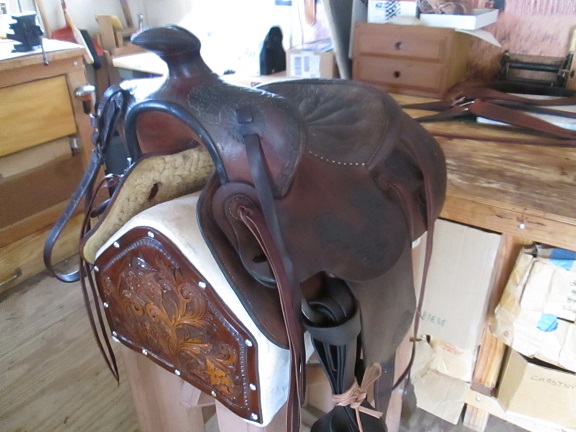
I didn't find any card. There was a serial number behind the cantle on the near side. The seat is only 12 inches, yet the stirrup fenders are 19 inches long; so it isn't a kids saddle. The fleece was in good condition for the saddle's possible age. I only repaired and replaced what was critical for safety and to keep the customer's cost down. It's a nice and strong saddle, too bad the seat is so small. Also, does anyone know what the purpose of the left hand strap on the fork was for? Ron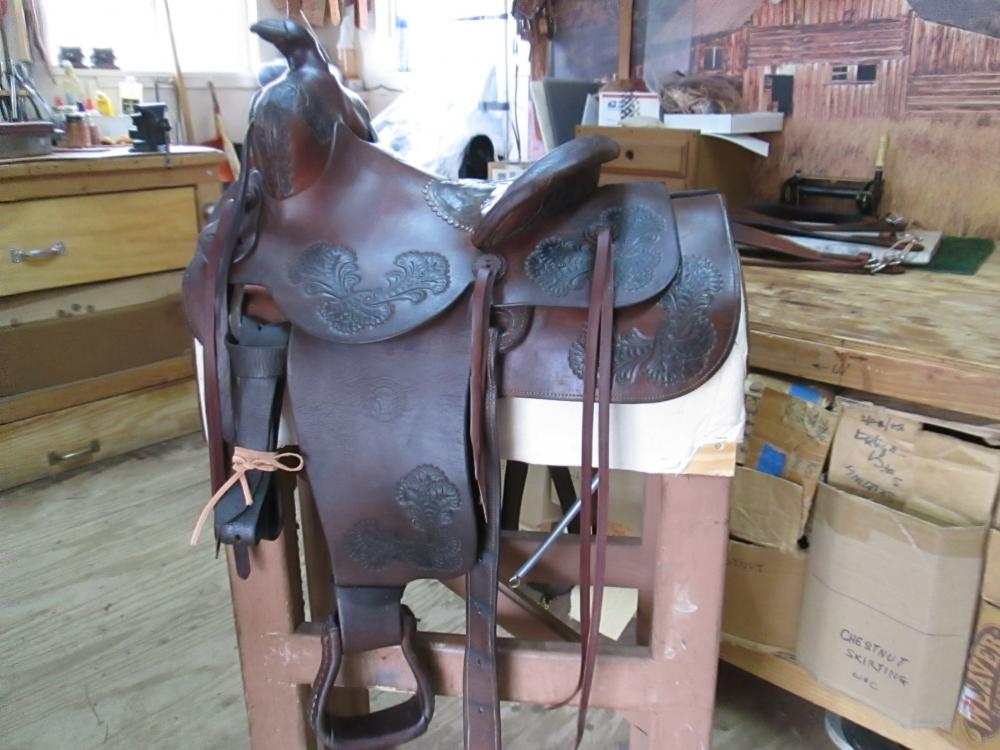
-
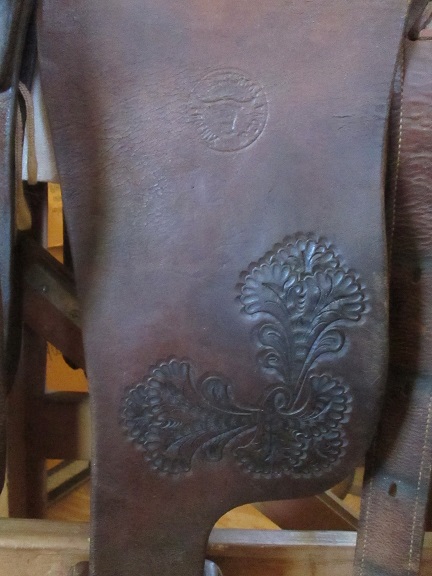
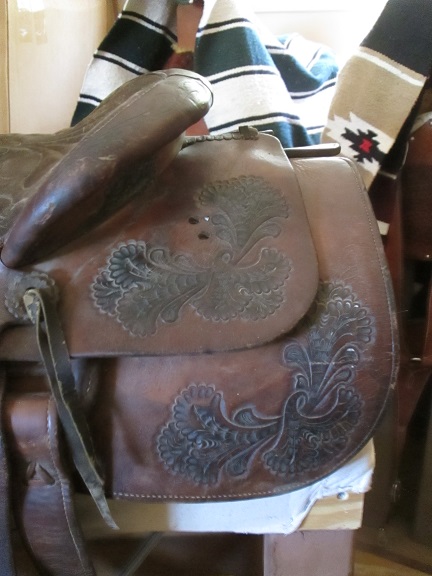
Recently received this N.Porter saddle to clean and repair. The leather was in good condition, and the saddle was a pleasure to repair. Can anyone identify the possible age of the saddle? There are some construction designs that are similar to those found in Stohlman's Encyclopedia of Saddle Making. The saddle tooling was also unique. Ron
.thumb.JPG.2974f33e7f0a920c5870748d476b7160.JPG)
-
What is the surface that you are using on which to place your leather? Wood or stone? You haven't shown your tooling surface. The mallet or hammer that you use is also important. Too light and it becomes too much work; too heavy, and your impressions will be too deep. It appears that you are letting the stamp bounce on the leather. As mentioned already, your beveling should not appear as individual blows, but as a smooth line where your tool marks fade into each other. Since your stamps aren't very expensive, go ahead and modify them. I've thrown out a lot of old Craft Japan stamps because I filed them down too much; but by doing this, it gives you a better understanding of how stamps are designed, and different impressions you can make by just playing around with just one or two stamps. Good luck, Ron
-
You have a couple things going for you. Ferg mentioned background, and I agree with him that you have done a good job with having about the right amount of background filler. Your flow is good, and the balance looks good. I'm going to make two comments: one, your flowers and leaves seem to be just second thoughts. Your wavy leaf on the right is how your other two leaves should appear. It's center stem is part of your overall design. The heart shaped leaves do not seem to be connected to the stem like you wavy leaf. Also, your flowers aren't connected with a bulb or stem. They are just there. One last comment (and I know I said two things), if you get a French curve, you'll make better curved lines with your design. Believe me, it's hard to transfer your image to leather if you aren't working with nice flowing lines to begin with. Good work, Ron
-
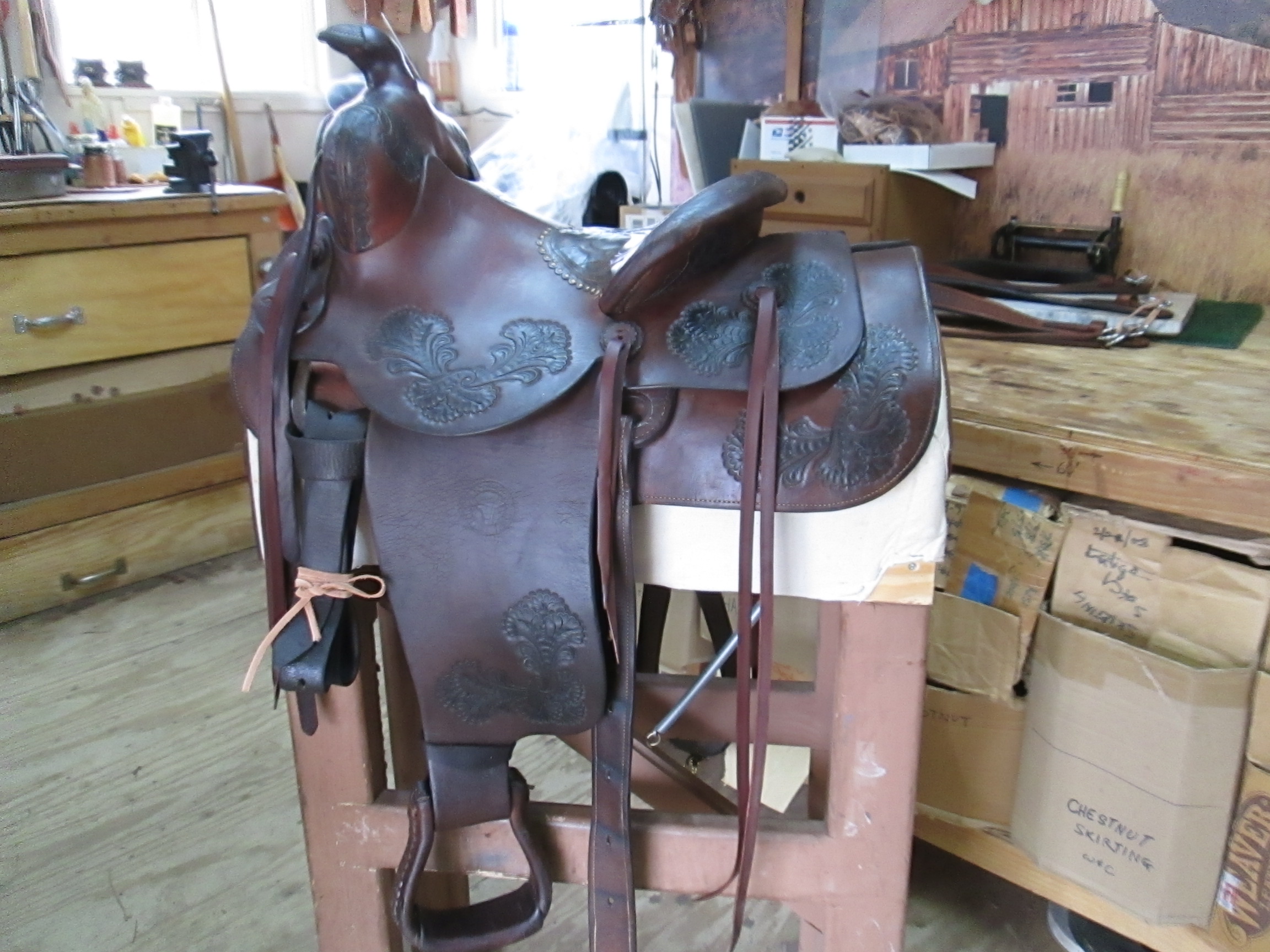
Paul, First, is the fleece real sheep skin or imitation. Second, check for staples holding pieces onto tree; if so, it's factory made. Third, if it passes the first two tests: real fleece, not stapled, then check the bars under the left stirrup leather for a tree maker's mark (some makers put their mark or label here). Fourth, what type of screws have been used: phillips head or slotted oval. Older saddles would use slotted oval, and maybe brass, no stainless steel nor fancy star heads. Check stirrup leathers for their adjustment buckles. If they are laced, this could indicate an older saddle, maybe 1940s or older. However, since the rigging is inskirt, and the weight is heavy, I tend to think that the saddle isn't antique worthy. If the stirrups are original, they appear to be heavy roper style stirrups that came out maybe in the 1960s. Please keep us informed of your findings. Ron
.JPG.4a2f831a9e1d47d11cd08390772efaae.JPG)